Dentures That Feel Natural, Look Beautiful.

Can Severe Tooth Decay Cause Tonsil Stones? The Hidden Connection Between Dental Infection and Tonsil Health
image hero:
Country:
Dental Hub: Can Severe Tooth Decay Cause Tonsil Stones?
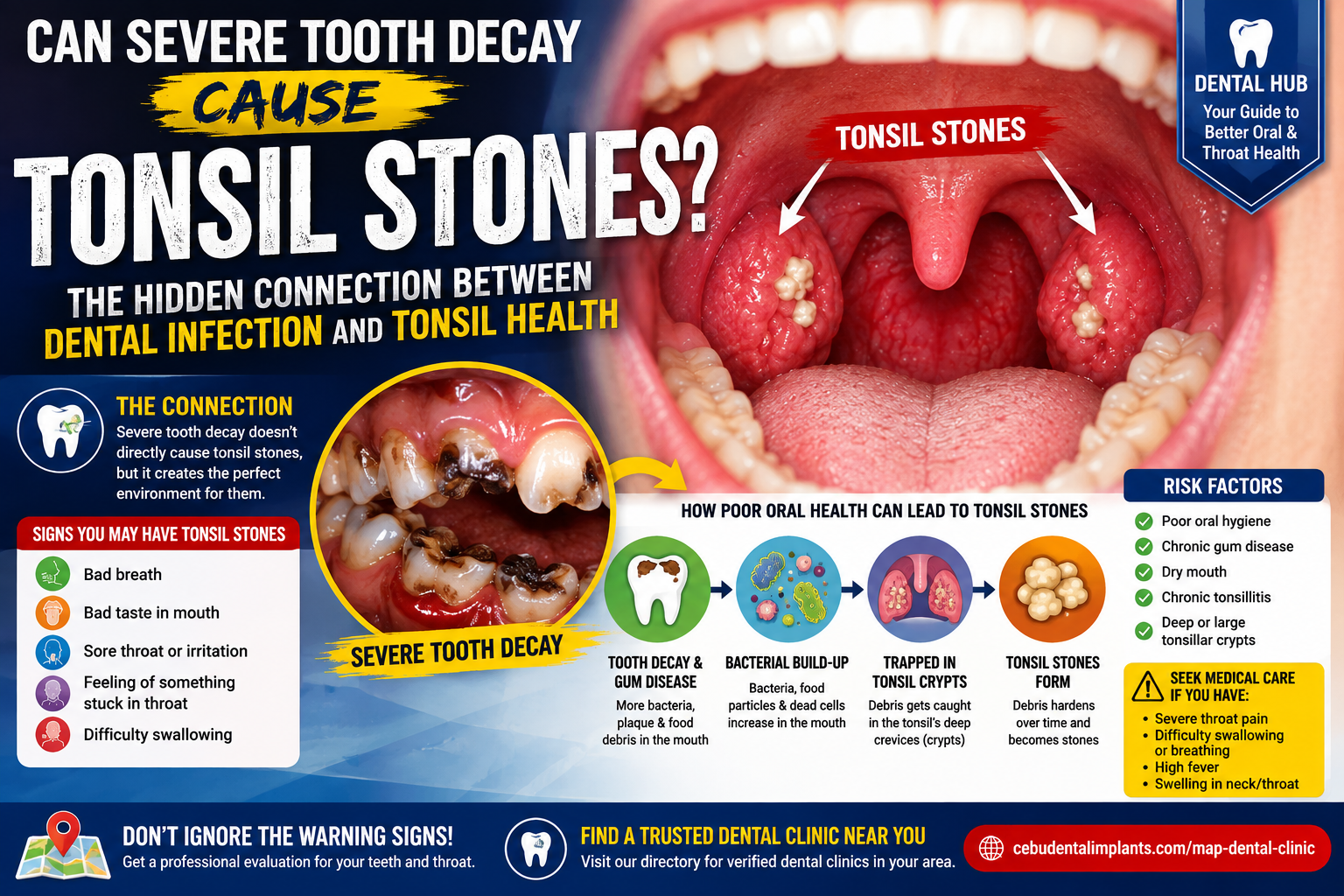
Severe tooth decay does not directly cause tonsil stones. However, advanced tooth decay, gum disease, poor oral hygiene, and untreated oral infections can create an environment with more bacteria and debris, which may indirectly contribute to tonsil-stone formation.
How Severe Tooth Decay May Be Connected
1. Increased bacterial load
Severe cavities and untreated dental disease can increase the amount of bacteria and food debris in the mouth. These materials can mix with saliva and shed cells and potentially contribute to debris accumulating in the tonsillar crypts.
2. Tonsil crypts can trap debris
The tonsils naturally contain small pockets called crypts. Food particles, bacteria, mucus and dead cells can become trapped inside them. Over time, the material can harden and form a tonsillolith.
3. The connection is indirect
It is more accurate to say:
Severe decay → poorer oral environment → increased debris/bacteria → possible contribution to tonsil-crypt accumulation → tonsil stones
Rather than:
Severe decay → tonsil stone directly
There is no basis to diagnose a tonsil stone simply because someone has severe tooth decay.
Other Factors That Can Increase Tonsil-Stone Risk
- Deep or enlarged tonsillar crypts
- Previous or recurrent tonsillitis
- Poor oral hygiene
- Food debris
- Postnasal mucus
- Dry mouth or reduced saliva
- Larger tonsils
- Chronic throat inflammation
What About a Dental Infection?
A dental infection should be treated independently. An abscessed or severely decayed tooth can cause significant complications if infection spreads into surrounding tissues, but it does not mean that the yellow/white material seen on a tonsil is necessarily a tonsil stone.
If a patient has severe tooth decay plus a suspected tonsil stone, the best approach is to have both areas evaluated:
Dentist: teeth, cavities, gums, periodontal disease and oral infection.
ENT/medical provider: tonsils, crypts and persistent throat findings.
Can Treating the Teeth Help?
Improving oral health can reduce the amount of bacteria and debris in the mouth and may help reduce factors that contribute to bad breath and tonsil-stone formation. However, treating severe decay does not guarantee that existing tonsil stones will disappear.
The tonsils themselves may still have deep crypts that trap material.
When the Situation Becomes More Serious
Do not assume a yellow or white throat spot is simply a tonsil stone if the patient develops:
- Severe or rapidly worsening throat pain
- High fever
- Difficulty swallowing saliva
- Difficulty breathing
- Rapid swelling of the throat or neck
- Difficulty opening the mouth
- Significant one-sided throat swelling
- A muffled or altered voice
These symptoms require prompt medical evaluation, because infections around the tonsil can sometimes become much more serious.
Dental Hub Takeaway
Severe tooth decay does not directly cause tonsil stones, but poor oral health can contribute to the bacterial and debris-rich environment associated with tonsil-stone formation.
If you have severe tooth decay + bad breath + a yellow/white tonsil spot, don't assume they are the same disease. A dental examination can address the tooth and gum infection, while an ENT evaluation can determine whether the throat finding is actually a tonsil stone.
Diagnostic Methods:
Conditions Diagnosed:
Related Clinical Cases
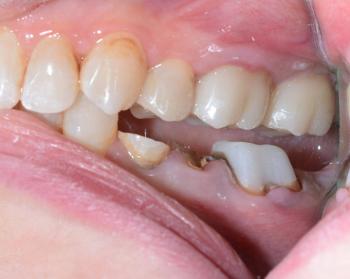
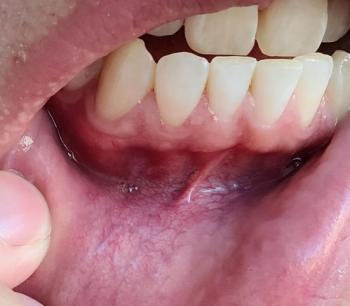
Patients with lower front gum inflammation may also experience tartar buildup, periodontal disease, gum abscesses, or tooth decay. Explore these related clinical case studies.