Dentures That Feel Natural, Look Beautiful.

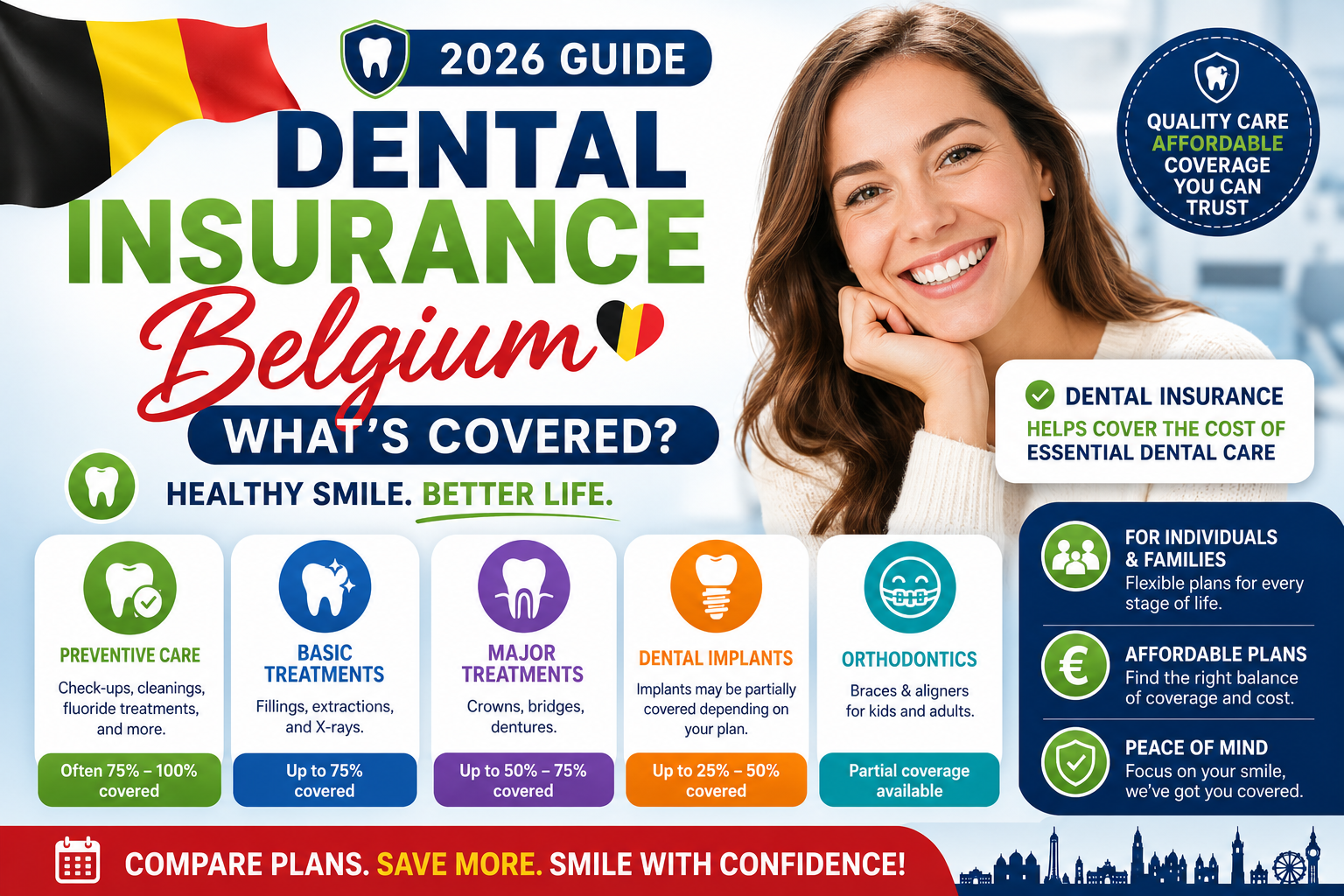
Dental Insurance Belgium - What’s Covered? (2026 Guide)
Language :
Understanding Dental Insurance in Belgium as an International Patient
Belgium is known for having one of the stronger healthcare systems in Europe, but many international patients are surprised when they discover that dental coverage works very differently compared to the United States.
As a dental expert working with international implant and restorative cases, I often speak with:
- Expats living in Belgium
- International workers
- Students
- Retirees
- Medical tourists comparing Belgium with other countries
One of the most common questions is:
“What exactly does Belgian dental insurance cover?”
The answer depends on several factors:
- Public vs private insurance
- Age
- Residency status
- Preventive vs restorative treatment
- Orthodontics
- Dental implants
- Supplemental coverage plans
This guide explains how dental insurance works in Belgium in 2026, including:
- Public health insurance reimbursement
- Mutualité / ziekenfonds systems
- Implant coverage realities
- Private dental insurance options
- Out-of-pocket costs
- Coverage limits
- Waiting periods
- What international patients should expect
How Dental Insurance Works in Belgium
Belgium operates a healthcare system built around:
- Mandatory public health insurance
- Mutual health funds
- Additional supplemental insurance
Residents are generally required to register with a health insurance fund known as:
- Mutualité (French-speaking)
- Ziekenfonds (Dutch-speaking)
These organizations work alongside the Belgian national healthcare system.
Unlike the USA, Belgium’s dental coverage is more structured around:
- Reimbursement systems
- Government-regulated fees
- Partial coverage models
Patients usually:
- Pay the dentist
- Submit reimbursement claims
- Receive partial repayment afterward
Basic Public Dental Coverage in Belgium
Belgian public healthcare provides partial dental reimbursement for many standard procedures.
Coverage is generally strongest for:
- Preventive care
- Basic restorative treatment
- Children and younger patients
Commonly Covered Dental Services
Public insurance may partially reimburse:
- Dental examinations
- Teeth cleaning
- Basic fillings
- Tooth extractions
- Emergency dental treatment
- X-rays
- Root canal treatment
- Certain dentures
Coverage percentages vary depending on:
- Patient age
- Treatment type
- Dentist participation
- Frequency limitations
Preventive Dentistry Coverage
Belgium strongly emphasizes preventive dental care.
Patients who attend regular checkups often receive:
- Better reimbursement rates
- Reduced future treatment costs
- Improved eligibility for some benefits
Regular preventive visits usually include:
- Oral examinations
- Scaling
- Basic hygiene care
- Diagnostic x-rays
Dental Coverage for Children in Belgium
Children and teenagers often receive the highest level of dental reimbursement.
In many cases:
- Basic preventive and restorative services for minors are heavily subsidized.
This may include:
- Checkups
- Sealants
- Fillings
- Orthodontic evaluations
Belgium prioritizes preventive care early in life to reduce long-term oral disease.
Does Belgian Public Insurance Cover Dental Implants?
This is one of the most misunderstood topics.
In most cases:
- Standard public dental insurance in Belgium provides limited or no routine implant coverage.
Dental implants are frequently considered:
- Advanced restorative treatment
- Partially elective
- Higher-cost rehabilitation
As a result, patients usually pay significant out-of-pocket costs for implants.
Situations Where Implant Coverage May Exist
Certain medically necessary situations may qualify for partial reimbursement.
Examples may include:
- Severe trauma
- Congenital conditions
- Tumor reconstruction
- Major jaw defects
- Serious functional impairment
Even then, approval usually requires:
- Extensive documentation
- Specialist evaluation
- Insurance review
Routine cosmetic or convenience implants are rarely fully covered under public insurance alone.
Average Implant Costs in Belgium
Dental implant pricing in Belgium varies depending on:
- Clinic location
- Surgeon expertise
- Implant system
- Laboratory quality
- Bone grafting needs
Approximate ranges:
- Single implant: €1,800–€3,500
- Implant crown included: €2,500–€4,500
- Full-mouth implants: €15,000–€40,000+
Compared to the United States, Belgium may still be somewhat less expensive, but implant treatment remains a major investment.
Private Dental Insurance in Belgium
Because public reimbursement is limited for advanced dentistry, many residents purchase supplemental private dental insurance.
Private plans may help cover:
- Major restorative care
- Orthodontics
- Implants
- Prosthetics
- Periodontal treatment
Several insurers offer dental add-on plans in Belgium.
What Private Dental Insurance Usually Covers
Supplemental dental plans may contribute toward:
- Crowns
- Bridges
- Dentures
- Orthodontics
- Implant treatment
- Gum therapy
However, reimbursement percentages vary widely.
Many plans still include:
- Annual limits
- Waiting periods
- Percentage caps
- Exclusions
Waiting Periods for Dental Insurance in Belgium
Just like in the USA, waiting periods are common.
Patients may need to wait:
- 6 months
- 12 months
- or longer
before major restorative treatment becomes eligible.
This especially applies to:
- Implants
- Orthodontics
- Prosthetic treatment
The Importance of Mutual Health Funds
Belgium’s mutual insurance organizations play a major role in reimbursement.
Popular organizations include:
- Christian Mutualities
- Socialist Mutualities
- Liberal Mutualities
- Independent Mutual Funds
Each fund may offer:
- Additional dental supplements
- Bonus reimbursements
- Expanded preventive coverage
Patients should compare benefits carefully.
How Dental Reimbursement Works in Belgium
Unlike many American PPO systems, Belgium often operates on reimbursement afterward.
Typical process:
- Patient receives treatment
- Patient pays dentist
- Insurance claim is submitted
- Reimbursement is issued later
This means patients still need:
- Upfront payment ability
- Savings
- Financing options
for larger procedures like implants.
Are All Dentists Covered Under Belgian Insurance?
Not always.
Some dentists follow official reimbursement agreements, while others may charge above standard fee schedules.
Patients should ask:
- Whether the dentist is conventioned
- What fees apply
- Expected reimbursement amounts
Private implant clinics sometimes charge significantly above reimbursed public fee levels.
Orthodontic Coverage in Belgium
Orthodontics may receive partial reimbursement, particularly for:
- Younger patients
- Medically necessary cases
Coverage often depends on:
- Age limits
- Severity classification
- Early application approval
Adult orthodontic coverage is generally more limited.
Dental Tourism and Belgium
Belgium attracts some international dental patients because of:
- Strong healthcare standards
- Experienced clinicians
- Multilingual providers
- Central European location
However, some Belgian residents also travel abroad for lower-cost implant treatment.
Popular destinations include:
- Hungary
- Turkey
- Spain
- Poland
Patients considering dental tourism should carefully evaluate:
- Follow-up care
- Implant warranties
- Material quality
- Revision access
- Sterilization standards
Comparing Belgium Dental Coverage to the USA
Belgian dental insurance differs significantly from American systems.
Belgium
Advantages:
- Structured public healthcare
- Lower preventive care costs
- Strong reimbursement framework
Limitations:
- Limited implant reimbursement
- Upfront payment often required
- Supplemental insurance frequently necessary
United States
Advantages:
- More provider flexibility
- Advanced cosmetic and implant access
- Broader financing systems
Limitations:
- Higher treatment costs
- Insurance annual maximums
- Complex coverage restrictions
Neither system is perfect. Each reflects different healthcare philosophies.
Common Misunderstandings About Belgian Dental Insurance
“Public insurance covers everything.”
False.
Advanced procedures often require substantial patient contribution.
“Implants are fully reimbursed.”
Rarely true except for specific medical indications.
“Private insurance removes all costs.”
Most supplemental plans still include:
- Caps
- Exclusions
- Waiting periods
“Cheapest treatment is always best.”
Implant success depends heavily on:
- Surgical skill
- Planning
- Materials
- Long-term maintenance
Low-cost shortcuts may become expensive later.
Financing Options for Dental Treatment in Belgium
Many clinics offer financing solutions for larger procedures.
Patients may use:
- Installment plans
- Healthcare financing
- Savings accounts
- Employer healthcare benefits
Some international patients also combine:
- Insurance reimbursement
- Cross-border financing
- Private savings
for full implant rehabilitation.
Choosing the Right Dentist Matters More Than Insurance Alone
As a dental expert, I always remind patients:
Insurance should support treatment — not determine quality.
The most important factors in implant success include:
- Clinical experience
- Diagnostic technology
- Sterilization standards
- Surgical planning
- Long-term maintenance
A poorly placed implant can lead to:
- Bone loss
- Infection
- Implant failure
- Expensive retreatment
Patients should prioritize long-term oral health over short-term savings.
Questions to Ask Before Starting Treatment in Belgium
Questions for Your Insurance Provider
- Are implants covered?
- What are the reimbursement percentages?
- Is there a waiting period?
- What annual limits apply?
- Are bone grafts included?
- Are preauthorizations required?
Questions for the Dentist
- What implant system do you use?
- Are treatment estimates written clearly?
- Are follow-up visits included?
- What happens if complications occur?
- Is financing available?
- Are laboratory fees separate?
The Future of Dental Insurance in Belgium
Belgium’s dental system continues evolving.
Future trends may include:
- Expanded implant reimbursement
- Digital insurance processing
- Improved preventive incentives
- Broader supplemental dental plans
- More senior-focused oral healthcare programs
As populations age, demand for implant treatment will likely continue increasing across Europe.
Final Thoughts from a U.S. Dental Expert Perspective
Belgium offers a respected healthcare environment with strong preventive dental foundations.
However, patients should understand that:
- Public insurance does not fully eliminate dental costs
- Implant treatment often requires supplemental insurance or personal payment
- Waiting periods and reimbursement limitations are common
The best approach is usually:
- Strong preventive care
- Supplemental dental coverage
- Strategic financial planning
- Choosing experienced providers
Most importantly, patients should remember:
Dental implants are not just cosmetic procedures.
They are long-term investments in oral function, nutrition, confidence, and quality of life.
Choosing quality treatment and experienced clinicians matters far more than simply finding the lowest upfront cost.
FAQ – Dental Insurance Belgium
Does Belgian public insurance cover dental implants?
In most routine cases, implant coverage is limited. Some medically necessary situations may qualify for partial reimbursement.
Is private dental insurance worth it in Belgium?
For patients needing implants, crowns, or orthodontics, supplemental dental insurance can help reduce out-of-pocket costs.
Are there waiting periods for implant coverage in Belgium?
Yes. Many supplemental dental plans include waiting periods for major restorative procedures.
Do patients pay upfront in Belgium?
Usually yes. Patients commonly pay the dentist first and receive reimbursement afterward.
Is dental treatment cheaper in Belgium than in the USA?
Generally yes for many procedures, although advanced implant treatment can still be expensive.
Related Topics
- Dental Implant Cost Belgium vs USA (2026 Guide)
- Best Countries in Europe for Dental Implants
- Dental Tourism in Belgium – Pros, Risks & Costs
Can tooth extraction cause infection? Mild inflammation is normal, but increasing swelling, fever, or severe pain may indicate infection. Learn more about post-extraction infection warning signs in this detailed guide.
Book a consultation with our Cebu dental specialists for proper evaluation and care.
Ready to get expert guidance?
If you’re experiencing severe pain or delayed healing, book a consultation with our Cebu dental specialists to get proper evaluation and care.
Consultation or contact page .
Book a Consultation
For severe discomfort or delayed healing, book a consultation with our Cebu dental specialists today.
Looking for a dentist? Browse our Cebu dental directory to find trusted clinics near you.
Medical Review and Clinical Basis
This article is based on clinical dental guidelines and real patient recovery patterns observed after tooth extraction procedures. The information reflects common post-extraction healing stages, including normal clot formation, gum tissue repair, and signs of possible complications such as dry socket or infection.
While mild discomfort is expected after a dental extraction, worsening pain after Day 3, bad odor, exposed bone, or spreading pain may require professional evaluation. These symptoms are consistent with known post-extraction complications described in standard dental practice.
About Cebu Dental Implants
Cebu Dental Implants provides comprehensive tooth extraction, surgical procedures, and dental implant services in the Philippines. Our team evaluates post-extraction healing, manages complications such as dry socket, and advises patients on proper aftercare to prevent infection and delayed healing.
If you experience severe pain or unusual symptoms after extraction, early professional assessment is recommended to prevent further complications.
Important Medical Disclaimer
This content is for educational purposes only and does not replace professional dental diagnosis. Every patient heals differently. If symptoms worsen or do not improve within a few days, consult a licensed dentist for proper evaluation and treatment.
Author
This article was prepared by the Cebu Dental Implants content team in consultation with licensed dental professionals experienced in tooth extraction and implant procedures.
Related Clinical Cases
Patients with lower front gum inflammation may also experience tartar buildup, periodontal disease, gum abscesses, or tooth decay. Explore these related clinical case studies.


Other topics:
Other Dental Clinic
 |
 |
 |
 |