Your Smile, Perfected with Precision.

Dental Implants in Iceland: Complete Cost, Treatment, Emergency Care & Patient Guide
image hero:
Country:
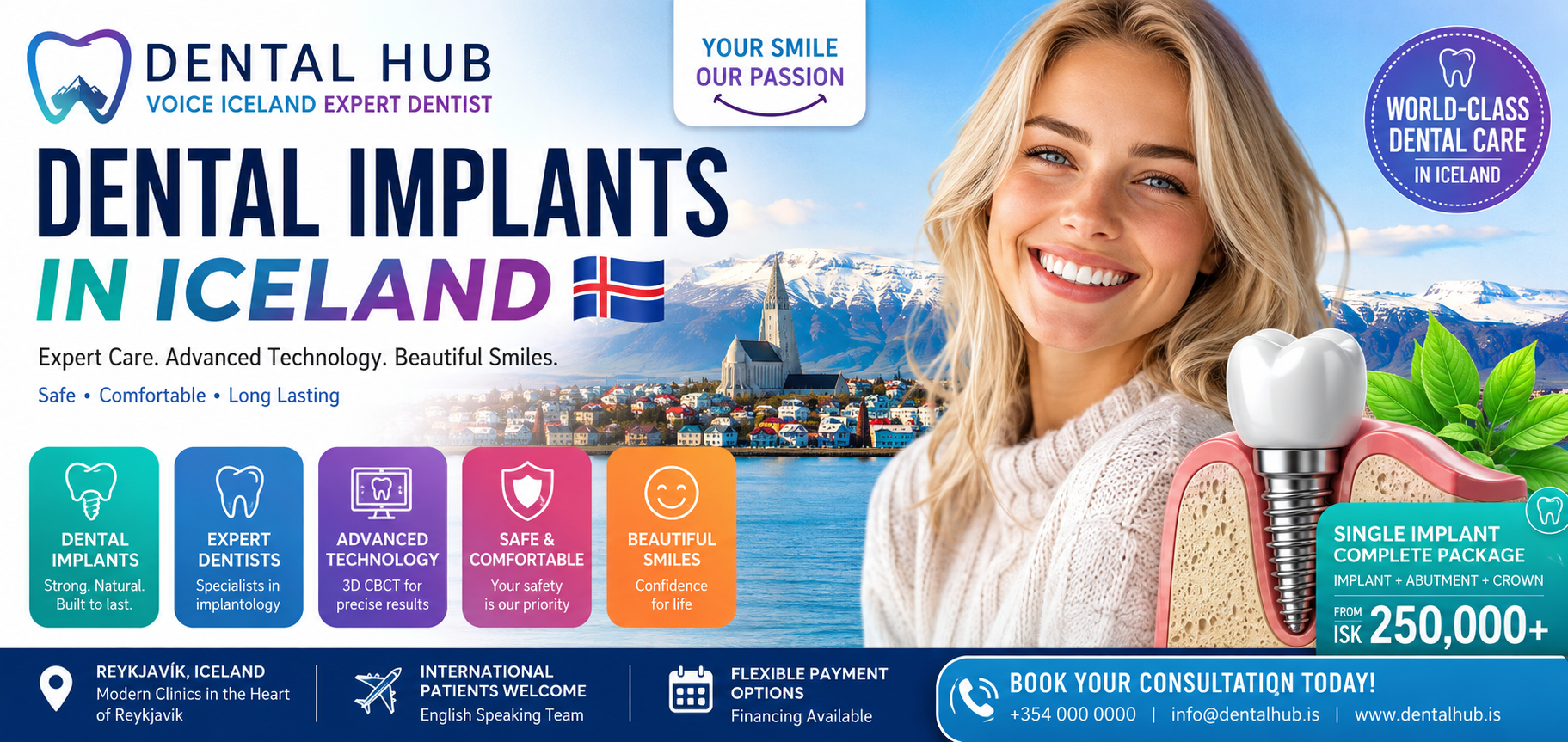
Dental implant treatment in Iceland combines advanced restorative dentistry with relatively high private-sector healthcare costs. For patients considering a single implant, multiple implants, implant-supported dentures, or complex bone reconstruction, the most important step is to understand the complete treatment pathway and total cost, rather than comparing only the advertised implant price.
This guide explains implant costs, emergency dental care, imaging, extraction, bone grafting, sinus lifts, insurance participation, financing, complications, and alternatives such as bridges and dentures.
Important: Prices below are planning estimates based on publicly available Icelandic dental fee information and current clinic price examples. The actual price depends on the clinic, dentist, implant system, laboratory, surgical complexity, and whether Iceland Health reimbursement applies.
1. Dental Care in Iceland: What Patients Should Know
Dental care in Iceland operates differently from many countries where adults have broad government dental coverage.
For many working-age adults, routine dental treatment is primarily paid privately. Iceland Health provides important exceptions and targeted reimbursement programs, including support for children, pensioners, people with significant disability, certain serious medical or dental conditions, accidents, and selected procedures.
Iceland Health currently defines pensioners for dental reimbursement purposes as people aged 67 and older and individuals with more than 75% disability. Eligible pensioners can receive substantial participation in general dental treatment, while specific rules apply to implants and fixed prostheses.
Therefore, patients should not assume that every implant is completely self-funded—or that every implant is reimbursed. Eligibility must be assessed according to the individual's circumstances and the specific treatment.
2. Average Dental Implant Cost in Iceland
A realistic planning figure for a single completed dental implant restoration is approximately:
ISK 250,000–450,000+ per tooth
This should be treated as a planning range, not a national fixed price.
A recent Icelandic clinic publicly lists a plant crown/crown on an implant at ISK 230,000, while an oral and maxillofacial surgery clinic lists placement of a first implant at approximately ISK 271,983. These figures illustrate why it is essential to determine whether an advertised price includes the surgical implant, abutment, crown, laboratory work, imaging, and other appointments.
A complete treatment can become considerably more expensive when the patient requires:
-
Tooth extraction
-
CBCT imaging
-
Bone grafting
-
Membrane procedures
-
Sinus augmentation
-
Temporary teeth
-
Specialist surgical treatment
-
Sedation
-
Complex crown design
-
Treatment of infection or periodontal disease
A practical budgeting example
For an uncomplicated single missing tooth:
Initial examination → imaging → implant placement → healing → abutment → crown
may produce a total somewhere around ISK 250,000–450,000+.
For a medically or surgically complex case, the total can exceed ISK 500,000.
3. Cost by Implant Type
The phrase "dental implant cost" can be misleading because different implant solutions require very different numbers of implants and prosthetic components.
| Implant treatment | Typical planning level |
|---|---|
| Single implant restoration | ISK 250,000–450,000+ |
| Multiple individual implants | ISK 500,000–1,000,000+ |
| Implant-supported partial denture | Highly variable |
| Implant-supported full denture | Several hundred thousand ISK and upward |
| Full-arch fixed implant restoration | Often ISK 1 million+ |
| Complex full-mouth reconstruction | Can reach several million ISK |
These are budgeting ranges rather than official Icelandic tariffs. Full-arch treatment is particularly difficult to price without diagnostic imaging and a prosthetic plan.
4. Implant + Abutment + Crown
A dental implant restoration normally has three principal components:
1. Implant fixture
This is the titanium implant placed into the jawbone.
2. Abutment
The abutment connects the implant to the visible restoration.
3. Crown
The crown replaces the visible portion of the missing tooth.
The patient should ask whether the quoted implant price includes all three components.
This is important because a quotation such as "implant from ISK X" may refer only to the surgical implant placement, rather than the finished tooth.
One Icelandic clinic currently lists a plant crown/crown on an implant at ISK 230,000, demonstrating that prosthetic costs can represent a major part of the final bill.
5. CT Scan / CBCT Cost
Three-dimensional imaging can be important for implant planning, particularly when evaluating:
-
Available bone volume
-
Inferior alveolar nerve position
-
Sinus anatomy
-
Previous bone loss
-
Implant angulation
-
Adjacent tooth roots
-
Surgical risks
Publicly available Icelandic specialist pricing currently shows CBCT imaging ranging from approximately ISK 11,840 to ISK 40,590, depending on the type and circumstances of the examination.
The final cost may therefore be approximately:
CBCT: ISK 12,000–40,000+
Patients should ask whether the imaging fee includes interpretation and whether a scan performed elsewhere can be used by the implant surgeon.
Iceland Health also has specific rules concerning payment participation for regional CT imaging, particularly when reimbursement eligibility applies.
6. Tooth Extraction Cost
Extraction may be required before implant placement.
A straightforward extraction is generally less expensive than surgical removal of a fractured, impacted, or deeply positioned tooth.
One Icelandic oral and maxillofacial surgery clinic currently lists:
-
Simple extraction: approximately ISK 19,970–48,620
-
Surgical removal of an erupted or bone-anchored tooth: approximately ISK 83,700–108,930
Another Icelandic dental provider lists a routine extraction at approximately ISK 41,420.
Planning range
Routine extraction: approximately ISK 20,000–50,000+
Complex surgical extraction: approximately ISK 80,000–130,000+
The patient's exact anatomy determines the final price.
7. Bone Graft Cost
Bone grafting may be required when there is insufficient bone for stable implant placement.
Common reasons include:
-
Long-standing tooth loss
-
Severe periodontal disease
-
Traumatic tooth extraction
-
Infection-related bone destruction
-
Thin facial bone
-
Previous failed implant
-
Severe jawbone resorption
A current Icelandic specialist price list gives a range of approximately ISK 140,000–290,000 for a separate bone-augmentation procedure, with an often-listed price around ISK 215,900.
Therefore, patients should budget approximately:
Bone graft: ISK 140,000–300,000+
A smaller graft performed simultaneously with implant placement may cost less than a major reconstructive procedure.
8. Sinus Lift Cost
A sinus lift may be necessary when an upper posterior implant site has inadequate vertical bone beneath the maxillary sinus.
The procedure may involve:
-
Elevating the sinus membrane
-
Adding bone-graft material
-
Allowing healing
-
Returning later for implant placement
The price varies considerably according to surgical technique and graft material.
Planning range
Sinus augmentation: approximately ISK 100,000–250,000+
Patients should request an itemized quotation that specifies:
-
Surgeon fee
-
Surgical materials
-
Bone-graft material
-
Membrane
-
Imaging
-
Sedation, if applicable
-
Follow-up appointments
9. Emergency Dental Care in Iceland
Dental emergencies should not be confused with routine implant consultations.
In Reykjavík, Tannlæknavaktin provides dental emergency services and handles urgent problems including dental trauma, severe toothache, dental infections, broken or displaced teeth, and other acute oral conditions. Its published information states that appointments are arranged by telephone and that urgent care is focused on the immediate problem, with further treatment often completed later.
Published opening information currently indicates:
-
Monday–Thursday: 08:00–22:00
-
Friday: 08:00–20:00
-
Weekends: 10:00–20:00
-
Telephone: +354 426 8000
After closing, the service directs patients to 112 for emergencies.
Emergency treatment may involve:
-
Examination
-
X-ray
-
Temporary restoration
-
Drainage
-
Pain management
-
Extraction
-
Stabilization of a traumatic tooth
-
Referral for specialist treatment
The emergency visit is usually only the beginning of treatment when a tooth ultimately requires an implant.
10. Dental Insurance and Iceland Health Coverage
This is one of the most important areas for patients to understand.
It is inaccurate to simply state that "Iceland has no dental coverage." Iceland Health does provide dental participation under defined circumstances.
Children
Iceland Health provides extensive participation in necessary general dental treatment for children under 18, subject to the applicable rules and agreements. Current regulations specify a patient payment of ISK 3,500 for examination and/or treatment during each 12-month period.
Pensioners and people with significant disability
Iceland Health identifies pensioners as people aged 67+ and people with more than 75% disability.
Eligible pensioners can receive 75% participation in general dental treatment, subject to the applicable rules.
Dental implants for eligible pensioners
For implants or fixed prostheses in a dentate jaw, Iceland Health currently states that up to ISK 146,677 may be granted in each 12-month period for qualifying treatment in the specified tooth positions.
For an edentulous jaw, Iceland Health may contribute 75% of the pensioner's cost for implant placement supporting dentures, subject to approval and specific limits. Current rules provide for the first two implants in the lower jaw and the first four implants in the upper jaw when the application is approved.
Important conclusion
Your eligibility depends on:
-
Age
-
Disability status
-
Medical circumstances
-
Dental diagnosis
-
Type of implant treatment
-
Location of the missing tooth
-
Whether prior approval is required
-
Current Iceland Health rules
Always ask the clinic to verify reimbursement before starting expensive treatment.
11. Financing Dental Implants in Iceland
Because implant treatment can require several hundred thousand Icelandic króna, financing can become an important part of treatment planning.
Financing arrangements are clinic-specific. Some practices may offer installment arrangements or work with financial providers, while others may require payment according to treatment stages.
Before agreeing to financing, ask:
-
What is the total cash price?
-
Is there an administration fee?
-
Is interest charged?
-
What is the monthly payment?
-
What happens if treatment takes longer than expected?
-
What happens if the implant fails?
-
Are additional surgeries included?
-
Does the financing cover the crown as well as the implant surgery?
Do not compare financing plans only by monthly payment. Compare the total amount repaid.
12. Dentist vs. Specialist Costs
A straightforward implant case may involve a general dentist, implant dentist, prosthodontic provider, or oral surgeon depending on the clinic's structure.
More complicated cases may require:
-
Oral and maxillofacial surgeon
-
Periodontist
-
Prosthodontist
-
General dentist
-
Dental technician
-
Radiology/imaging service
A specialist consultation can cost more than a routine dental examination.
For example, an Icelandic oral and maxillofacial surgery clinic currently lists a standard examination/consultation at approximately ISK 14,290, while its first examination for jaw surgery is listed at approximately ISK 49,510.
The price difference illustrates why patients should determine exactly what type of consultation they are receiving.
13. Potential Implant Complications
Dental implants have high long-term success rates, but no surgical procedure is risk-free.
Possible complications include:
Peri-implant disease
Inflammation around an implant can lead to progressive bone loss.
Risk factors include:
-
Poor oral hygiene
-
Previous periodontal disease
-
Smoking
-
Poorly controlled systemic conditions
-
Irregular maintenance
Failure of osseointegration
The implant may fail to integrate sufficiently with the surrounding bone.
In some cases, the implant must be removed and replaced after healing.
Infection
Infection may occur around the implant or surgical site and requires professional evaluation.
Nerve injury
Implants in the lower jaw must be carefully planned to avoid the inferior alveolar nerve.
Possible symptoms include numbness, tingling, altered sensation, or pain.
Sinus complications
Upper-jaw implants can interact with the maxillary sinus. Careful imaging and surgical planning are particularly important when bone height is limited.
Crown or abutment problems
Even when the implant itself remains stable, the prosthetic component can loosen, fracture, wear, or require replacement.
14. Implant vs. Bridge
A dental implant and traditional bridge solve the same basic problem—replacement of a missing tooth—but they do so differently.
| Feature | Dental Implant | Traditional Bridge |
|---|---|---|
| Jawbone support | Yes | No |
| Adjacent teeth prepared | Usually no | Usually yes |
| Surgery | Yes | Usually no |
| Treatment time | Longer | Usually faster |
| Initial cost | Higher | Usually lower |
| Bone preservation | Better | Does not replace tooth root |
| Maintenance | Requires implant hygiene | Requires bridge hygiene |
| Reversibility | Surgical treatment | Less invasive |
Which is better?
There is no universal answer.
An implant may be attractive when the adjacent teeth are healthy and adequate bone is available.
A bridge may be appropriate when:
-
Adjacent teeth already require crowns
-
Surgery is undesirable
-
Bone volume is inadequate
-
Treatment needs to be completed quickly
-
Financial limitations favor a shorter treatment
The decision should be based on the entire dental situation rather than implant marketing.
15. Implant vs. Dentures
For multiple missing teeth, patients may compare implants with removable dentures.
Implant-supported solution
Advantages:
-
Greater stability
-
Improved chewing function
-
Less movement
-
More natural feeling
-
Can improve retention of a denture
Disadvantages:
-
Higher cost
-
Surgery required
-
Bone availability matters
-
Maintenance is still necessary
Conventional removable dentures
Advantages:
-
Lower initial cost
-
No implant surgery
-
Can replace many teeth relatively quickly
Disadvantages:
-
Can move during chewing
-
May require adjustment
-
Can contribute to sore spots
-
Does not replace individual tooth roots
-
Jawbone continues to remodel after tooth loss
For some patients, the best compromise is an implant-supported removable denture, rather than either a conventional denture or a full fixed implant reconstruction.
16. Case Study: Single Front-Tooth Implant in Reykjavík
Illustrative case—not a report of a specific real patient
A 35-year-old adult living in Reykjavík loses an upper central incisor after a sports accident.
The neighboring teeth are healthy.
Stage 1: Emergency care
The patient receives urgent assessment and treatment of the traumatic injury.
If the tooth cannot be saved, extraction may be necessary.
Stage 2: Healing and diagnosis
After initial healing, the dentist evaluates:
-
Bone volume
-
Gum condition
-
Adjacent teeth
-
Smile aesthetics
-
CBCT findings
Suppose the patient has a localized bone defect.
Stage 3: Bone reconstruction
A bone-grafting procedure may be required before or during implant placement.
Stage 4: Implant placement
A titanium implant is surgically placed into the prepared bone.
Stage 5: Healing
The implant is allowed to integrate with the surrounding bone.
Stage 6: Abutment and crown
The restorative dentist and dental laboratory create the final crown.
Illustrative budget
A complex case could involve:
-
Emergency treatment
-
Extraction
-
CBCT
-
Bone graft
-
Implant placement
-
Abutment
-
Crown
-
Temporary restoration
-
Follow-up appointments
The final bill could therefore become substantially higher than the advertised price of the implant alone.
The key lesson is simple:
Do not ask only, "How much is an implant?" Ask, "How much will the complete treatment cost from diagnosis to final crown?"
17. Questions to Ask Your Icelandic Dentist
Before approving treatment, ask for a written treatment plan.
Clinical questions
-
Am I definitely a candidate for an implant?
-
Can my natural tooth still be saved?
-
Do I have sufficient bone?
-
Do I need a bone graft?
-
Do I need a sinus lift?
-
Will I need a temporary tooth?
-
How long will the complete treatment take?
-
Who will perform the surgery?
-
What implant brand and model will be used?
-
What happens if the implant fails?
Financial questions
-
What is the total treatment cost?
-
Does the price include the implant fixture?
-
Does it include the abutment?
-
Does it include the final crown?
-
Is CBCT included?
-
Is extraction included?
-
Is bone grafting included?
-
Are follow-up appointments included?
-
Are temporary restorations included?
-
Can you provide an itemized kostnaðaráætlun?
Insurance questions
-
Am I eligible for Iceland Health participation?
-
Does my specific implant treatment qualify?
-
Does the clinic handle the reimbursement?
-
Do I need prior approval?
-
What amount will I personally have to pay?
18. FAQ
How much does a dental implant cost in Iceland?
A practical planning range for a completed single implant restoration is approximately ISK 250,000–450,000+, although individual cases can be substantially cheaper or more expensive depending on what is included.
Is the implant price the same as the price of a new tooth?
No. The implant fixture, abutment and crown may be priced separately.
Is a CBCT scan necessary?
Not every case requires the same imaging, but three-dimensional imaging can be extremely useful for complex implant planning.
How much is a CBCT in Iceland?
Published specialist pricing currently shows approximately ISK 11,840–40,590, depending on the examination and circumstances.
How much does a tooth extraction cost?
Published Icelandic clinic prices show routine extraction around ISK 20,000–50,000+, with complex surgical extraction potentially exceeding ISK 80,000–130,000.
Does Iceland Health pay for dental implants?
Sometimes. Eligibility is highly specific. Pensioners and people with qualifying disability can receive dental participation, and certain implant treatments have specific reimbursement rules.
Does everyone over 67 receive implant coverage?
Not automatically for every implant. Iceland Health has specific rules concerning the location and type of implant treatment, annual limits, and previous treatment.
Can tourists receive dental treatment in Iceland?
Yes, dental clinics can provide private treatment, but visitors should not assume that ordinary private dental treatment will be covered by their European Health Insurance Card.
Iceland Health states that dental treatment abroad and reimbursement rules are governed separately, while ordinary dental services for adults should not be assumed to be covered through EHIC arrangements. Patients should verify coverage with their insurer before treatment.
What should I do if I have a severe dental emergency in Reykjavík?
Contact the local emergency dental service, Tannlæknavaktin, for urgent dental problems. Its published service information covers severe toothache, infections and dental trauma. For emergencies after its service hours, it directs patients to 112.
Do Icelandic dentists speak English?
English is widely used in Iceland, particularly in professional healthcare and dental settings. Patients can nevertheless ask the clinic whether English-language consultation and written treatment estimates are available before booking.
19. Iceland Dental Implant Cost Checklist
Before beginning treatment, make sure your quotation addresses:
-
Examination
-
Diagnostic X-rays
-
CBCT
-
Emergency treatment, if applicable
-
Tooth extraction
-
Bone graft
-
Sinus lift
-
Implant fixture
-
Abutment
-
Temporary restoration
-
Final crown
-
Dental laboratory fees
-
Specialist fees
-
Sedation
-
Follow-up visits
-
Potential complications
-
Iceland Health reimbursement
-
Financing
-
Total out-of-pocket cost
Final Clinical Perspective
From an Icelandic dental perspective, the most important principle is complete treatment planning.
A patient should not choose an implant clinic simply because its advertised implant price is the lowest. The clinically appropriate question is:
"What is the total cost of achieving a healthy, functional and maintainable tooth replacement?"
In Iceland, publicly available clinic pricing demonstrates substantial variation between surgical, restorative, imaging and laboratory components. Iceland Health also has targeted reimbursement programs rather than a universal adult dental subsidy.
For this reason, obtain a written kostnaðaráætlun, confirm exactly what is included, establish whether Iceland Health participation applies, and ask what additional costs could arise if bone grafting, sinus augmentation, specialist surgery or complications become necessary.
The cheapest implant quotation is not necessarily the cheapest treatment—and the most expensive implant system is not automatically the best treatment for every patient. Clinical diagnosis, surgical planning, restorative quality and long-term maintenance should drive the decision.
Related Clinical Cases
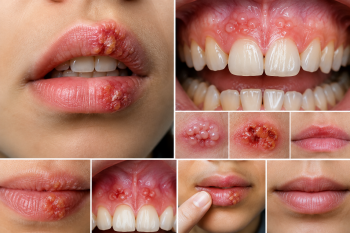
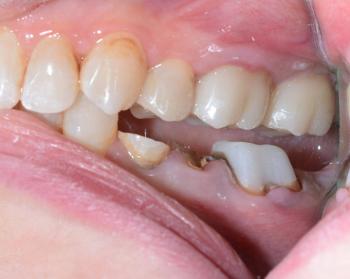
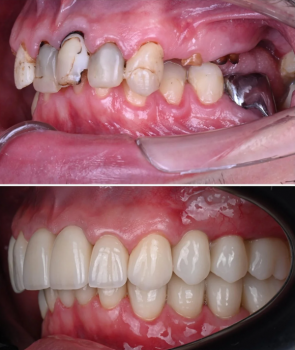
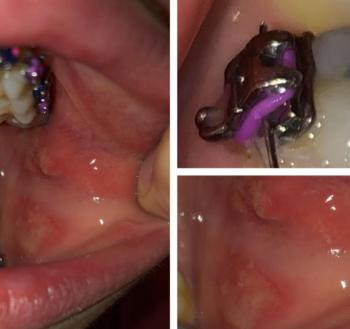
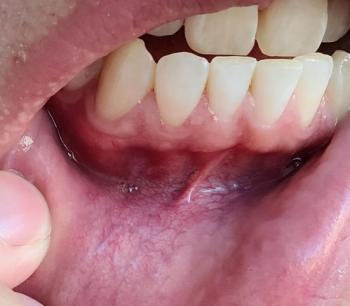
Patients with lower front gum inflammation may also experience tartar buildup, periodontal disease, gum abscesses, or tooth decay. Explore these related clinical case studies.


Other topics:
Other Dental Clinic