Your Smile, Perfected with Precision.

Dental Treatment Costs in Iceland: Complete Guide to Implants, Surgery, Insurance and Alternatives
Country:
Dental treatment in Iceland can be expensive, particularly when treatment involves implants, advanced imaging, bone reconstruction or specialist surgery. However, the financial picture is more nuanced than simply saying that all adult dentistry is privately funded.
Iceland Health provides dental participation for children, pensioners, people with certain disabilities, and qualifying cases involving congenital conditions, accidents and diseases. For pensioners, the current rules include substantial participation in general dental treatment and specific reimbursement arrangements for dentures and qualifying dental implants.
The purpose of this guide is to help patients understand the likely cost structure, what may be reimbursed, what additional procedures can add to the bill, and which questions should be answered before treatment begins.
Important: Iceland does not have one nationwide private dental price. The costs below are practical planning ranges, not official national averages or guaranteed quotations. Your dentist should provide a written treatment estimate before treatment.
1. Average Dental Treatment and Implant Cost in Iceland
The cost of dental treatment varies according to the clinic, dentist, laboratory, materials, complexity and whether Iceland Health participation applies.
For a straightforward single-tooth implant restoration, a reasonable planning range is approximately:
ISK 300,000–600,000+ per completed tooth
More complex cases can exceed this considerably.
A complete implant treatment can involve:
-
Examination
-
X-rays or CBCT
-
Tooth extraction
-
Bone preservation
-
Implant surgery
-
Healing period
-
Abutment
-
Crown
-
Laboratory work
-
Follow-up visits
A patient therefore should not compare clinics using only the advertised price of the implant fixture.
Full-arch treatment
Treatments such as All-on-4 or other full-arch implant-supported restorations can reach well above ISK 1 million per arch, with the final price depending heavily on the number of implants, temporary prosthesis, definitive prosthesis, laboratory work and surgical requirements.
A full-mouth reconstruction can reach several million ISK.
2. Cost by Implant Type
The implant system is only one part of the final treatment price.
Standard titanium implant
Titanium remains the most commonly used implant material.
Planning range for implant-related surgical components: approximately ISK 180,000–350,000+
Premium implant systems
Well-established international systems can have higher component and laboratory costs.
Examples include systems manufactured by companies such as Straumann and Nobel Biocare.
A higher-priced implant system is not automatically better for every patient. The appropriate system depends on the surgeon's experience, bone anatomy, prosthetic plan and long-term maintenance strategy.
Zirconia implants
Ceramic zirconia implants are an alternative for selected patients.
They can be more expensive because of:
-
Specialized components
-
Limited system availability
-
Surgical requirements
-
Prosthetic considerations
-
Laboratory costs
The final price should be evaluated as a complete restoration, not simply as the price of the implant fixture.
3. Implant + Abutment + Crown
A single implant restoration normally consists of three principal parts.
Implant fixture
The implant is inserted into the jawbone and functions as the artificial tooth root.
Abutment
The abutment connects the implant to the crown.
Crown
The crown provides the visible tooth and restores chewing function.
A practical planning breakdown can look approximately like this:
| Component | Indicative planning range |
|---|---|
| Implant fixture/surgical component | ISK 180,000–350,000+ |
| Abutment | ISK 40,000–100,000+ |
| Crown | ISK 90,000–180,000+ |
| Complete restoration | ISK 300,000–600,000+ |
These figures are not an official Icelandic tariff.
Published Icelandic clinic prices demonstrate why patients need to ask exactly what a quotation includes. For example, one Icelandic clinic currently lists an implant crown/crown on an implant at ISK 230,000.
Always ask:
"Does your quoted implant price include the fixture, surgery, abutment, crown and dental laboratory?"
4. CT Scan / CBCT Cost
Three-dimensional CBCT imaging can be extremely useful for implant planning.
It can show:
-
Bone height
-
Bone width
-
Nerve position
-
Sinus anatomy
-
Adjacent roots
-
Previous bone loss
-
Surgical landmarks
However, CBCT is not automatically mandatory for every dental implant case. The dentist or surgeon determines whether three-dimensional imaging is clinically justified.
Iceland Health publishes a separate fee schedule for imaging examinations, with the current imaging schedule listed as valid from 1 March 2026.
Planning range
A patient may encounter approximately:
ISK 15,000–40,000+
depending on the imaging provider and examination.
For complex cases, ask whether the quoted price includes:
-
Scan
-
Radiological interpretation
-
Surgical planning
-
Digital implant planning
5. Tooth Extraction Cost
An extraction may be necessary before implant placement.
Simple extraction
Approximately:
ISK 20,000–40,000+
Surgical or complex extraction
Approximately:
ISK 40,000–80,000+
Complexity increases with:
-
Fractured roots
-
Curved roots
-
Impacted teeth
-
Bone coverage
-
Infection
-
Previous root-canal treatment
-
Difficult access
For pensioners, tooth extraction is included within the general dental services for which Iceland Health provides 75% participation, subject to the applicable agreement and limitations.
6. Bone Graft Cost
Bone resorption can occur after tooth loss and is particularly important when an implant has to be placed in an area with inadequate bone.
Potential procedures include:
Socket preservation
Approximately:
ISK 50,000–120,000+
Minor ridge augmentation
Approximately:
ISK 80,000–180,000+
Major bone reconstruction
Approximately:
ISK 150,000–350,000+
The actual price depends on:
-
Amount of bone required
-
Graft material
-
Membrane
-
Surgical technique
-
Number of teeth
-
Specialist involvement
A dentist should explain whether grafting is genuinely necessary and whether it can be performed at the same time as implant placement.
7. Sinus Lift Cost
The posterior upper jaw can present a special challenge because the maxillary sinus may occupy much of the available bone.
A sinus lift may be considered when there is insufficient bone height.
Minor/internal sinus elevation
Approximately:
ISK 60,000–130,000+
Lateral-window sinus augmentation
Approximately:
ISK 150,000–350,000+
The quotation should specify whether it includes:
-
Surgeon
-
Bone-graft material
-
Membrane
-
CBCT
-
Medication
-
Follow-up
Not every upper-jaw implant requires a sinus lift. Three-dimensional diagnosis determines whether augmentation is necessary.
8. Insurance Coverage in Iceland
Children
Iceland Health currently pays 100% of dental costs for children up to age 18, within the applicable dental agreement and limitations. A family dentist arrangement and an annual fee of ISK 3,500 apply under the current rules.
Working-age adults
There is not a general 75% dental subsidy for ordinary working-age adults.
This is different from saying that absolutely no adult dental treatment can ever receive Iceland Health participation. Specific circumstances can qualify, including certain accidents, diseases, congenital conditions and other defined situations.
Pensioners
Iceland Health defines pensioners for dental purposes as:
-
People aged 67 or older
-
People with more than 75% disability
Qualifying pensioners receive 75% participation in general dental repairs, subject to the applicable rules. General dentistry includes examinations, diagnosis, X-rays, regular treatment, root canals, periodontal treatment and tooth extraction.
9. Dental Implant Coverage for Pensioners
This area requires particular attention.
Implant or fixed prosthesis in a dentate jaw
A dentate jaw means that one or more natural teeth remain.
For qualifying pensioners, Iceland Health may grant up to:
ISK 146,677 per 12-month period
for qualifying dental implants or other fixed dental prostheses in specified positions in front of the 12-year molars. The period is calculated according to the treatment date.
This is not the same as paying 75% of the entire implant.
Implant-supported dentures in an edentulous jaw
An edentulous jaw has no natural teeth.
Iceland Health states that it can pay 75% of the pensioner's cost of inserting dental implants to support dentures, subject to approval.
If approved, participation applies to:
-
First 2 implants in the lower jaw
-
First 4 implants in the upper jaw
The dentist must submit the application and receive approval before treatment begins.
Why this distinction matters
A pensioner with one missing tooth and otherwise natural teeth may receive a very different reimbursement from a pensioner who has no teeth and needs implants to stabilize a denture.
10. Financing Dental Treatment
Because implant treatment can cost hundreds of thousands of Icelandic króna, financing may be important.
Possible arrangements include:
Clinic payment plans
Some clinics may divide payments between:
-
Examination
-
Surgery
-
Healing
-
Abutment
-
Crown
External financing
Patients may also investigate consumer financing or credit arrangements available through the clinic or financial institutions.
Before signing a financing agreement, ask:
-
Total amount financed
-
Interest rate
-
Administration fees
-
Monthly payment
-
Total repayment
-
Early repayment conditions
-
What happens if treatment is delayed
-
Whether additional surgery is included
The monthly payment is less important than the total amount eventually paid.
11. Dentist and Specialist Costs
Dental treatment may involve several levels of expertise.
General dentist
Usually handles:
-
Examination
-
Diagnosis
-
Preventive dentistry
-
Routine fillings
-
Periodontal treatment
-
Simple extraction
-
Some implant restoration
Implant-focused dentist
May coordinate:
-
Implant planning
-
Implant surgery
-
Prosthetic restoration
-
Long-term implant maintenance
Oral and maxillofacial surgeon
May be involved in:
-
Difficult extractions
-
Major bone grafting
-
Sinus surgery
-
Complex implant placement
-
Jaw surgery
-
Nerve-related surgical cases
Periodontal specialist
May be particularly useful when there is:
-
Advanced gum disease
-
Gum recession
-
Bone loss
-
Soft-tissue deficiency
-
Peri-implant disease
Specialist fees are generally higher than routine dental examination fees because of the additional expertise, surgical complexity and equipment involved.
12. Potential Dental Implant Complications
Dental implants have high success rates, but they are not risk-free.
Peri-implantitis
Inflammation and bone loss around an implant can threaten long-term stability.
Risk factors include:
-
Poor oral hygiene
-
Previous periodontal disease
-
Smoking
-
Inadequate maintenance
-
Certain systemic health factors
Failure of osseointegration
The implant may fail to integrate sufficiently with bone.
If this happens, the implant may need to be removed and replaced after appropriate healing.
Nerve injury
Lower-jaw implants require careful planning around the inferior alveolar nerve.
Possible symptoms include:
-
Numbness
-
Tingling
-
Altered sensation
-
Pain
Sinus complications
Upper-jaw implant surgery can affect the maxillary sinus, particularly when bone height is limited.
Mechanical complications
The crown or abutment may:
-
Loosen
-
Fracture
-
Wear
-
Chip
These problems can occur even when the implant itself remains successfully integrated.
13. Implant vs. Bridge
| Feature | Dental Implant | Traditional Bridge |
|---|---|---|
| Surgery | Usually required | Usually not |
| Adjacent teeth | Usually preserved | Usually prepared |
| Bone stimulation | Yes | No |
| Treatment time | Usually longer | Usually shorter |
| Initial cost | Higher | Usually lower |
| Cleaning | Implant-specific care | Cleaning beneath bridge required |
| Long-term maintenance | Required | Required |
| Bone loss at missing tooth | Implant helps maintain function of the area | Does not replace the tooth root |
Implant advantages
An implant can be particularly attractive when:
-
Adjacent teeth are healthy
-
The patient wants a fixed replacement
-
Bone is adequate
-
Surgery is acceptable
Bridge advantages
A bridge may be attractive when:
-
Adjacent teeth already require crowns
-
Surgery is undesirable
-
Treatment needs to be completed relatively quickly
-
Implant placement is not clinically suitable
14. Implant vs. Dentures
Dental implants
Advantages:
-
Fixed restoration possible
-
Strong chewing stability
-
No need to grind down adjacent healthy teeth for a single implant
-
Can provide excellent retention for dentures
-
Helps maintain a functional replacement for the missing root
Disadvantages:
-
Higher initial cost
-
Surgery
-
Healing time
-
Possible grafting
-
Long-term maintenance
Removable dentures
Advantages:
-
Lower initial treatment complexity
-
No implant surgery
-
Can replace many teeth
-
Substantial Iceland Health participation may apply for qualifying pensioners
Disadvantages:
-
Can move
-
May cause sore areas
-
Requires regular cleaning
-
Does not replace individual tooth roots
-
Jawbone continues to remodel after tooth loss
For some patients, implant-supported dentures provide a useful compromise between conventional dentures and a completely fixed implant restoration.
15. Questions to Ask Your Dentist
Before beginning expensive treatment, ask:
-
Can my natural tooth still be saved?
-
Why is an implant recommended?
-
Do I need a CBCT scan?
-
How much bone do I have?
-
Do I need a bone graft?
-
Do I need a sinus lift?
-
Which implant system will you use?
-
Who will perform the surgery?
-
Is the surgeon a specialist?
-
Does the quotation include the implant fixture?
-
Does it include the abutment?
-
Does it include the crown?
-
Are laboratory fees included?
-
Are CBCT and X-rays included?
-
What happens if the implant fails?
-
What is the expected treatment timeline?
-
What are the long-term maintenance costs?
-
What portion qualifies for Iceland Health participation?
-
Do I need prior approval?
-
Can you provide a written kostnaðaráætlun before treatment?
Iceland Health specifically states that dentists have a duty to inform patients of treatment costs before treatment begins and can check the applicable Iceland Health participation before treatment.
16. Case Study: Single-Molar Implant in Reykjavík
Illustrative case for educational purposes
A 49-year-old Reykjavík resident loses a lower first molar following a fractured root.
The neighboring teeth are healthy.
Stage 1 — Examination
The dentist evaluates:
-
Gum health
-
Bite
-
Adjacent teeth
-
Bone volume
-
Medical history
Stage 2 — Imaging
A CBCT scan is recommended because the dentist needs three-dimensional information about the available bone and nearby anatomical structures.
Stage 3 — Extraction
The remaining root fragments are removed.
If the extraction leaves a significant bone defect, socket preservation may be recommended.
Stage 4 — Implant placement
After the site is prepared, a titanium implant is placed.
Stage 5 — Healing
The implant is allowed to integrate with the surrounding bone.
Stage 6 — Restoration
An abutment is connected and a custom crown is fabricated.
Illustrative cost
| Treatment stage | Example planning cost |
|---|---|
| Examination and diagnostics | ISK 15,000–40,000 |
| CBCT | ISK 15,000–40,000 |
| Extraction | ISK 25,000–60,000 |
| Minor grafting | ISK 60,000–120,000 |
| Implant surgery | ISK 180,000–300,000+ |
| Abutment and crown | ISK 130,000–250,000+ |
| Potential total | ISK 425,000–810,000+ |
This is an illustrative planning model, not a quotation from a specific Icelandic clinic.
For a working-age adult, ordinary treatment would generally be privately funded unless a special Iceland Health eligibility category applies.
17. Dental Treatment Abroad
Some Icelandic patients consider treatment abroad because dental prices can be lower in certain countries.
Iceland Health confirms that qualifying dental treatment in the EEA, United Kingdom and Switzerland can receive participation under Icelandic rules. However, the reimbursement is calculated according to Icelandic legislation, agreements and fee schedules—not simply according to the foreign clinic's invoice. Travel expenses are not reimbursed.
Some procedures require prior approval, including:
-
Dental implants in an edentulous jaw
-
Regional CT imaging of the jawbone
Iceland Health says applications requiring prior approval should be approved before treatment begins.
Therefore, patients should never assume:
"The foreign treatment costs 50% less, so I will automatically save 50%."
Travel, accommodation, follow-up treatment and complications can change the economics significantly.
18. Frequently Asked Questions
How much does a dental implant cost in Iceland?
A practical planning range for a complete single-tooth implant restoration is approximately ISK 300,000–600,000+, although actual prices can fall outside this range.
Is ISK 250,000 a realistic implant price?
It can be possible for particular components or treatment packages, but patients must determine whether the price includes the implant, surgery, abutment, crown and laboratory work.
Is CBCT mandatory for every implant?
No. CBCT is a diagnostic tool whose use should be based on the clinical situation and the information required for safe treatment planning.
Does Iceland Health cover dental implants?
It depends on the patient's circumstances and the type of implant treatment.
For pensioners with natural teeth remaining, qualifying fixed implants can receive a grant of up to ISK 146,677 per 12-month period in specified positions.
For qualifying pensioners with an edentulous jaw who need implants to support dentures, Iceland Health can pay 75% of the cost of specified implants after approval.
Do working-age adults receive 75% dental coverage?
No. The 75% general dental participation described by Iceland Health applies to qualifying pensioners, not ordinary working-age adults. Specific adult conditions can nevertheless qualify for Iceland Health participation.
Are dentures covered for pensioners?
Yes. Iceland Health states that it pays 75% of dentist and dental-technician costs for qualifying pensioners' full dentures, implant dentures or partial dentures every six years, with relining participation every three years.
Can an implant last a lifetime?
An implant can remain functional for many years, but "lifetime" should not be treated as a guarantee. The implant, crown, gums and supporting bone all require maintenance.
Is an implant better than a bridge?
Not automatically. The correct choice depends on the condition of the neighboring teeth, bone availability, medical factors, treatment timeline and financial considerations.
Is an implant better than a denture?
For a single missing tooth, an implant can provide a fixed replacement without preparing neighboring healthy teeth. For extensive tooth loss, however, a denture or implant-supported denture may be more practical.
How long does implant treatment take?
A straightforward case may take several months. Extraction, grafting, sinus augmentation or delayed healing can extend treatment to six months or longer.
Can I finance dental implants?
Financing arrangements vary by clinic and provider. Ask for the total financed amount, interest and all fees rather than focusing only on the monthly payment.
19. Final Iceland Dental Expert Perspective
The most important mistake patients make is comparing implant prices rather than complete treatment plans.
An implant quotation should be evaluated from diagnosis through final restoration:
Examination → imaging → extraction if required → bone preparation → implant placement → healing → abutment → crown → maintenance
The second major issue is Iceland Health eligibility.
Pensioners have meaningful dental benefits, but the reimbursement depends on the category of treatment. General dental treatment can receive 75% participation, while fixed implants in a dentate jaw have a separate grant structure. Implant-supported dentures in an edentulous jaw have another reimbursement pathway requiring prior approval.
Iceland Health's current fee schedules also change over time; the official site lists dental treatment tariffs effective from 1 January 2026, so patients should verify current amounts before making a major financial decision.
The best approach for an Iceland dental patient is:
1. Get the diagnosis.
2. Ask whether the natural tooth can be saved.
3. Compare implant, bridge and denture options.
4. Obtain a written kostnaðaráætlun.
5. Ask the dentist to calculate Iceland Health participation.
6. Confirm whether prior approval is required.
7. Understand every additional surgical cost before signing the treatment plan.
A good dental decision is not simply the cheapest option. It is the treatment that provides the best balance of clinical safety, function, longevity, maintenance and total cost for the individual patient.
Related Clinical Cases
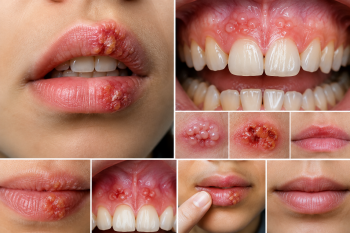
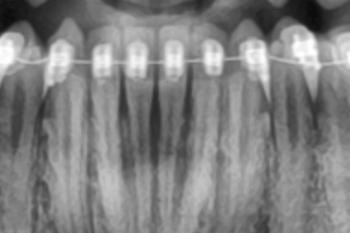
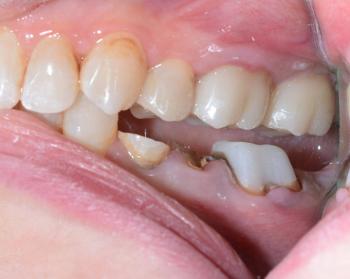
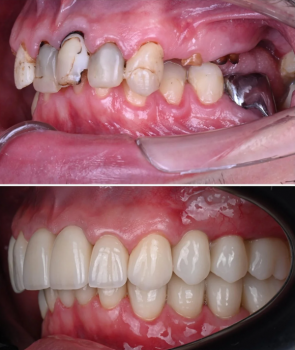
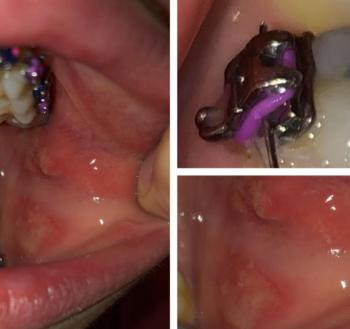
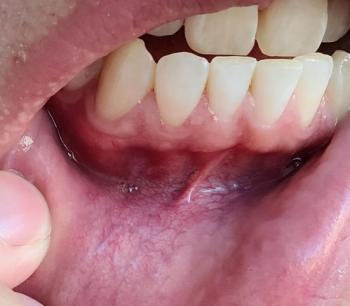
Patients with lower front gum inflammation may also experience tartar buildup, periodontal disease, gum abscesses, or tooth decay. Explore these related clinical case studies.


Other topics:
Other Dental Clinic