We Bring Back the Sparkle in Your Smile.

Severe Gum Swelling Near Back Teeth: Causes, Treatment, Recovery Process, and Risks of Neglecting It for 3 Months
Image:
Severity:
Teeth Problems:
1. Understanding the Dental Condition
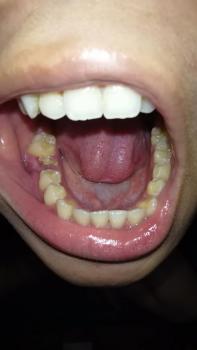
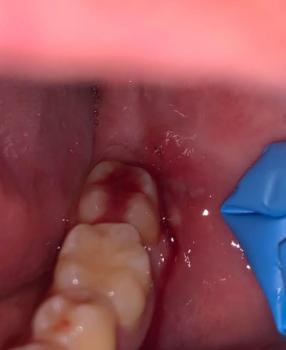
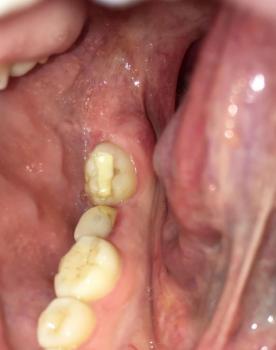
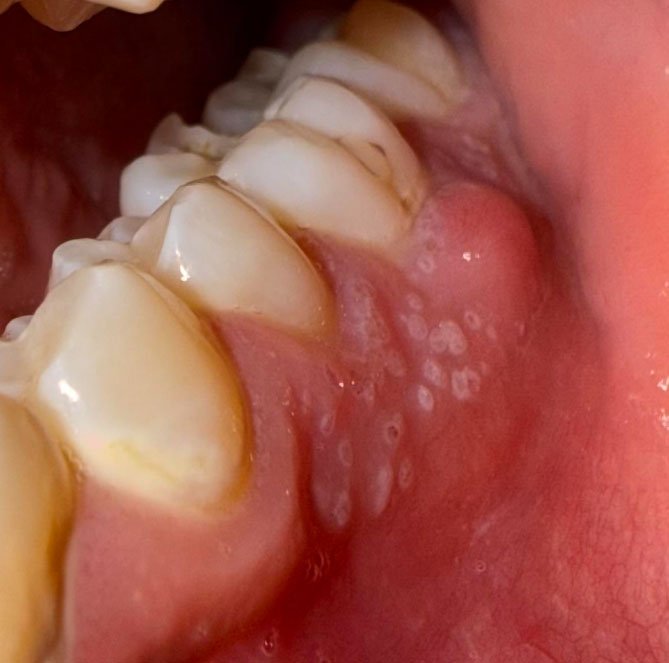
The clinical photograph shows an unusual enlargement of the soft tissue beside the back teeth. The affected gum area appears red, swollen, and raised, with several small white spots across its surface.
These visible changes may indicate an inflammatory process or an abnormal oral tissue lesion.
Possible causes include:
-
Periodontal infection: Bacterial accumulation around the teeth can cause gum inflammation, swelling, bleeding, and periodontal pocket formation.
-
Dental abscess: An infection originating from a tooth or surrounding periodontal tissue may produce localized swelling and pus.
-
Traumatic irritation: Repeated biting, sharp tooth edges, or irritation from food can damage the soft tissue.
-
Oral ulceration: Inflammation or injury can produce white or yellowish areas surrounded by red tissue.
-
Oral mucosal disease: Certain inflammatory conditions can produce multiple white patches and changes in the appearance of the oral lining.
A visual photograph cannot establish the exact diagnosis. A dentist must examine the area and determine its underlying cause.
2. What Happens If This Condition Is Neglected for Three Months or Longer?
Ignoring persistent gum swelling can lead to more complicated dental problems. The consequences depend on the underlying condition.
First Month: Persistent Inflammation
If the swelling is caused by infection or irritation, symptoms may continue or become worse.
Possible developments include:
-
Increasing gum redness and swelling.
-
Bleeding during brushing.
-
Pain when chewing.
-
Bad breath or an unpleasant taste.
-
Increased sensitivity around the affected teeth.
Second Month: Possible Tissue and Tooth Damage
If an untreated periodontal infection is present, bacteria may continue damaging the supporting structures around the teeth.
Possible complications include:
-
Development or enlargement of periodontal pockets.
-
Gum recession.
-
Loss of supporting bone around affected teeth.
-
Increased tooth mobility.
-
Recurrent gum swelling or drainage.
An untreated dental abscess may also spread into surrounding tissues.
Third Month and Beyond: More Complicated Treatment
If the underlying condition remains untreated, the patient may experience:
-
Persistent or recurring infection.
-
Significant periodontal tissue destruction.
-
Progressive bone loss.
-
Increased risk of losing an affected tooth.
-
More extensive dental treatment requirements.
Importantly, not every gum lesion progresses in this way. Some conditions are noninfectious, while others require prompt investigation for different reasons.
A white or red oral lesion that does not heal within two weeks should be professionally examined. Waiting three months is not recommended because some serious oral diseases can initially resemble harmless inflammation.
3. Professional Dental Consultation: Step-by-Step Process
The first priority is identifying the exact cause of the swelling before beginning treatment.
Step 1: Complete Oral Examination
The dentist examines:
-
The swollen gum tissue.
-
The white spots and surrounding oral lining.
-
The condition of the neighboring teeth.
-
Signs of bleeding, pus, ulceration, or tissue damage.
-
The presence of plaque and tartar.
The dentist will also ask when the swelling started, whether it is painful, and whether it has increased in size.
Step 2: Dental X-Ray Examination
Depending on the clinical findings, dental radiographs may be necessary.
An X-ray can help identify:
-
Infection around tooth roots.
-
Bone loss caused by periodontal disease.
-
Deep dental decay.
-
Changes around the roots of neighboring teeth.
-
Possible dental abscesses.
A photograph alone cannot show whether the underlying jawbone has been affected.
Step 3: Periodontal Assessment
The dentist may measure the spaces between the gums and teeth using a periodontal probe.
This helps identify:
-
Periodontal pocket depth.
-
Gum attachment loss.
-
Bleeding during examination.
-
Tooth mobility.
-
Areas requiring professional cleaning or periodontal treatment.
Step 4: Additional Tissue Examination if Necessary
If the white or red tissue changes are unusual, persistent, or unexplained, referral to an oral medicine specialist or oral and maxillofacial surgeon may be necessary.
A biopsy may be recommended to identify the nature of the lesion and exclude serious conditions.
4. Treatment and Recovery Process
Treatment depends entirely on the confirmed diagnosis.
Treatment A: If It Is Periodontal Infection
Possible professional treatment includes:
-
Professional removal of plaque and hardened tartar.
-
Scaling and root planing when indicated.
-
Cleaning of infected periodontal pockets.
-
Oral hygiene instruction.
-
Periodontal reassessment after initial treatment.
-
Periodontal surgery if advanced disease requires it.
The objective is to control bacterial infection and preserve the supporting structures around the teeth.
Treatment B: If It Is a Dental Abscess
The dentist must identify the source of infection.
Possible treatments include:
-
Drainage of an abscess when indicated.
-
Root canal treatment if the tooth can be preserved.
-
Extraction if the tooth cannot be predictably restored.
-
Antibiotics when there are appropriate clinical indications, particularly if infection is spreading or systemic symptoms are present.
Antibiotics alone do not eliminate the source of most dental infections. Definitive dental treatment is essential.
Treatment C: If It Is an Oral Tissue Lesion
If the swelling and white spots are related to an inflammatory or mucosal condition, treatment may involve:
-
Removing an identifiable source of irritation.
-
Appropriate medication based on the diagnosis.
-
Specialist evaluation.
-
Biopsy when indicated.
-
Follow-up examinations to monitor healing.
Treatment should not begin with unprescribed antibiotics or steroid medication without identifying the cause.
5. Expected Recovery Timeline
The recovery period varies depending on the diagnosis and severity.
| Recovery stage | What may happen |
|---|---|
| Initial consultation | Diagnosis and treatment planning |
| First few days | Treatment of the identified source of irritation or infection |
| 1–2 weeks | Initial reassessment of symptoms and tissue healing |
| 3–6 weeks | Further evaluation of gum response and periodontal healing |
| 2–3 months | Longer-term periodontal reassessment when necessary |
These are general follow-up intervals, not guaranteed healing times. A suspicious oral lesion may require earlier specialist review rather than waiting for routine follow-up.
6. How Can the Patient Protect the Teeth During Recovery?
Good oral hygiene is essential, but aggressive brushing can further irritate inflamed tissue.
Recommended precautions:
-
Brush twice daily using a soft-bristled toothbrush.
-
Clean between the teeth gently.
-
Avoid smoking and tobacco products.
-
Reduce sugary foods and drinks.
-
Avoid very hard or irritating foods if chewing is painful.
-
Maintain adequate water intake.
-
Attend all scheduled dental appointments.
-
Avoid squeezing, scraping, or puncturing the swollen area.
Do not apply household chemicals, concentrated salt solutions, or unprescribed medication directly to the lesion.
7. Warning Signs That Require Urgent Attention
Seek urgent dental or medical care if any of the following occur:
-
Rapidly increasing facial or gum swelling.
-
Fever accompanied by dental swelling.
-
Pus or a persistent unpleasant taste.
-
Severe or worsening pain.
-
Difficulty opening the mouth.
-
Swelling extending toward the face or neck.
-
Difficulty swallowing or breathing.
Difficulty breathing or swallowing requires emergency medical attention.
8. Final Dental Assessment: Early Diagnosis Can Prevent Complications
This case demonstrates why unusual gum swelling and white tissue changes should never be ignored.
Although some oral lesions are caused by relatively minor irritation, others may indicate periodontal infection, dental abscesses, or more serious oral diseases.
The correct recovery process begins with a complete clinical examination, appropriate imaging, and additional tissue investigation when necessary.
The goal is not simply to make the swelling disappear. It is to identify the underlying condition, eliminate its cause, protect the surrounding teeth and bone, and restore healthy oral tissues.
Dental Recommendation: Do not wait three months to seek treatment. Arrange a dental examination promptly, especially if the swelling is persistent, growing, bleeding, painful, or associated with white and red tissue changes.
Related Clinical Cases
Patients with lower front gum inflammation may also experience tartar buildup, periodontal disease, gum abscesses, or tooth decay. Explore these related clinical case studies.