Building Confidence One Smile at a Time.

Bone Loss from Gum Disease: A Japanese Dentist’s Clinical Review, Case Analysis, and Practical Advice
image hero:
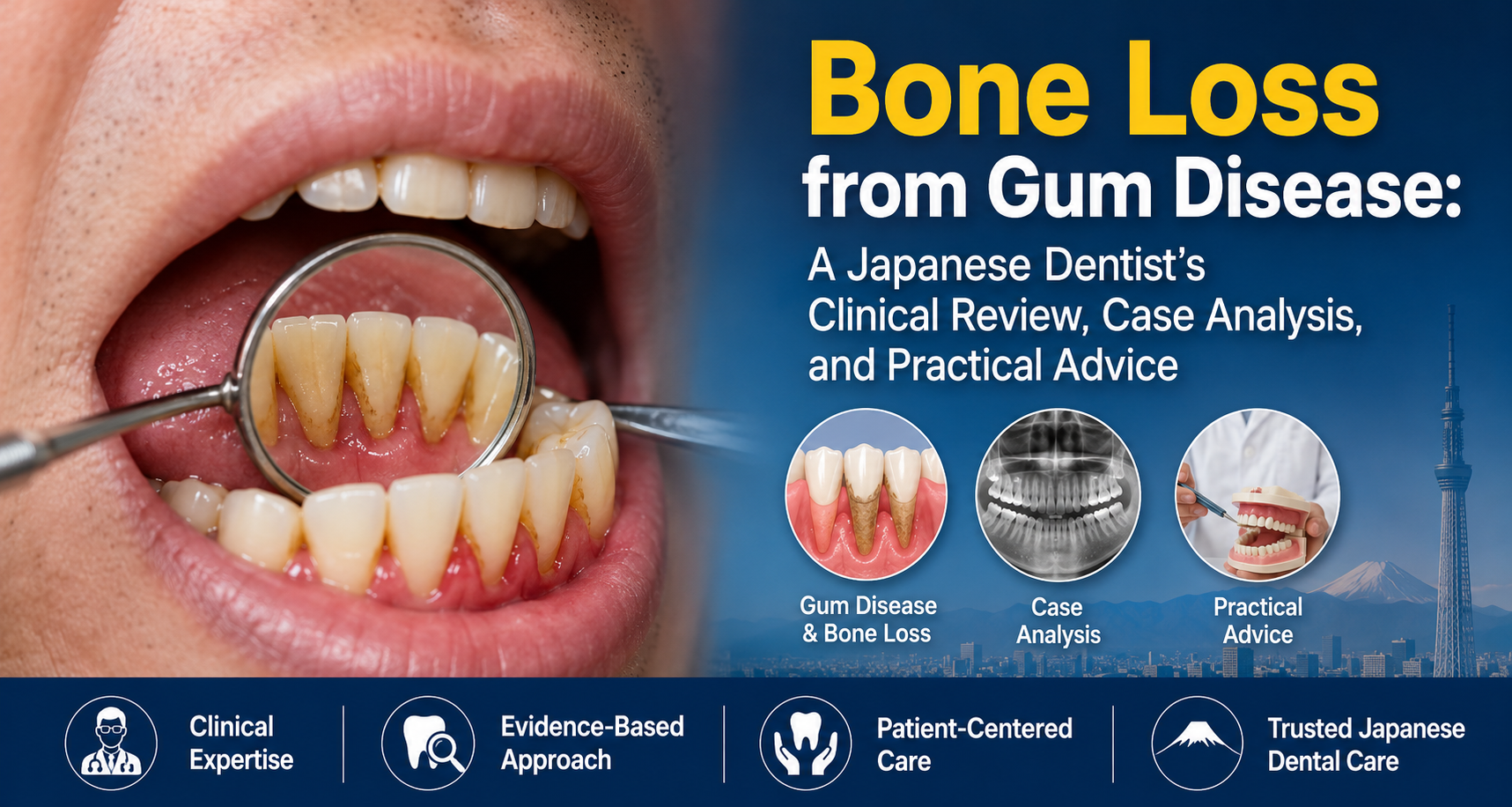
Bone loss caused by gum disease is one of the most important warning signs in periodontal dentistry. Unlike simple gingivitis, advanced periodontal disease can progressively destroy the tissues and alveolar bone that support the teeth. If the disease continues untreated, teeth may become mobile, migrate, or eventually require extraction.
From a Japanese clinical dentistry perspective, the key principle is simple:
Do not wait for a loose tooth before treating periodontal disease.
Bone destruction can progress with surprisingly little pain. Gum disease is frequently described as a "silent" disease because significant periodontal damage may develop before the patient notices severe symptoms.
1. What Is Gum Disease Bone Loss?
The teeth are not held in the jaw by the crown alone. They are supported by a complex periodontal structure consisting of:
-
Gingiva
-
Periodontal ligament
-
Cementum
-
Alveolar bone
Periodontitis develops when bacterial plaque and the body's inflammatory response destroy the supporting periodontal tissues. The resulting attachment loss and alveolar bone loss can be visible on dental radiographs.
A patient may initially notice only:
-
Bleeding during brushing
-
Red or swollen gums
-
Persistent bad breath
-
Gum recession
-
Food getting trapped between teeth
-
Teeth appearing longer
-
Mild tooth movement
By the time obvious mobility develops, substantial supporting tissue may already have been lost.
2. Clinical Case Analysis
Representative Case: Generalized Periodontal Bone Loss
Consider a hypothetical 55-year-old patient who reports:
-
Bleeding gums for several years
-
Persistent bad breath
-
Occasional gum swelling
-
Increasing spaces between several teeth
-
Difficulty chewing hard foods
-
One lower molar feeling slightly loose
The patient reports little or no significant pain.
Initial clinical impression
This presentation would raise strong concern for periodontitis rather than simple gingivitis.
A comprehensive periodontal examination would normally include:
-
Periodontal pocket measurements
-
Bleeding-on-probing assessment
-
Clinical attachment evaluation
-
Tooth mobility assessment
-
Gingival recession measurements
-
Evaluation of plaque and calculus
-
Dental radiographs
-
Assessment of occlusion and tooth migration
-
Review of relevant risk factors
Radiographs can help determine the pattern and extent of alveolar bone destruction.
3. Why Does Bone Disappear?
The process is not simply "bacteria eating the bone."
Periodontitis involves a complex interaction between the microbial biofilm and the patient's inflammatory and immune response. Chronic inflammation can result in destruction of periodontal attachment and alveolar bone.
The progression can be visualized conceptually:
Plaque accumulation → Gingival inflammation → Periodontal pocket formation → Persistent inflammation → Attachment loss → Alveolar bone loss → Tooth mobility → Possible tooth loss
This is why controlling inflammation and the bacterial biofilm is fundamental to periodontal treatment.
4. Gingivitis Versus Periodontitis
Gingivitis
Gingivitis primarily affects the gums.
Typical findings include:
-
Redness
-
Swelling
-
Bleeding
-
Tenderness
Importantly, gingivitis is generally reversible when appropriately treated and maintained with effective oral hygiene.
Periodontitis
Periodontitis is more destructive.
The disease can involve:
-
Periodontal attachment loss
-
Deep periodontal pockets
-
Gingival recession
-
Alveolar bone loss
-
Tooth mobility
-
Tooth migration
-
Eventual tooth loss
Once supporting bone has been destroyed, simply brushing harder cannot restore it.
5. How Dentists Evaluate Bone Loss
A periodontal diagnosis should never be based solely on how the gums look.
A dentist or periodontist may combine clinical examination with radiographic findings.
The modern periodontal classification evaluates disease using staging and grading.
Staging
Stage generally reflects the severity and complexity of periodontal destruction.
Grading
Grade provides information about the anticipated rate of progression and other biological considerations.
Factors such as documented progression, radiographic bone loss relative to age, smoking, and diabetes or glycemic control can influence grading.
This is important because two patients can have similar amounts of bone loss but very different risks of future progression.
6. A Critical Clinical Point: Bone Loss Does Not Automatically Mean Tooth Extraction
Patients sometimes hear:
"You have bone loss, so the tooth must be removed."
That conclusion is not necessarily correct.
The correct question is:
Can the tooth be predictably maintained after periodontal treatment?
Dentists consider factors such as:
-
Remaining bone support
-
Periodontal pocket depth
-
Tooth mobility
-
Root anatomy
-
Furcation involvement
-
Crown-to-root relationship
-
Caries
-
Fractures
-
Occlusion
-
Patient's ability to maintain oral hygiene
-
Response to periodontal treatment
Some teeth with significant periodontal destruction can remain functional for many years when appropriately treated and maintained.
However, teeth with hopeless structural or periodontal conditions may ultimately require extraction.
7. Treatment Strategy
The treatment plan depends on the severity, distribution, anatomy, risk factors, and response to therapy.
Phase 1: Infection and Biofilm Control
The foundation is controlling plaque and calculus.
This commonly includes:
-
Professional periodontal cleaning
-
Oral hygiene instruction
-
Removal of supra- and subgingival deposits
-
Scaling and root planing when indicated
-
Correction of plaque-retentive factors
The ADA identifies scaling and root planing as the initial nonsurgical treatment of choice for periodontitis.
Phase 2: Reassessment
Periodontal tissues need time to respond after initial therapy.
The dentist reassesses:
-
Pocket depths
-
Bleeding
-
Plaque control
-
Tooth mobility
-
Inflammation
-
Remaining periodontal defects
The purpose is not merely to determine whether the gums "look better."
The dentist needs to determine whether the disease is becoming controllable.
8. When Surgery May Be Considered
Some moderate-to-advanced periodontal defects cannot be adequately managed through nonsurgical treatment alone.
Depending on the defect, periodontal surgery may provide access to areas that cannot be effectively cleaned otherwise.
Possible procedures include:
Periodontal pocket reduction
The gum tissue may be reflected to provide access for thorough removal of deposits and diseased tissue.
Regenerative periodontal procedures
In selected defects, clinicians may use regenerative techniques involving materials such as membranes or bone grafting materials to encourage regeneration of supporting periodontal tissues.
Gum grafting
Gum grafting is primarily directed toward managing recession and exposed roots rather than simply replacing every area of lost alveolar bone.
The appropriate procedure depends heavily on the anatomy of the individual defect.
9. Can Lost Bone Grow Back?
This is one of the most important questions patients ask.
The honest answer:
Sometimes partial regeneration is possible, but not every type of bone loss can be completely restored.
The pattern of the periodontal defect matters.
Certain well-contained periodontal defects may be candidates for regenerative treatment. Other forms of generalized or horizontal bone loss may have considerably less regenerative potential.
Therefore, a dental X-ray showing "bone loss" is not enough to determine whether bone regeneration is possible.
A periodontist must evaluate the actual defect.
10. Why Waiting Can Make Treatment More Difficult
Periodontitis can continue progressing even when pain is minimal.
The American Academy of Periodontology lists warning signs including bleeding gums, gum recession, loose or separating teeth, pus, persistent bad breath, and changes in the way teeth fit together.
This creates a dangerous misconception:
"It doesn't hurt, so my gums must be okay."
That is not a reliable assumption.
Periodontal disease can be clinically significant without producing severe pain.
11. Clinical Advice From a Japanese Dentist's Perspective
Japanese dentistry has a strong emphasis on prevention, regular examinations, meticulous oral hygiene, and long-term maintenance.
For a patient showing periodontal bone loss, my advice would be:
Advice 1 — Get a complete periodontal examination
Do not rely on a visual inspection at home.
Advice 2 — Request appropriate dental radiographs
Radiographic evaluation helps the clinician understand the pattern and extent of supporting bone loss.
Advice 3 — Treat the cause, not only the symptom
Mouthwash may temporarily improve breath or reduce some bacteria, but it cannot substitute for professional periodontal treatment when calculus and deep periodontal pockets are present.
Advice 4 — Do not aggressively brush damaged gums
More pressure does not mean better cleaning.
Use an appropriate toothbrush and technique recommended by your dental professional.
Advice 5 — Clean between the teeth
Periodontal disease frequently develops in areas that ordinary brushing cannot adequately clean.
Interdental brushes, floss, or other interdental devices may be recommended depending on the patient's anatomy.
Advice 6 — Stop smoking if you smoke
Smoking is an important periodontal risk factor and can negatively affect periodontal health and treatment outcomes.
Advice 7 — Maintain periodontal follow-up
Treatment does not end when bleeding decreases.
Periodontitis is a chronic disease requiring long-term maintenance.
12. The Role of Maintenance Therapy
One of the biggest mistakes after periodontal treatment is returning to the dentist only when symptoms appear.
A patient who has experienced periodontal bone loss has already demonstrated susceptibility to periodontal destruction.
Long-term maintenance can include:
-
Periodontal examinations
-
Professional plaque and calculus removal
-
Pocket monitoring
-
Reinforcement of home-care techniques
-
Radiographic monitoring when clinically appropriate
-
Monitoring of tooth mobility
-
Evaluation of periodontal recurrence
The objective is to prevent previously treated disease from becoming active again.
13. When a Dental Implant Becomes Necessary
If a tooth is ultimately lost because of advanced periodontal destruction, implant treatment may become an option.
However, there is an important principle:
Active periodontal disease should be controlled before implant treatment whenever possible.
Replacing a missing tooth without controlling periodontal disease does not solve the underlying susceptibility to inflammation.
Patients who have experienced periodontitis also require careful periodontal and peri-implant maintenance after implant placement.
14. Dental Hub Review: What I Would Look for in a Case
When reviewing a periodontal bone-loss case, I would divide the assessment into five questions:
1. How much bone has been lost?
Radiographs help establish the extent and pattern of destruction.
2. Is the disease currently active?
Bleeding, pocketing, inflammation, plaque levels, and evidence of progression matter.
3. Why is the patient progressing?
Risk factors and local factors need to be identified.
4. Can the teeth be stabilized?
The prognosis of individual teeth must be evaluated.
5. Can the patient maintain the result?
Long-term periodontal stability depends heavily on continuing professional maintenance and effective home care.
15. Patient Warning Signs That Should Not Be Ignored
See a dentist or periodontal specialist if you experience:
-
Repeated gum bleeding
-
Persistent bad breath
-
Gum recession
-
Teeth becoming loose
-
Teeth changing position
-
New spaces developing between teeth
-
Pus around the gums
-
Pain or swelling around a tooth
-
Difficulty chewing
-
Increasing sensitivity associated with gum recession
These symptoms do not prove that bone loss is present, but they warrant professional evaluation.
Final Dental Hub Conclusion
Gum disease bone loss is not simply an aging problem. It is a periodontal disease process that can progressively compromise the structures supporting the teeth.
The most important clinical lesson is early detection.
If periodontal disease is identified before extensive destruction occurs, treatment can focus on controlling inflammation, eliminating bacterial deposits, improving oral hygiene, and preserving the patient's natural teeth.
When bone loss is already present, the goal changes from simply treating bleeding gums to stabilizing the periodontal condition, protecting remaining bone, preserving teeth where possible, and preventing further destruction.
A Japanese dentist's practical philosophy can be summarized in three principles:
Detect early. Treat systematically. Maintain continuously.
For an individual patient, the exact severity of bone loss cannot be determined from symptoms alone. A periodontal examination, pocket measurements, and appropriate dental imaging are necessary for diagnosis and treatment planning.
Dental Hub Clinical Note: This article is educational and does not replace an examination by a licensed dentist or periodontist. Treatment decisions should be based on the patient's clinical findings, radiographs, medical history, risk factors, and treatment response.
Related Clinical Cases
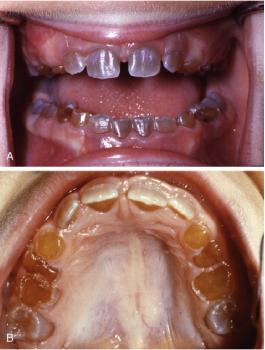
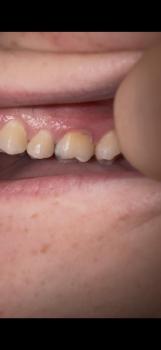
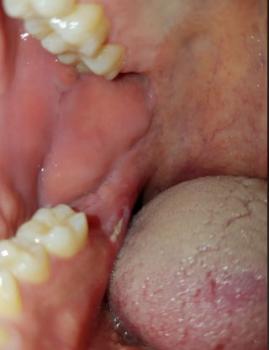
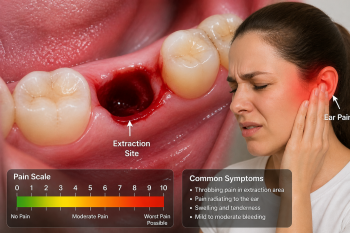
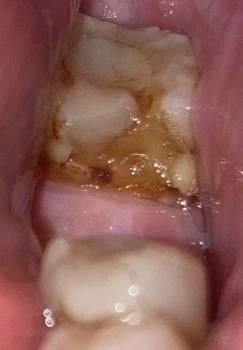
Patients with lower front gum inflammation may also experience tartar buildup, periodontal disease, gum abscesses, or tooth decay. Explore these related clinical case studies.



Other topics:
Other Dental Clinic