Modern Dentistry, Timeless Smiles.

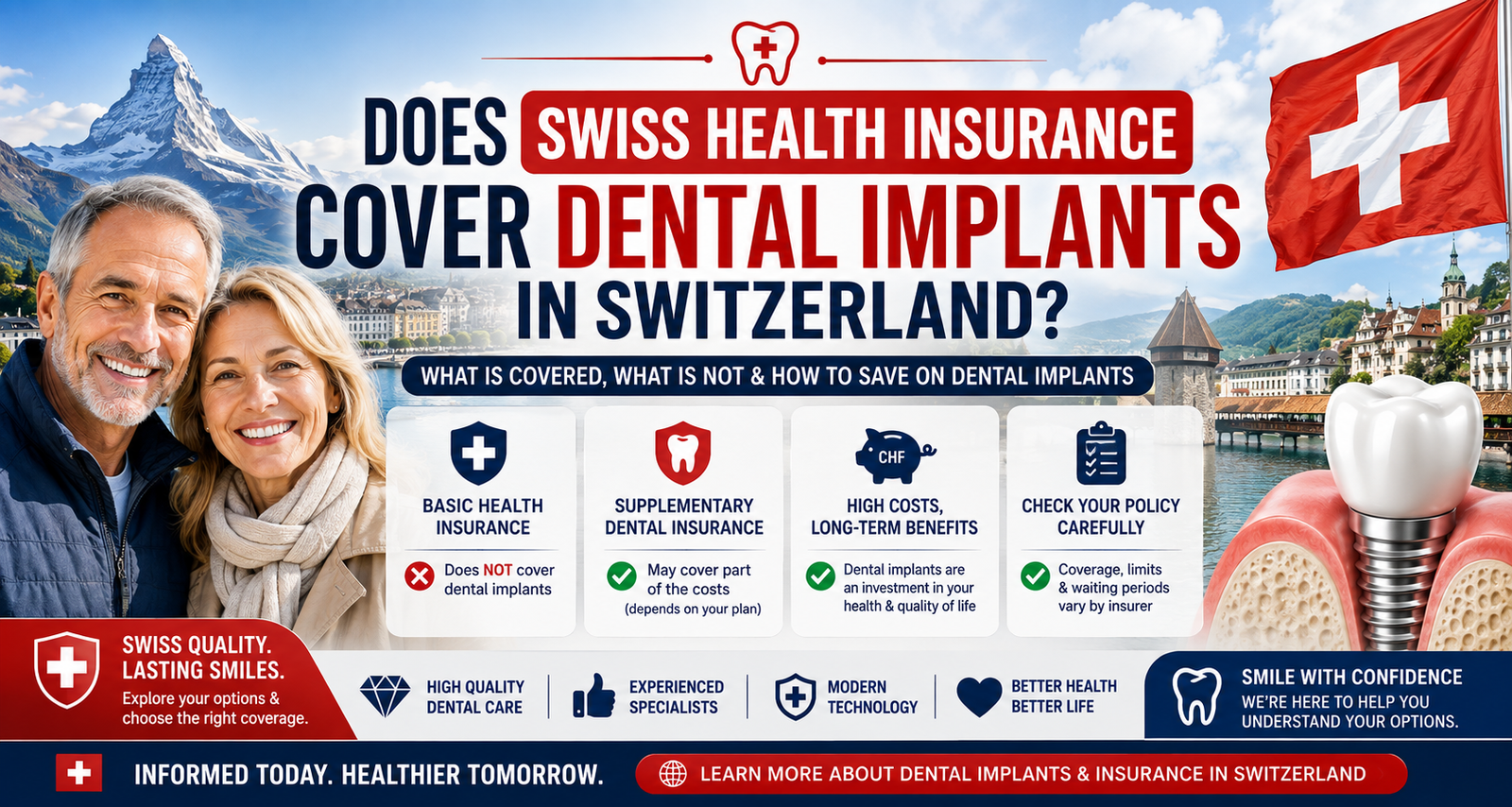
Does Swiss Health Insurance Cover Dental Implants in Switzerland?
image hero:
Country:
If you are considering a dental implant in Switzerland, one of the first questions is:
Will Swiss health insurance pay for it?
The short answer is generally no.
Mandatory basic health insurance under LAMal/KVG generally does not cover ordinary dental implants or routine adult dental treatment. Dental care is largely treated as an individual expense in Switzerland.
However, there are important exceptions, and supplementary dental insurance can provide additional coverage depending on the policy.
1. Does LAMal/KVG Cover Dental Implants?
For most patients, no.
Mandatory Swiss health insurance generally excludes ordinary dental treatment, including dental implants used to replace teeth lost through common causes such as tooth decay, periodontal disease or normal dental deterioration.
Patients therefore normally have to pay the cost themselves.
However, Swiss law provides specific situations in which dental treatment can qualify for reimbursement.
2. When Can Basic Insurance Cover Dental Treatment?
Coverage may be possible when the dental problem is connected to a legally recognized medical circumstance.
Examples can include:
Serious Medical Disease
Certain serious diseases affecting the masticatory system or associated with a severe general illness may qualify for coverage under statutory rules.
The condition must meet the applicable legal requirements.
Congenital Conditions
Certain congenital abnormalities affecting the jaw or teeth may qualify for treatment under specific circumstances.
Tumors and Serious Disease
Dental or jaw reconstruction associated with certain serious diseases, including some tumor-related conditions, may potentially qualify.
Accidents
Dental injuries resulting from an accident can be treated differently from ordinary tooth loss.
However, the responsible accident insurance may be the relevant payer rather than ordinary LAMal/KVG coverage.
For employees covered by Swiss accident insurance, the specific accident-insurance rules need to be checked.
Important: A dentist recommending an implant does not automatically make the procedure eligible for basic insurance.
The underlying cause and statutory requirements matter.
3. What About a Tooth Lost From an Accident?
This is one of the most important distinctions.
Suppose someone loses a front tooth in a serious accident.
The resulting dental reconstruction may potentially be covered through applicable accident insurance.
That is very different from losing the tooth because of:
-
Tooth decay
-
Periodontal disease
-
Failed root canal treatment
-
Long-term dental neglect
-
Normal deterioration
In those ordinary situations, the implant would generally be the patient's responsibility.
If the tooth was lost in an accident, the patient should contact the relevant accident insurer before treatment begins.
4. Supplementary Dental Insurance
Because basic insurance provides limited dental coverage, some Swiss residents purchase voluntary supplementary dental insurance.
This is commonly referred to as:
Zahnzusatzversicherung
Depending on the policy, supplementary insurance may contribute toward:
-
Dental examinations
-
Dental hygiene
-
Fillings
-
Root canals
-
Periodontal treatment
-
Crowns
-
Bridges
-
Dentures
-
Dental implants
-
Orthodontic treatment
However, implant coverage varies considerably between policies.
Do not assume that buying "dental insurance" automatically means that an implant will be fully covered.
5. How Much of an Implant Can Insurance Pay?
This depends on the individual policy.
For example, a hypothetical policy might provide:
75% reimbursement up to CHF 2,000 per year.
If an implant treatment costs:
CHF 4,000
75% would theoretically equal:
CHF 3,000
But the annual maximum would restrict the insurer's payment to:
CHF 2,000
The patient would then remain responsible for at least:
CHF 2,000
This illustrates why you should look at both:
Reimbursement percentage + annual maximum
rather than focusing on the percentage alone.
6. Pre-Existing Dental Problems
This is one of the biggest obstacles for people who discover they need an implant and then try to purchase insurance.
Supplementary insurers may require:
-
Health declarations
-
Dental certificates
-
Dental examinations
-
Information about existing treatment
-
Information about missing teeth
An insurer may then:
-
Accept the application
-
Accept it with exclusions
-
Restrict certain benefits
-
Require additional conditions
-
Decline the application
Consequently, purchasing insurance after a dentist has already diagnosed the problem may not protect you from the cost of that particular implant.
7. Waiting Periods
Dental insurance can also have waiting periods.
Depending on the insurer and product, certain dental benefits may not become available immediately.
Possible waiting periods include:
-
Six months
-
Twelve months
-
Longer periods for particular treatments
Some policies can have different qualification periods for major restorative or prosthetic treatment.
Therefore, if you are planning an implant soon, ask the insurer:
"If I purchase this policy today, will this specific implant treatment be eligible for reimbursement?"
Get the answer in writing.
8. The Age-Curve Problem
Another consideration is the relationship between premiums and age.
Some Swiss insurance products use age-related pricing structures.
As the policyholder becomes older, premiums can increase while annual reimbursement limits may remain comparatively limited.
This can reduce the financial attractiveness of insurance for someone who purchases coverage late in life.
For this reason, people considering long-term dental insurance should compare:
Total premiums over time
against
Potential reimbursement over time.
Do not judge a policy only by its first-year premium.
9. Major Swiss Insurers to Compare
When researching supplementary dental insurance in Switzerland, consumers may encounter providers including:
-
SWICA
-
Sanitas
-
CSS
-
Concordia
-
KPT
-
Groupe Mutuel
-
Helsana
The important issue is not simply which company has the best reputation.
Instead, compare the specific dental product.
Look at:
| Feature | Why It Matters |
|---|---|
| Implant coverage | Determines whether implants qualify |
| Reimbursement percentage | Determines the insurer's contribution |
| Annual maximum | Limits total reimbursement |
| Waiting period | Determines when coverage begins |
| Existing conditions | Can result in exclusions |
| Dental certificate | May be required before acceptance |
| Age pricing | Affects long-term affordability |
| Treatment abroad | Important for cross-border care |
| Pre-approval | Can prevent unexpected bills |
10. What Patients Should Do Before Getting an Implant
If you are considering an implant, don't simply ask the dentist for the procedure.
Follow these steps.
Step 1: Determine Why the Tooth Was Lost
Was it caused by:
-
Accident?
-
Decay?
-
Gum disease?
-
Failed root canal?
-
Congenital condition?
-
Tumor or other serious disease?
The cause can affect insurance eligibility.
Step 2: Get a Written Treatment Plan
Ask your dentist for an itemized:
Kostenvoranschlag
The estimate should identify the major components of treatment.
Step 3: Contact Your Insurer
Send the treatment estimate to your insurer.
Ask specifically about:
-
Implant surgery
-
Implant fixture
-
Abutment
-
Crown
-
Bone grafting
-
Diagnostic imaging
-
Laboratory charges
Step 4: Obtain Written Confirmation
Do not rely solely on a verbal statement that an implant is "covered."
Ask for written confirmation of the amount or percentage the insurer expects to reimburse.
Step 5: Compare Alternatives
Depending on your clinical situation, your dentist may discuss alternatives such as:
-
Dental bridge
-
Removable partial denture
-
Implant-supported restoration
-
No immediate replacement in selected situations
The cheapest option is not automatically the best option, and the most expensive option is not automatically necessary.
11. What About Dental Treatment in Germany, France or Italy?
Switzerland's location means that some residents consider treatment in neighboring countries.
Depending on the region, patients may investigate dental clinics in:
-
Germany
-
France
-
Italy
-
Austria
Cross-border treatment can sometimes offer different pricing, but insurance reimbursement must be checked before treatment.
Ask your insurer whether:
-
Treatment abroad is permitted.
-
The dentist must meet specific qualifications.
-
Prior authorization is required.
-
Reimbursement is based on Swiss or foreign treatment costs.
-
A separate annual maximum applies.
Never assume that an implant covered in Switzerland will automatically be reimbursed if performed abroad.
12. Is Supplementary Implant Insurance Worth It?
It depends on your circumstances.
It may be attractive if:
-
You have healthy teeth when applying.
-
You want protection against future dental expenses.
-
The policy has a meaningful implant benefit.
-
The annual maximum is sufficiently high.
-
Premiums remain affordable over time.
-
You are comfortable with the waiting period.
It may be less attractive if:
-
You already need an implant.
-
The implant is excluded as a pre-existing condition.
-
The annual maximum is low.
-
Premiums are high.
-
You rarely need dental treatment.
The key is to perform the calculation before purchasing the policy.
13. The Most Important Question
If you are researching Swiss dental insurance because you already need an implant, don't begin with:
"Which insurance is cheapest?"
Start with:
"Will this insurer cover my specific implant treatment, given my current dental condition?"
That question can save you from paying premiums for a policy that ultimately excludes the treatment you need.
Bottom Line
For most Swiss residents, mandatory LAMal/KVG does not pay for ordinary dental implants.
Coverage may be possible in exceptional situations involving qualifying accidents, serious diseases or congenital conditions, subject to the applicable legal requirements.
For ordinary tooth loss, patients generally need to pay themselves or rely on voluntary supplementary dental insurance.
Supplementary insurance can help, but consumers must examine:
Coverage + reimbursement percentage + annual maximum + waiting period + exclusions + underwriting requirements.
And if you already have a missing tooth or have been told that you need an implant, obtain a Kostenvoranschlag and ask the insurer for written confirmation before beginning treatment.
Frequently Asked Questions
Does LAMal cover dental implants?
Generally, no. Ordinary dental implants are normally excluded from mandatory basic health insurance.
Can basic insurance pay for an implant after an accident?
Potentially, depending on the circumstances and the applicable accident insurance. The accident must meet the relevant coverage requirements.
Does supplementary dental insurance cover implants?
Some policies do, but coverage varies substantially. Check the exact policy conditions and annual maximum.
Can I buy dental insurance after my dentist recommends an implant?
You can apply, but the insurer may exclude the existing problem or decline the application.
How long is the dental insurance waiting period?
It varies by insurer and treatment. Six and twelve months are common examples, but specific procedures may have different requirements.
Is dental implant insurance worth it in Switzerland?
It depends on your premium, expected dental needs, implant benefit, annual maximum and exclusions.
Should I get insurance before I need an implant?
If you want insurance protection against future dental expenses, investigating coverage while your dental health is good is generally more favorable than waiting until a major problem has already been diagnosed.
Disclaimer
Insurance regulations, products, premiums and benefits can change. This article provides general educational information and should not be considered insurance, financial or medical advice. Always verify current coverage directly with the relevant insurer and obtain written confirmation before beginning expensive dental treatment.
Last reviewed: August 2026
Related Clinical Cases
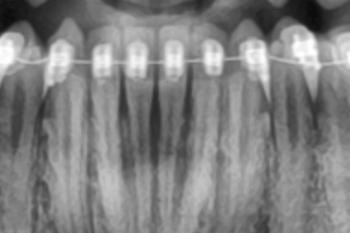
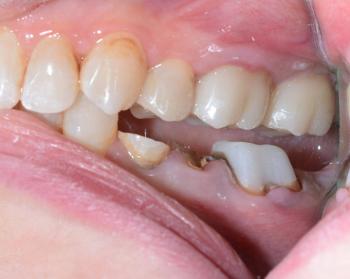
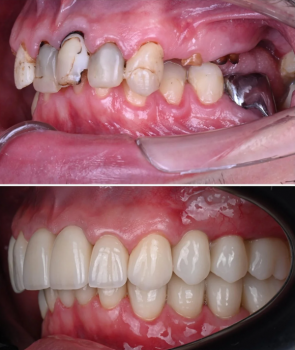
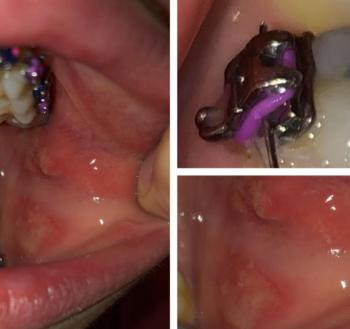
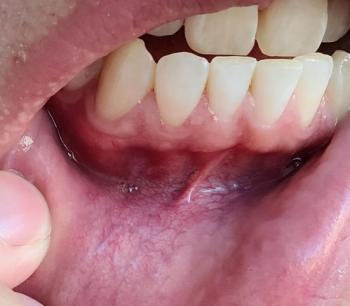
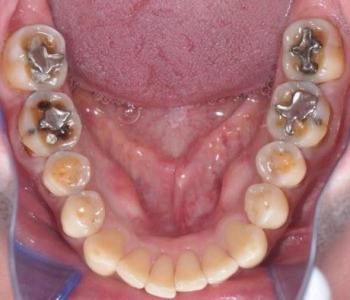
Patients with lower front gum inflammation may also experience tartar buildup, periodontal disease, gum abscesses, or tooth decay. Explore these related clinical case studies.
Other topics:
Other Dental Clinic