Healthy Teeth, Happy Life.

How to Reduce Dental Costs in Austria: A Complete 2026 Guide to Saving Money on Dental Care
Language :
Topics:
Austria is widely recognized for its high-quality healthcare system, and dentistry is no exception. Residents enjoy access to a well-developed network of public and private dental providers, modern treatment facilities, and highly trained dental professionals. However, despite the strengths of the Austrian healthcare system, many dental procedures still involve significant out-of-pocket expenses, particularly when advanced restorative, cosmetic, or implant treatments are required.
For many patients, the cost of dental treatment can become a major concern. A single dental implant may cost several thousand euros, while crowns, bridges, orthodontics, and cosmetic procedures can quickly add up. Fortunately, Austria offers several legal and practical ways to reduce dental expenses without compromising the quality of care.
By understanding how public insurance works, taking advantage of reimbursement opportunities, utilizing tax deductions, and strategically selecting supplementary insurance coverage, patients can substantially lower their overall dental costs.
This guide explains the most effective ways to save money on dental care in Austria while maintaining excellent oral health.
Understanding Why Dental Costs Can Be High in Austria
Before discussing cost-saving strategies, it is important to understand why some dental procedures are expensive.
Austria's statutory health insurance system primarily focuses on medically necessary treatment. While basic dental care receives substantial support, many modern dental procedures fall outside the scope of public funding.
Examples include:
- Dental implants
- Ceramic crowns
- Porcelain veneers
- Cosmetic dentistry
- Adult orthodontics
- High-end bridges
- Premium dentures
- Advanced aesthetic fillings
Private dental clinics also face significant operating costs, including:
- Staff salaries
- Laboratory fees
- Digital equipment
- Sterilization systems
- Facility expenses
- Continuing education requirements
These costs are reflected in treatment fees.
Fortunately, patients have several ways to reduce their financial burden.
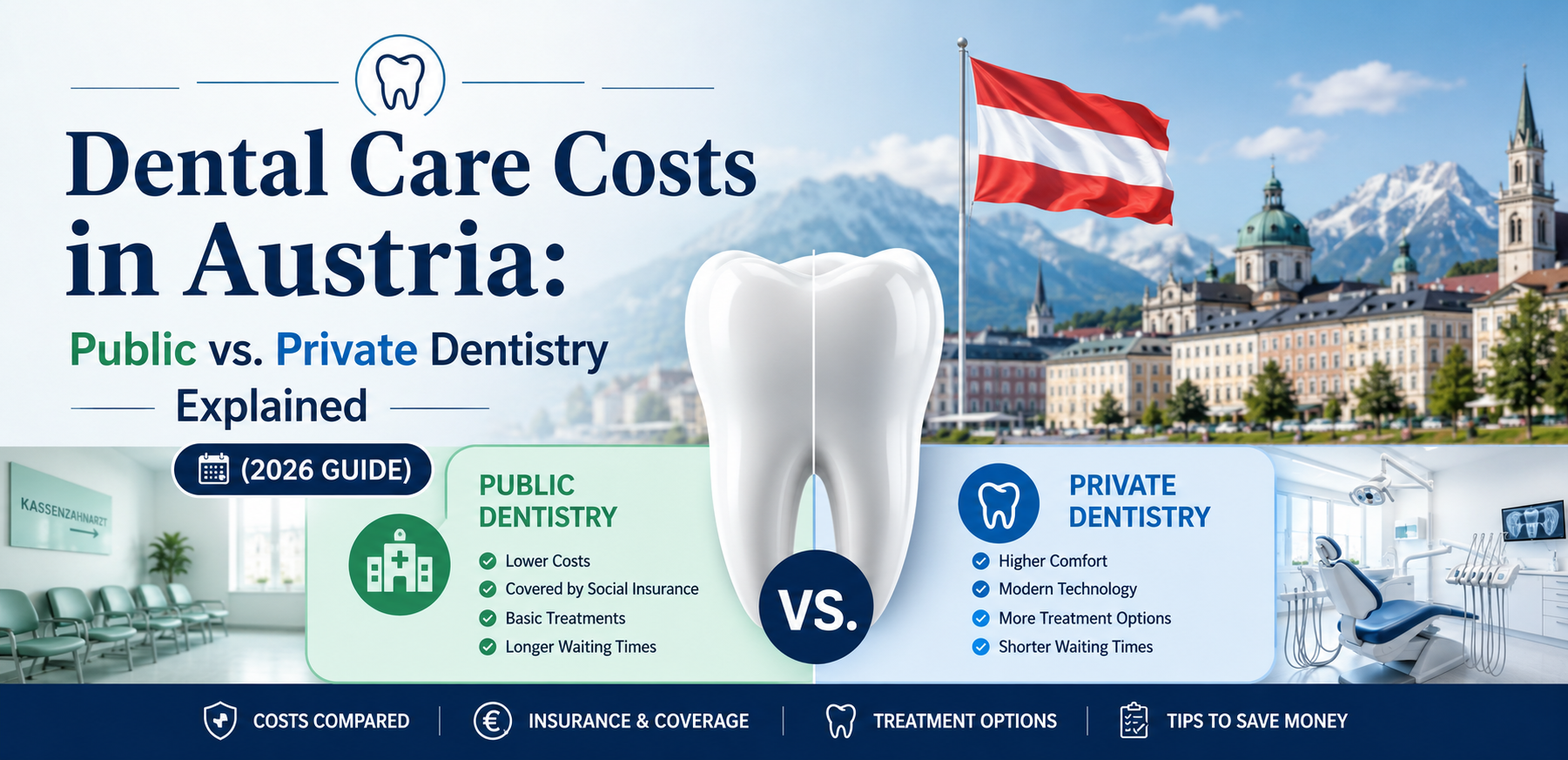
Strategy 1: Use Public Insurance Dentists (Kassenarzt)
The simplest and most effective way to minimize dental expenses is to seek treatment from dentists contracted with Austria's public health insurance system.
These dentists are known as Kassenarzt providers.
What Is a Kassenarzt?
A Kassenarzt is a dentist who has entered into a contractual agreement with the Austrian Health Insurance Fund (ÖGK) or another statutory insurance provider.
These dentists provide covered services directly through the public healthcare system.
For eligible treatments, patients generally pay little or nothing out of pocket.
How to Identify a Kassenarzt
Finding a contracted dentist is usually straightforward.
Many clinics display signs such as:
- "Kassenarzt"
- "Alle Kassen"
- "ÖGK Partner"
Patients can also consult official insurance provider directories.
When scheduling an appointment, simply ask whether the clinic accepts public insurance.
What Services Are Typically Covered?
Public insurance focuses on medically necessary care rather than cosmetic improvements.
Commonly covered services include:
Routine Dental Examinations
Most insured patients qualify for:
- Two dental check-ups annually
- Oral health evaluations
- Preventive monitoring
Regular examinations help identify problems before they become expensive to treat.
Basic Fillings
Public insurance generally covers standard fillings.
Coverage often includes:
- Amalgam fillings for posterior teeth
- Basic restorative treatment
- Cavity management
Patients requesting premium composite materials may need to pay additional fees.
Root Canal Treatment
When a tooth can be saved, root canal treatment is frequently covered.
Benefits may include:
- Diagnosis
- Treatment
- Follow-up evaluation
Complex specialist procedures may involve extra charges.
Tooth Extractions
Necessary extractions are generally covered by public insurance.
This includes:
- Severely damaged teeth
- Infected teeth
- Emergency situations
Patients can avoid significant costs when treatment is medically indicated.
Emergency Dental Care
Emergency treatment remains one of the strongest aspects of public dental coverage.
Services may include:
- Pain management
- Temporary restorations
- Infection treatment
- Urgent extractions
Prompt care helps prevent more costly complications.
Basic Dental Cleaning
Many insurance-supported clinics provide basic scaling and plaque removal services.
Regular cleanings help reduce future treatment costs by preventing disease progression.
How the E-Card Saves Money
Austria's electronic health insurance card (e-card) simplifies access to covered services.
When visiting a contracted dentist:
- Present your e-card.
- Coverage is verified electronically.
- Eligible treatments are billed directly to the insurance provider.
Patients avoid the need to pay upfront and request reimbursement later.
This system reduces administrative burdens while maximizing insurance benefits.
Strategy 2: Understand Private Dentist Reimbursement Rules
Many patients prefer private dentists because of shorter waiting times, greater flexibility, and access to advanced treatment options.
Although private care is more expensive, reimbursement opportunities still exist.
What Is a Wahlarzt?
A Wahlarzt is a private dentist who does not maintain a direct contract with public insurance providers.
Patients pay treatment fees directly.
However, reimbursement may be available for certain covered services.
How Reimbursement Works
After treatment:
- The patient receives an invoice (Honorarnote).
- The invoice is submitted to the insurance provider.
- The insurer evaluates the claim.
- Partial reimbursement is issued if applicable.
This process can significantly reduce costs.
Understanding the 80% Rule
Many patients misunderstand reimbursement calculations.
Insurance providers generally reimburse approximately 80% of what they would have paid a contracted dentist for the same treatment.
Importantly, this is not 80% of the private dentist's fee.
Example:
Public treatment value: €100
Private dentist fee: €400
Potential reimbursement: €80
Patient responsibility: €320
Understanding this distinction prevents unrealistic expectations.
Documentation Requirements
To maximize reimbursement potential, invoices should include:
- Patient name
- Insurance number
- Date of treatment
- Detailed treatment description
- Provider information
- Payment confirmation
Incomplete documentation may delay or reduce reimbursement.
Strategy 3: Take Advantage of Austrian Tax Deductions
One of the most overlooked methods for reducing dental costs involves Austria's tax system.
Certain dental expenses may qualify as extraordinary expenses (Außergewöhnliche Belastung).
This can reduce overall tax liability.
What Are Extraordinary Expenses?
Extraordinary expenses are unavoidable medical costs that exceed normal living expenses.
When qualifying expenses surpass certain thresholds, taxpayers may claim deductions.
Dental treatment often falls into this category.
Dental Treatments That May Qualify
Eligible treatments commonly include:
- Root canal therapy
- Tooth extractions
- Periodontal treatment
- Crowns
- Bridges
- Dentures
- Implant treatment
- Oral surgery
These procedures are generally considered medically necessary.
Treatments Typically Excluded
Purely cosmetic procedures usually do not qualify.
Examples include:
- Teeth whitening
- Cosmetic veneers
- Tooth jewelry
- Aesthetic-only modifications
Medical necessity remains the determining factor.
Importance of Documentation
Patients should retain:
- Original invoices
- Payment receipts
- Treatment plans
- Medical necessity statements
Documentation strengthens claims during tax filing.
Request a Medical Necessity Certificate
Many tax professionals recommend obtaining a statement from your dentist confirming medical necessity.
Such documentation may help support:
- Implant claims
- Crown treatment
- Surgical procedures
- Complex restorative work
This can be particularly useful for expensive treatments.
Understanding Deductible Thresholds
Austria applies income-based thresholds before deductions become available.
Factors affecting deductibility include:
- Income level
- Marital status
- Number of dependents
- Family circumstances
Consulting a tax advisor is advisable when substantial dental expenses are involved.
Strategy 4: Purchase Supplementary Dental Insurance
For many patients, supplementary dental insurance can provide substantial financial protection.
These policies help cover treatments excluded from public insurance.
What Is Dental Supplementary Insurance?
Supplementary insurance (Zusatzversicherung) is purchased separately from statutory health coverage.
It helps reduce out-of-pocket expenses for advanced dental care.
Treatments Often Covered
Policies may provide benefits for:
- Dental implants
- Crowns
- Bridges
- Orthodontics
- Professional cleanings
- Composite fillings
- Dentures
Coverage levels vary significantly between insurers.
When Supplementary Insurance Makes Sense
Insurance is often beneficial for:
- Patients with extensive dental history
- Individuals expecting implant treatment
- Adults considering orthodontics
- Families with children
Long-term planning frequently improves value.
Buy Before Problems Develop
One common mistake is waiting until treatment is needed before purchasing insurance.
Unfortunately:
- Most insurers impose waiting periods.
- Existing conditions may be excluded.
- Premiums may increase after diagnosis.
Insurance works best when obtained while oral health remains stable.
Understanding Waiting Periods
Waiting periods typically range from:
- Six months
- Nine months
- Twelve months
Major benefits often become available only after these periods expire.
Patients should read policy details carefully.
Understanding Benefit Ladders
Many policies gradually increase coverage over time.
Example:
Year 1: €500 reimbursement
Year 2: €1,000 reimbursement
Year 3: €1,500 reimbursement
Year 4+: Higher annual limits
This structure encourages long-term participation.
Strategy 5: Always Request Written Cost Estimates
A surprisingly effective cost-control strategy is requesting detailed treatment estimates before committing to care.
Why Estimates Matter
Written estimates allow patients to:
- Compare providers
- Evaluate alternatives
- Understand fees
- Avoid unexpected costs
Transparency leads to better financial decisions.
What Should Be Included?
A quality estimate should list:
- Diagnosis
- Recommended procedures
- Materials
- Laboratory costs
- Follow-up visits
- Total projected expense
Patients should never hesitate to ask questions.
Obtain Multiple Opinions
For expensive treatment plans, a second opinion can be valuable.
Different dentists may recommend:
- Different materials
- Different techniques
- Different treatment sequences
Alternative approaches sometimes reduce costs significantly.
Strategy 6: Utilize ÖGK Dental Centers
Many patients are unaware that ÖGK operates dedicated dental centers throughout Austria.
These facilities can provide excellent value.
Benefits of ÖGK Dental Centers
Advantages may include:
- Standardized pricing
- Public insurance compatibility
- Broad treatment availability
- Experienced clinicians
In some cases, services unavailable through individual contracted dentists may be offered.
Comparing Costs
Because pricing structures are standardized, patients often experience lower costs compared with private practices.
For budget-conscious individuals, these centers deserve consideration.
Strategy 7: Invest in Prevention
The most effective long-term cost reduction strategy is prevention.
Preventive care costs far less than restorative treatment.
Financial Impact of Prevention
Consider the progression:
Small cavity → Filling
Untreated cavity → Root canal + crown
Lost tooth → Implant
The financial difference can be thousands of euros.
Preventive Habits That Save Money
Key habits include:
- Twice-daily brushing
- Daily flossing
- Routine examinations
- Professional cleanings
- Healthy diet choices
- Smoking cessation
Small investments today often prevent major expenses later.
Strategy 8: Carefully Evaluate Dental Tourism
Some Austrian residents explore treatment options in neighboring countries.
This practice is commonly known as dental tourism.
Potential Benefits
Advantages may include:
- Lower treatment costs
- Shorter waiting periods
- Access to specialized providers
Popular destinations often include:
- Hungary
- Slovakia
- Czech Republic
Potential Risks
Patients should also consider:
- Travel expenses
- Follow-up limitations
- Language barriers
- Warranty concerns
- Regulatory differences
The lowest price is not always the best value.
Verify Reimbursement Eligibility
Before receiving treatment abroad:
- Contact your insurance provider.
- Confirm documentation requirements.
- Verify reimbursement eligibility.
Proper planning avoids unpleasant surprises.
Strategy 9: Compare Materials Carefully
Different materials often have dramatically different prices.
For example:
Fillings
Amalgam: Lower cost
Composite: Higher cost
Crowns
Metal crown: Lower cost
Porcelain-fused-to-metal: Moderate cost
Zirconia: Higher cost
Dentures
Standard acrylic: Lower cost
Premium solutions: Higher cost
Patients should discuss durability, aesthetics, and cost before making decisions.
Strategy 10: Schedule Treatment Strategically
Timing can influence costs.
For example:
- Insurance benefit limits often reset annually.
- Tax deductions may be easier to maximize when expenses are grouped within a single tax year.
- Supplementary insurance coverage may increase over time.
Strategic scheduling can improve reimbursement opportunities.
Common Mistakes That Increase Dental Costs
Patients frequently spend more than necessary because they:
- Skip routine check-ups
- Ignore early symptoms
- Delay treatment
- Fail to submit reimbursement claims
- Overlook tax deductions
- Purchase insurance too late
- Choose providers solely based on advertising
Avoiding these mistakes can produce substantial savings.
Final Thoughts
Reducing dental costs in Austria is entirely achievable when patients understand how the system works and take advantage of available financial protections. The foundation of any cost-saving strategy begins with utilizing public insurance benefits through Kassenarzt providers whenever possible. For those who prefer private dentists, reimbursement options can still offset a portion of expenses when claims are submitted correctly.
Beyond insurance, Austria's tax laws provide additional opportunities to reduce the financial burden of medically necessary dental treatment. Supplementary dental insurance can further protect against the high costs associated with implants, crowns, orthodontics, and other advanced procedures when purchased early and used strategically.
Patients should also request written treatment estimates, compare providers carefully, maintain thorough records, and prioritize preventive care to avoid costly future interventions. While dental tourism may offer savings in some cases, careful planning and insurance verification are essential before seeking treatment abroad.
Ultimately, the most effective approach combines prevention, informed decision-making, insurance utilization, tax planning, and long-term oral health maintenance. By taking these steps, Austrian residents can significantly reduce dental expenses while continuing to receive the high-quality care for which Austria's healthcare system is known.
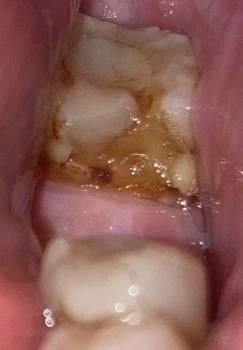
Can tooth extraction cause infection? Mild inflammation is normal, but increasing swelling, fever, or severe pain may indicate infection. Learn more about post-extraction infection warning signs in this detailed guide.
Book a consultation with our Cebu dental specialists for proper evaluation and care.
Ready to get expert guidance?
If you’re experiencing severe pain or delayed healing, book a consultation with our Cebu dental specialists to get proper evaluation and care.
Consultation or contact page .
Book a Consultation
For severe discomfort or delayed healing, book a consultation with our Cebu dental specialists today.
Looking for a dentist? Browse our Cebu dental directory to find trusted clinics near you.
Medical Review and Clinical Basis
This article is based on clinical dental guidelines and real patient recovery patterns observed after tooth extraction procedures. The information reflects common post-extraction healing stages, including normal clot formation, gum tissue repair, and signs of possible complications such as dry socket or infection.
While mild discomfort is expected after a dental extraction, worsening pain after Day 3, bad odor, exposed bone, or spreading pain may require professional evaluation. These symptoms are consistent with known post-extraction complications described in standard dental practice.
About Cebu Dental Implants
Cebu Dental Implants provides comprehensive tooth extraction, surgical procedures, and dental implant services in the Philippines. Our team evaluates post-extraction healing, manages complications such as dry socket, and advises patients on proper aftercare to prevent infection and delayed healing.
If you experience severe pain or unusual symptoms after extraction, early professional assessment is recommended to prevent further complications.
Important Medical Disclaimer
This content is for educational purposes only and does not replace professional dental diagnosis. Every patient heals differently. If symptoms worsen or do not improve within a few days, consult a licensed dentist for proper evaluation and treatment.
Author
This article was prepared by the Cebu Dental Implants content team in consultation with licensed dental professionals experienced in tooth extraction and implant procedures.
Related Clinical Cases
Patients with lower front gum inflammation may also experience tartar buildup, periodontal disease, gum abscesses, or tooth decay. Explore these related clinical case studies.



Other topics:
Other Dental Clinic