Dentures That Feel Natural, Look Beautiful.

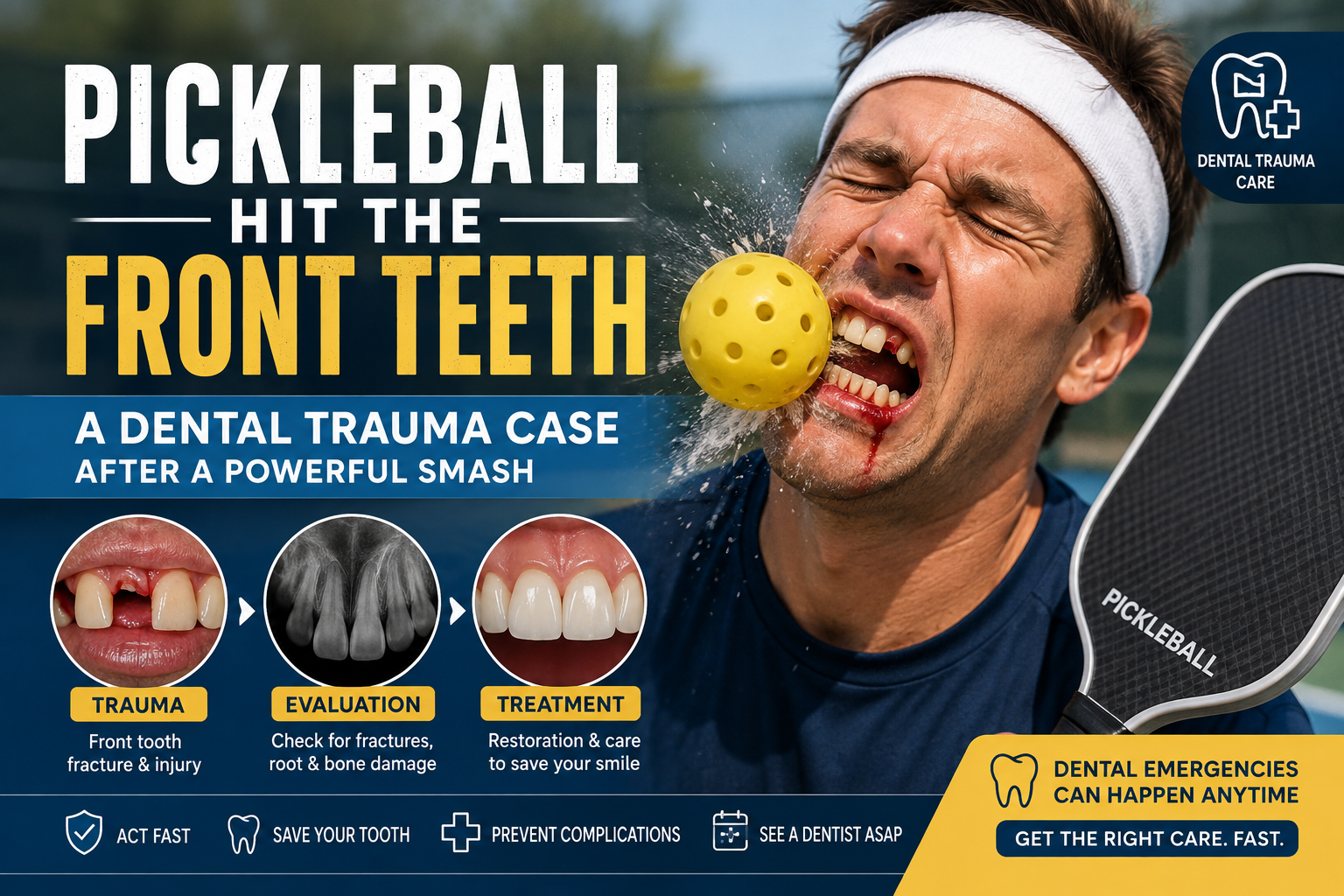
Pickleball Hit the Front Teeth: A Dental Trauma Case After a Powerful Smash
Language :
Topics:
A hard pickleball smash can turn an ordinary recreational game into a dental emergency. At the kitchen line, players may be only 14 feet apart, leaving very little time to react to a high-speed shot aimed toward the face.
This case illustrates what can happen when a powerful pickleball strikes the front teeth, the types of dental injuries that can result, what to do immediately, and how athletes can reduce the risk of serious facial and dental trauma.
Important: This article is for dental education and does not replace an examination by a dentist or physician after an injury.
The Case: A Pickleball Smash Hits the Front Teeth
Imagine an adult player competing in a singles pickleball match.
The player moves toward the kitchen line and prepares for the next shot. The opponent suddenly hits a powerful overhead smash from close range.
The player raises the paddle, but the ball travels too quickly.
The pickleball strikes directly against the player's mouth and front teeth.
The player immediately stops, covers the mouth and experiences pain and sensitivity around the upper incisors.
After the initial shock, the player notices that one front tooth feels loose and another tooth appears chipped.
This type of impact can produce several different forms of dental trauma. The extent of the injury cannot always be determined simply by looking at the teeth.
What Can Happen When a Pickleball Hits the Front Teeth?
A direct blow to the mouth can affect the tooth, periodontal ligament, surrounding bone, gums, lips and other oral tissues.
1. Chipped or Fractured Front Tooth
A forceful impact can fracture part of the enamel.
A more significant fracture may extend through enamel and dentin and, in severe cases, involve the dental pulp.
A small chip may require only smoothing or composite bonding, while a larger fracture may require more extensive restorative treatment.
2. Loose or Displaced Tooth
The impact can injure the periodontal tissues supporting the tooth.
The tooth may become:
- Tender
- Slightly mobile
- Shifted sideways
- Pushed inward
- Partially displaced from its socket
A tooth that appears only slightly loose can still have significant underlying injury.
A dentist may need clinical examination and dental imaging to determine the extent of the trauma.
3. Tooth Concussion or Subluxation
Sometimes the tooth looks normal after the accident.
However, the supporting tissues may have been injured.
The player may experience:
- Tenderness when biting
- Sensitivity
- Mild mobility
- Pain when the tooth is touched
This is one reason athletes should not assume that a tooth is fine simply because it has not visibly broken.
4. Knocked-Out Tooth — Dental Avulsion
The most serious dental scenario is avulsion, meaning the tooth is completely displaced from its socket. The ADA defines avulsion as separation of a tooth from its socket because of trauma.
A knocked-out permanent tooth requires urgent dental attention.
Time matters because the tissues attached to the tooth root can be damaged while the tooth remains outside the mouth.
The ADA notes that survival is highest when a traumatically avulsed tooth is replanted by a dentist within approximately one hour.
5. Cuts to the Lips and Gums
When the ball strikes the mouth, the lips can be forced against the teeth.
This can cause:
- Lip cuts
- Gum bleeding
- Bruising
- Swelling
- Tongue injuries
- Injuries to the inside of the mouth
A dental examination is particularly important when bleeding continues or there is significant facial trauma.
What Should You Do Immediately?
The first priority is to stop playing and assess the injury.
Move away from the playing area and remain calm.
Step 1: Check for Serious Injury
Look for:
- Severe facial pain
- Heavy or uncontrolled bleeding
- Difficulty breathing
- Difficulty swallowing
- Loss of consciousness
- Confusion
- Severe headache
- Vomiting
- Suspected jaw or facial fracture
A serious head, facial or airway injury requires medical evaluation, and life-threatening symptoms require emergency medical care.
Step 2: If the Tooth Is Chipped or Broken
Rinse the mouth gently with water to remove debris.
A cold compress placed against the outside of the cheek or lip can help reduce swelling. The ADA gives similar first-aid advice for broken teeth.
If a piece of tooth has broken off, save the fragment and take it to the dentist. In some cases, the fragment may be useful for restoration.
Step 3: If the Tooth Is Loose or Displaced
Do not repeatedly touch, twist or force the tooth.
Avoid chewing on the injured area and arrange urgent dental evaluation.
A dentist can determine whether the tooth requires repositioning, stabilization or additional treatment.
A dental splint may sometimes be used to stabilize traumatized or displaced teeth while supporting tissues heal.
What If the Front Tooth Is Completely Knocked Out?
This is the situation where every minute matters.
If a permanent tooth is completely knocked out:
Handle the Tooth Carefully
Hold it by the crown, the visible part of the tooth.
Avoid touching the root.
If the tooth is dirty, gently rinse it without scrubbing or removing attached tissue. The ADA specifically advises handling an avulsed tooth by the crown and avoiding scrubbing the root.
Keep the Tooth Moist
If immediate professional replantation is not possible, the tooth needs an appropriate moist storage medium.
Milk is a practical emergency option when a suitable tooth-preservation solution is unavailable. The ADA specifically recommends milk as a transport medium for a knocked-out tooth.
A commercially available tooth-preservation solution may also be used according to its instructions; the ADA notes that accepted preservation solutions can improve survival of traumatically avulsed teeth.
Get Emergency Dental Care
Do not wait until the next day if a permanent tooth has been knocked out.
Contact an emergency dentist or dental office immediately and explain that the patient has suffered a traumatic tooth avulsion.
The sooner the tooth is appropriately managed, the better the chance of preserving it.
What Treatment Might the Dentist Provide?
Treatment depends on the exact injury.
Composite Bonding
A small fracture may be repaired with tooth-colored composite resin.
Dental Crown
A severely fractured tooth may require a crown after the dentist determines that enough healthy tooth structure remains to support it.
Root Canal Treatment
If the dental pulp has been severely injured or later becomes necrotic, endodontic treatment may be required to preserve the tooth.
The need for root canal treatment depends on the type of trauma, tooth maturity and subsequent clinical findings rather than simply the presence of pain immediately after the accident.
Repositioning and Splinting
A displaced tooth may need to be carefully repositioned and stabilized.
A dental splint can temporarily connect the injured tooth to neighboring teeth while the supporting tissues heal.
Treatment of an Avulsed Tooth
For an avulsed permanent tooth, the dentist will assess the tooth and socket, determine whether replantation is appropriate, stabilize the tooth when indicated and arrange follow-up care.
Long-term monitoring is important because traumatic injuries can affect the pulp and supporting tissues even when the tooth initially appears healthy.
Why Dental X-Rays May Be Necessary
A front tooth can look relatively normal externally while having an underlying injury.
Dental imaging can help the dentist evaluate:
- Root fractures
- Bone injury
- Tooth displacement
- Changes around the tooth
- Other teeth affected by the impact
The dentist may also monitor the injured tooth over time because some complications become apparent only during follow-up.
Could a Pickleball Really Cause This Much Damage?
Yes.
The ball itself is lightweight compared with many sports balls, but the danger comes from velocity, distance and reaction time.
At the kitchen line, players are close to one another. A powerful shot directed toward the upper body or face may arrive before the player can move out of the way.
The risk increases when players are:
- Standing close to the net
- Playing aggressively
- Reacting to overhead smashes
- Distracted
- Not wearing protective equipment
The injury is not limited to the teeth. The lips, gums, jaw, nose, cheeks and eyes can also be affected.
How Can Pickleball Players Protect Their Teeth?
1. Consider a Sports Mouthguard
A properly fitted sports mouthguard can provide a protective barrier between the teeth and traumatic impacts.
For players who regularly compete at high intensity, discussing a custom-fitted mouthguard with a dentist can be worthwhile.
2. Wear Protective Eyewear
Protective pickleball eyewear can reduce the risk of eye and facial injuries from fast-moving balls.
3. Keep the Paddle Ready
At the kitchen line, maintaining an appropriate ready position with the paddle up can help a player react more quickly to fast shots.
However, no paddle position can guarantee protection against a direct facial impact.
4. Improve Court Awareness
Players should remain aware of their opponent's position and likely shot direction.
In doubles, communication is especially important because two players can move into the same area while reacting to a fast ball.
5. Don't Ignore a "Small" Tooth Injury
A chipped or slightly loose front tooth deserves professional assessment.
Pain may decrease while an underlying injury remains.
Early evaluation gives the dentist an opportunity to document the injury, stabilize teeth when appropriate and establish a follow-up plan.
The Takeaway: Protect Your Smile on the Pickleball Court
Pickleball is an exciting and increasingly competitive sport, but its fast reaction times can create unexpected risks.
A powerful smash from close range can strike the mouth and cause anything from a minor enamel chip to a fractured, displaced or completely avulsed front tooth.
The most important lesson is simple:
If a pickleball hits your front teeth, stop playing and have the injury evaluated promptly—especially if a tooth is loose, displaced, fractured or knocked out.
For a completely knocked-out permanent tooth, protect the tooth, keep it appropriately moist and seek emergency dental care immediately. The ADA emphasizes that rapid management is important for the best chance of successful replantation.
Your paddle protects your game.
A mouthguard can help protect your smile.
Can tooth extraction cause infection? Mild inflammation is normal, but increasing swelling, fever, or severe pain may indicate infection. Learn more about post-extraction infection warning signs in this detailed guide.
Book a consultation with our Cebu dental specialists for proper evaluation and care.
Ready to get expert guidance?
If you’re experiencing severe pain or delayed healing, book a consultation with our Cebu dental specialists to get proper evaluation and care.
Consultation or contact page .
Book a Consultation
For severe discomfort or delayed healing, book a consultation with our Cebu dental specialists today.
Looking for a dentist? Browse our Cebu dental directory to find trusted clinics near you.
Medical Review and Clinical Basis
This article is based on clinical dental guidelines and real patient recovery patterns observed after tooth extraction procedures. The information reflects common post-extraction healing stages, including normal clot formation, gum tissue repair, and signs of possible complications such as dry socket or infection.
While mild discomfort is expected after a dental extraction, worsening pain after Day 3, bad odor, exposed bone, or spreading pain may require professional evaluation. These symptoms are consistent with known post-extraction complications described in standard dental practice.
About Cebu Dental Implants
Cebu Dental Implants provides comprehensive tooth extraction, surgical procedures, and dental implant services in the Philippines. Our team evaluates post-extraction healing, manages complications such as dry socket, and advises patients on proper aftercare to prevent infection and delayed healing.
If you experience severe pain or unusual symptoms after extraction, early professional assessment is recommended to prevent further complications.
Important Medical Disclaimer
This content is for educational purposes only and does not replace professional dental diagnosis. Every patient heals differently. If symptoms worsen or do not improve within a few days, consult a licensed dentist for proper evaluation and treatment.
Author
This article was prepared by the Cebu Dental Implants content team in consultation with licensed dental professionals experienced in tooth extraction and implant procedures.
Video:
Related Clinical Cases
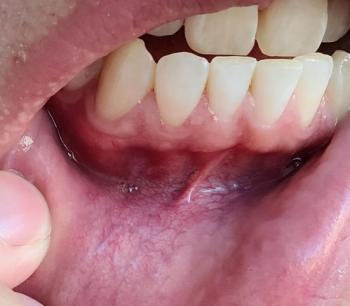
Patients with lower front gum inflammation may also experience tartar buildup, periodontal disease, gum abscesses, or tooth decay. Explore these related clinical case studies.

Other topics:
Other Dental Clinic