Your Smile, Perfected with Precision.

The Science Behind a “10-Second” Tooth-Decay Treatment: Can Cavities Really Be Stopped Without Drilling?
Language :
Topics:
A striking new direction in dentistry is changing the traditional idea that every cavity must immediately be treated with a dental drill. Scientists and dentists are increasingly using nonrestorative treatments designed to stop or slow the progression of tooth decay while preserving as much natural tooth structure as possible.
One of the best-studied examples is 38% silver diamine fluoride (SDF), a professionally applied liquid that can arrest certain active dental caries lesions without surgically removing the decayed dentin. The American Dental Association recognizes SDF as a noninvasive option for arresting dentinal caries in appropriate situations.
The “10-Second” Discovery
The idea that a cavity can be treated in approximately 10 seconds is not entirely fictional—but it needs important scientific context.
Clinical studies of SDF have used application times ranging from approximately 10 seconds to 3 minutes. However, the American Academy of Pediatric Dentistry recommends an application time of about one minute, followed by drying, rather than claiming that every cavity can be successfully treated in exactly 10 seconds.
So the more accurate scientific headline is:
A minimally invasive liquid treatment can sometimes be applied in seconds to minutes and may arrest certain cavities without drilling.
That is very different from saying that a severe cavity can simply be cured in 10 seconds.
How Does Silver Diamine Fluoride Work?
SDF combines two important components: silver and fluoride.
Silver has antimicrobial properties that can interfere with bacteria and biofilm associated with tooth decay. Fluoride supports remineralization and helps strengthen the remaining mineral structure. Silver and fluoride ions can also interfere with enzymes involved in the breakdown of the dentin matrix.
The goal isn't necessarily to rebuild a badly damaged tooth instantly.
Instead, the treatment can stop or slow the biological process responsible for the lesion progressing.
This represents a major change in dental philosophy: rather than automatically removing every area of softened dentin, dentists can sometimes focus on controlling the disease while preserving tooth structure.
Why No Drilling Can Be Important
Traditional restorative dentistry often involves removing diseased tooth structure and placing a restoration.
Modern caries management recognizes that dental caries is a dynamic disease involving demineralization, remineralization, bacteria, diet and individual risk factors. The ADA notes that the traditional “drill and fill” approach does not address the entire disease process.
For appropriately selected lesions, nonrestorative treatment may therefore provide several advantages:
-
No conventional drilling
-
Less removal of natural tooth structure
-
Minimal discomfort
-
Short clinical application
-
Potentially useful for patients with dental anxiety
-
Useful when conventional restorative treatment is difficult
-
Can help control active caries while treatment is planned
The Most Visible Side Effect: The Cavity Turns Dark
There is an important catch.
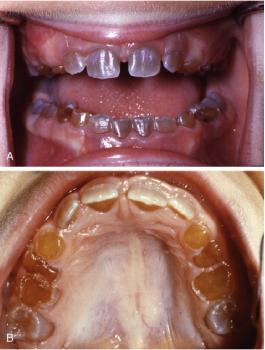
When SDF successfully arrests a carious lesion, the affected area commonly becomes dark or black.
This isn't necessarily a sign that treatment failed. In fact, visible staining of the carious dentin is associated with the arrest process.
The permanent discoloration can make SDF less attractive when the cavity is located in a highly visible area.
For that reason, dentists must discuss the cosmetic consequences with patients before treatment.
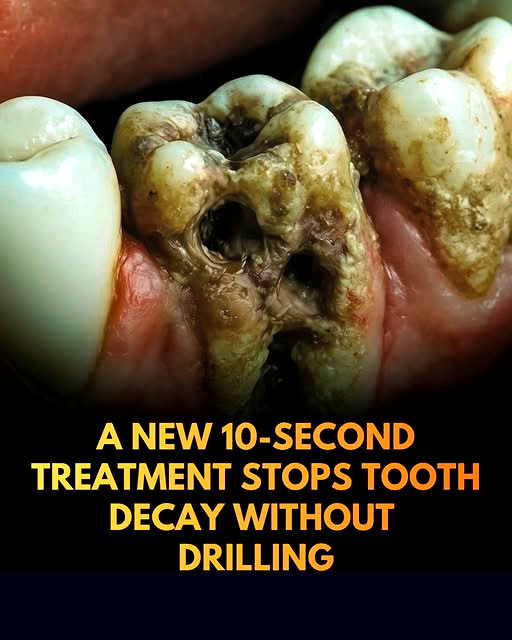
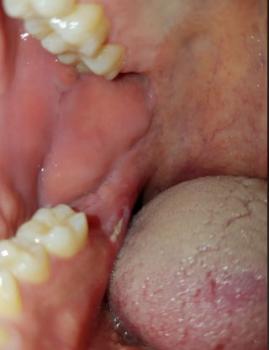
What About a Large Hole Like the Tooth in the Image?
This is where social-media headlines can become misleading.
A severely destroyed tooth cannot necessarily be restored simply by placing SDF on it.
SDF may arrest the biological activity of a carious lesion, but it does not magically reconstruct missing enamel and dentin.
The ADA specifically notes that further restoration may be necessary when a cavitated tooth has lost significant form or function.
Depending on the tooth, the dentist may ultimately recommend:
-
A filling
-
A crown
-
Pulp therapy or root canal treatment
-
Extraction
-
Another restorative or surgical procedure
The correct treatment depends on the depth of decay, remaining tooth structure, pulp condition, symptoms, restorability and the patient's overall caries risk.
What Does the Latest Science Say?
Research continues to strengthen the case for SDF as a caries-arresting treatment.
A randomized placebo-controlled clinical trial reported by the ADA found that 54% of caries lesions treated with SDF were arrested compared with 21% in the placebo group in the studied pediatric population.
At the same time, researchers continue to emphasize limitations in the evidence. A 2026 JADA review reported evidence supporting remineralization effects but noted that much of the underlying research was laboratory-based and that the overall certainty of that evidence was very low.
That distinction matters.
Promising science does not mean every cavity can be permanently fixed with a 10-second treatment.
A New Era of Tooth Preservation
The bigger scientific discovery isn't simply a faster way to treat cavities.
It is the shift toward preserving natural tooth structure whenever clinically appropriate.
Instead of asking only, “How much decay should we drill away?” modern dentistry increasingly asks:
“Can we control the disease while preserving the tooth?”
For selected patients and lesions, SDF provides one evidence-based answer.
But it is not a universal replacement for fillings, crowns or root canal treatment.
Bottom Line
The viral claim that a “10-second treatment stops tooth decay without drilling” is based on a real concept but oversimplifies the science.
Silver diamine fluoride can arrest certain active cavities without conventional drilling, and clinical studies have used application times as short as 10 seconds. However, approximately one minute is a commonly recommended application time, and severely damaged teeth may still require conventional restorative treatment.
The future of dentistry may not be about eliminating the dental drill completely.
It may be about knowing when we don't need to use it.
Can tooth extraction cause infection? Mild inflammation is normal, but increasing swelling, fever, or severe pain may indicate infection. Learn more about post-extraction infection warning signs in this detailed guide.
Book a consultation with our Cebu dental specialists for proper evaluation and care.
Ready to get expert guidance?
If you’re experiencing severe pain or delayed healing, book a consultation with our Cebu dental specialists to get proper evaluation and care.
Consultation or contact page .
Book a Consultation
For severe discomfort or delayed healing, book a consultation with our Cebu dental specialists today.
Looking for a dentist? Browse our Cebu dental directory to find trusted clinics near you.
Medical Review and Clinical Basis
This article is based on clinical dental guidelines and real patient recovery patterns observed after tooth extraction procedures. The information reflects common post-extraction healing stages, including normal clot formation, gum tissue repair, and signs of possible complications such as dry socket or infection.
While mild discomfort is expected after a dental extraction, worsening pain after Day 3, bad odor, exposed bone, or spreading pain may require professional evaluation. These symptoms are consistent with known post-extraction complications described in standard dental practice.
About Cebu Dental Implants
Cebu Dental Implants provides comprehensive tooth extraction, surgical procedures, and dental implant services in the Philippines. Our team evaluates post-extraction healing, manages complications such as dry socket, and advises patients on proper aftercare to prevent infection and delayed healing.
If you experience severe pain or unusual symptoms after extraction, early professional assessment is recommended to prevent further complications.
Important Medical Disclaimer
This content is for educational purposes only and does not replace professional dental diagnosis. Every patient heals differently. If symptoms worsen or do not improve within a few days, consult a licensed dentist for proper evaluation and treatment.
Author
This article was prepared by the Cebu Dental Implants content team in consultation with licensed dental professionals experienced in tooth extraction and implant procedures.
Related Clinical Cases
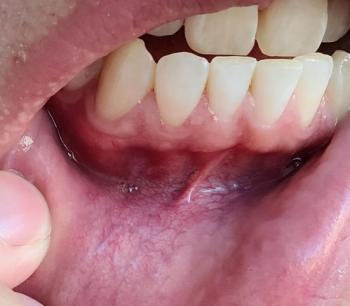
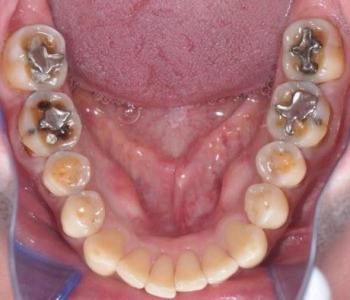
Patients with lower front gum inflammation may also experience tartar buildup, periodontal disease, gum abscesses, or tooth decay. Explore these related clinical case studies.

Other topics:
Other Dental Clinic