Transforming Smiles, Restoring Confidence.

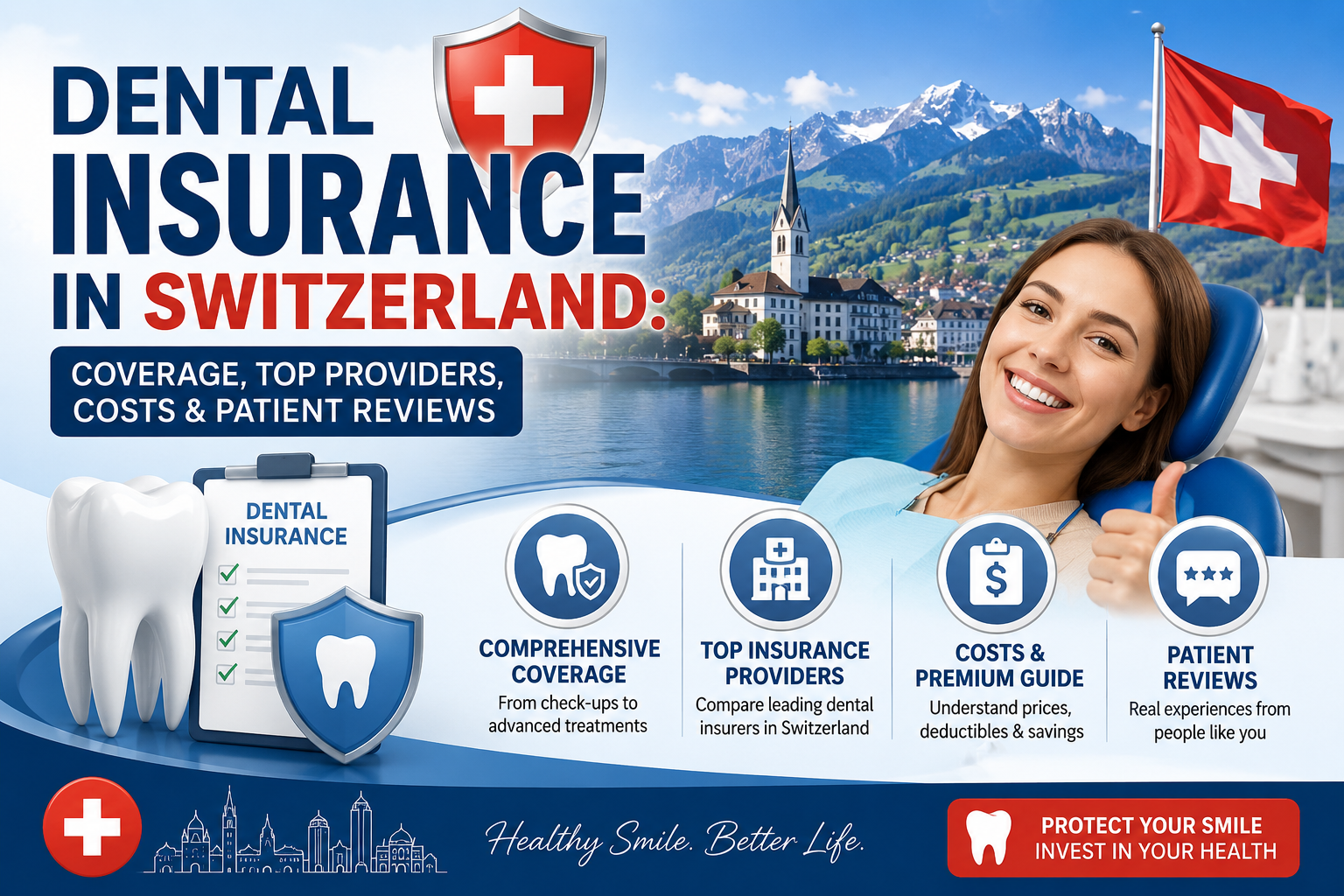
Dental Insurance in Switzerland: Coverage, Top Providers, Costs & Patient Reviews
image hero:
Country:
Navigating dental insurance in Switzerland can be confusing, particularly for newcomers who assume that mandatory health insurance covers routine dental treatment.
In reality, mandatory basic health insurance under LAMal/KVG generally does not cover ordinary adult dental care. Routine examinations, dental hygiene, fillings, crowns, bridges and most dental implants are normally paid out of pocket unless a specific statutory exception applies.
Because Swiss dental treatment can be expensive, many residents consider supplementary dental insurance (Zahnzusatzversicherung).
But supplementary policies vary significantly. Reimbursement percentages, annual limits, waiting periods, exclusions and acceptance requirements can make one policy substantially more useful than another.
1. What Does Swiss Dental Insurance Cover?
Supplementary dental insurance can provide benefits ranging from preventive treatment to major restorative procedures.
The exact benefits depend on the policy.
Prophylaxis and Basic Dental Care
Depending on the plan, coverage may include:
-
Dental examinations
-
Professional dental cleaning
-
Dental hygiene
-
X-rays
-
Preventive treatment
-
Basic fillings
Some policies reimburse a percentage of eligible expenses, while others impose annual or treatment-specific limits.
Extended Dental Treatment
Higher-level policies may contribute toward:
-
Root canal treatment
-
Periodontal treatment
-
Extractions
-
More complex restorative procedures
Again, the policy wording determines whether a specific treatment qualifies.
Major Restorative and Prosthetic Treatment
Some supplementary policies provide benefits for:
-
Crowns
-
Bridges
-
Dentures
-
Prosthetic treatment
-
Dental implants
Implants require particular attention because the word "implant" can refer to several separate costs, including surgery, implant components, abutments and the final crown.
A policy covering dental implants does not necessarily mean that it pays the majority of the total treatment.
Orthodontics
Orthodontic coverage can be particularly valuable for families.
Depending on the plan, benefits may apply to:
-
Traditional braces
-
Fixed orthodontic appliances
-
Removable appliances
-
Certain aligner treatments
-
Other orthodontic procedures
Children and teenagers often receive more favorable orthodontic benefits than adults.
2. Basic Insurance vs. Supplementary Dental Insurance
The distinction is important.
| Coverage | Mandatory LAMal/KVG | Supplementary Dental Insurance |
|---|---|---|
| Routine dental examination | Generally not covered | May be covered |
| Dental cleaning | Generally not covered | May be covered |
| Standard filling | Generally not covered | May be covered |
| Root canal | Generally not covered | Depends on policy |
| Crown | Generally not covered | Depends on policy |
| Bridge | Generally not covered | Depends on policy |
| Dental implant | Generally not covered | Depends on policy |
| Dentures | Generally not covered | Depends on policy |
| Orthodontics | Limited circumstances | Often available |
| Qualifying dental accident | May be covered under applicable insurance | Policy dependent |
Basic insurance does cover dental treatment in certain legally defined circumstances, so "never covered" would be inaccurate.
3. Major Swiss Dental Insurance Providers
Swiss consumers can choose from supplementary products offered by several established insurers.
Common names encountered when comparing Swiss dental insurance include:
-
SWICA
-
Sanitas
-
CSS
-
KPT
-
Groupe Mutuel
-
Concordia
-
Helsana
The important point is that the insurer's name alone does not determine whether a policy is good.
The specific product and benefit level matter much more.
SWICA
SWICA offers dental supplementary insurance through its Denta range.
The available reimbursement level depends on the selected product. SWICA's current information illustrates how dental policies can combine reimbursement percentages with annual maximums and separate orthodontic benefits.
When evaluating SWICA, consumers should pay particular attention to:
-
Annual maximum
-
Reimbursement percentage
-
Orthodontic benefits
-
Waiting periods
-
Eligibility requirements
-
Premium structure
Sanitas
Sanitas offers supplementary dental insurance with different levels of coverage.
Its published conditions illustrate an important feature of Swiss dental insurance: different procedures can have different waiting periods and eligibility requirements.
For example, certain restorative and periodontal treatments may have different qualification periods from prosthetic treatment.
CSS
CSS offers supplementary dental insurance covering a range of dental and orthodontic services depending on the selected product.
Its plans demonstrate why consumers should examine:
-
Dental treatment reimbursement
-
Orthodontic reimbursement
-
Annual maximums
-
Waiting periods
-
Dental certificates
-
Conditions for existing dental problems
KPT
KPT is another Swiss insurer worth including when comparing dental insurance, particularly for families interested in children's dental and orthodontic coverage.
Parents should compare the total potential benefit rather than simply choosing the policy with the lowest monthly premium.
Groupe Mutuel
Groupe Mutuel also offers supplementary insurance products relevant to dental expenses.
For adults considering higher levels of protection, the important comparison points are the maximum annual reimbursement, covered procedures and premium over time.
Concordia and Helsana
Concordia and Helsana are also established Swiss insurers that consumers may encounter when comparing supplementary health and dental products.
As with the other insurers, the exact product conditions matter more than the brand name.
4. What Do Customers and Expats Complain About?
Reviews and consumer discussions tend to reveal several recurring frustrations.
"I Thought My Health Insurance Covered My Teeth"
This is perhaps the biggest surprise for newcomers.
Someone can have mandatory Swiss health insurance and still receive a large bill for ordinary dental treatment.
"The Insurance Percentage Sounds Better Than the Actual Benefit"
A policy advertising a high reimbursement percentage may still have a relatively low annual maximum.
For example:
75% reimbursement up to CHF 2,000
does not mean the insurer will pay 75% of every dental bill without limitation.
The annual maximum can significantly reduce the actual reimbursement for expensive procedures.
"I Couldn't Get Coverage After My Dentist Found the Problem"
This is another major issue.
Supplementary insurers can use health declarations, dental certificates and underwriting requirements.
An applicant with known decay, missing teeth, planned crowns or other existing dental conditions may face:
-
Exclusions
-
Limited benefits
-
Additional conditions
-
Rejection of the application
Therefore, buying dental insurance after receiving a major treatment recommendation may be too late for that particular problem.
"The Premium Gets More Expensive With Age"
Some dental insurance products use age-related pricing structures.
Consumers should therefore calculate the long-term cost, rather than looking only at the first-year premium.
5. Waiting Periods
Waiting periods are another important consideration.
Depending on the policy and treatment, a waiting period may apply before reimbursement becomes available.
Some policies use periods of six or twelve months, while particular benefits can have different qualification rules.
This is especially important for major restorative treatment.
If you purchase insurance today and already know that you need a crown or implant, you should not assume that the upcoming treatment will automatically be covered.
Ask the insurer before treatment begins.
6. Pre-Existing Dental Conditions
Pre-existing conditions are one of the biggest issues in Swiss supplementary dental insurance.
The insurer may ask for information about your current dental health or require a dental certificate.
Problems that have already been diagnosed can potentially result in an exclusion or rejection.
For this reason, people who want dental insurance should ideally investigate their options before they have an expensive dental problem.
This does not mean every insurer will automatically reject someone with a dental history. The result depends on the insurer's underwriting rules and the individual application.
7. The Age-Curve Problem
Dental insurance can become more complicated as people get older.
Premiums may increase while annual reimbursement limits do not necessarily increase proportionally.
Imagine two hypothetical situations.
Young Adult
Annual premium:
CHF 480
Potential annual reimbursement:
CHF 1,500
The policy could provide useful protection if significant treatment occurs.
Older Adult
Annual premium:
CHF 1,200
Potential annual reimbursement:
CHF 2,000
The policy might still be valuable, but the customer needs to consider whether the long-term premium cost justifies the available protection.
This is why comparing only the reimbursement percentage is not enough.
8. Is Dental Insurance Worth It?
There is no universal answer.
Dental Insurance May Be Worth Considering If:
-
You have children who may require orthodontics.
-
You want protection against unpredictable dental expenses.
-
You expect substantial dental treatment over the coming years.
-
The policy has a high enough annual maximum.
-
The premium is affordable over the long term.
-
You can obtain coverage without major exclusions.
Saving Money Yourself May Make More Sense If:
-
You have very healthy teeth.
-
You rarely require dental treatment.
-
The policy has a low annual maximum.
-
Premiums are high relative to potential benefits.
-
Major existing problems are excluded.
-
You have sufficient savings to handle unexpected dental bills.
The decision is essentially a comparison between risk protection and self-funding.
9. Always Ask for a Kostenvoranschlag
Before agreeing to expensive dental treatment, request an itemized Kostenvoranschlag from your dentist.
This treatment estimate should ideally show:
-
Diagnosis
-
Proposed procedure
-
Individual treatment costs
-
Laboratory charges
-
Materials
-
Number of teeth involved
-
Total estimated cost
Then send the estimate to your insurance company before treatment.
Ask:
"How much of this treatment will my policy reimburse?"
Whenever possible, obtain the answer in writing.
This can prevent a major financial surprise.
10. Dental Insurance and Implants
Implant treatment deserves special attention because total costs can become substantial.
A complete implant restoration may involve:
-
Consultation
-
Diagnostic imaging
-
Tooth extraction
-
Bone grafting, if required
-
Implant surgery
-
Implant fixture
-
Abutment
-
Temporary restoration
-
Final crown
-
Laboratory costs
A policy may cover some of these expenses but not others.
Therefore, ask the insurer to assess the entire treatment plan, rather than simply asking whether "implants are covered."
11. Dental Treatment Near Switzerland's Borders
Residents living near France, Germany, Italy or Austria sometimes investigate cross-border dental treatment because prices can differ considerably.
However, insurance coverage abroad is policy-specific.
Before receiving treatment outside Switzerland, ask:
-
Is treatment abroad covered?
-
Does the dentist need to be recognized by the insurer?
-
Is prior authorization required?
-
Is reimbursement calculated according to Swiss prices?
-
Are there geographical restrictions?
-
Does the policy impose a separate annual limit?
Never assume that treatment covered in Switzerland will automatically be covered abroad.
12. How to Compare Swiss Dental Insurance
Use this checklist when comparing policies.
| Factor | What to Check |
|---|---|
| Premium | Monthly and annual cost |
| Reimbursement | 50%, 60%, 75%, etc. |
| Annual maximum | Maximum CHF paid each year |
| Waiting period | When benefits begin |
| Existing conditions | Exclusions or underwriting |
| Implants | Whether implant treatment is covered |
| Crowns | Percentage and annual limits |
| Root canals | Included or excluded |
| Periodontal treatment | Included or excluded |
| Orthodontics | Especially important for children |
| Age limits | Maximum age for benefits |
| Treatment abroad | Whether cross-border care qualifies |
| Pre-authorization | Whether insurer approval is required |
13. Practical Recommendations
1. Investigate Insurance Before You Need It
Do not wait until a dentist tells you that you need several crowns or an implant.
Once a problem has been diagnosed, obtaining comprehensive coverage for that problem may become difficult.
2. Compare the Annual Maximum
A high reimbursement percentage means little if the annual maximum is low.
Always calculate the maximum amount you could actually receive.
3. Read the Exclusions
Look specifically for exclusions involving:
-
Existing decay
-
Missing teeth
-
Previously diagnosed periodontal disease
-
Planned treatment
-
Orthodontic treatment already underway
-
Treatment abroad
4. Get Written Confirmation
For expensive treatment, obtain a written coverage decision before starting.
5. Compare the Long-Term Premium
Do not compare policies using only the first month's price.
Estimate what you could pay over five or ten years.
6. Consider Children Separately
For families, orthodontic coverage can dramatically change the financial calculation.
A policy that is unattractive for a healthy adult may be much more valuable for a child who eventually requires extensive orthodontic treatment.
14. Final Verdict
Swiss dental insurance can provide valuable financial protection, but the best policy is not necessarily the one with the highest reimbursement percentage.
The most important factors are:
Premium + reimbursement percentage + annual maximum + exclusions + waiting period.
Mandatory LAMal/KVG insurance generally leaves ordinary adult dental care outside its standard benefits, making supplementary dental insurance worth investigating for residents who want additional protection.
However, consumers should carefully compare policies from providers such as SWICA, Sanitas, CSS, KPT, Groupe Mutuel, Concordia and Helsana rather than choosing solely based on brand reputation.
And if you already have a dental problem, the most important step may not be buying insurance at all—it may be obtaining a detailed Kostenvoranschlag and finding out exactly what your existing coverage will pay.
Frequently Asked Questions
Does Swiss health insurance cover dental treatment?
Mandatory health insurance generally does not cover ordinary dental treatment, although specific statutory exceptions exist.
What is Zahnzusatzversicherung?
It is supplementary dental insurance that can provide additional benefits for dental and orthodontic treatment beyond mandatory health insurance.
Does dental insurance cover implants in Switzerland?
Some supplementary policies provide benefits for implant-related treatment, but coverage and annual limits vary significantly.
Can I buy dental insurance after discovering a cavity?
You can apply, but the insurer may require a dental assessment and may exclude existing conditions or decline coverage.
How long is the waiting period?
It varies by insurer and treatment. Six- and twelve-month periods are common examples, but some benefits can have different qualification rules.
Is Swiss dental insurance expensive?
Premiums vary according to age, insurer, product and coverage level. Compare the annual premium with the maximum potential reimbursement.
Should I get dental insurance for my child?
It can be worth considering, particularly when orthodontic treatment is a concern. Compare orthodontic limits, age restrictions, waiting periods and total premiums.
Can I use dental insurance for treatment in Germany, France or Italy?
Some policies may permit treatment abroad, but this must be confirmed in the individual policy. Obtain written confirmation before receiving expensive cross-border treatment.
Disclaimer
Insurance products, premiums, benefits, exclusions and eligibility requirements can change. This article is intended for general educational and informational purposes and does not constitute insurance, financial or medical advice. Always check the current policy conditions directly with the insurer before purchasing coverage or starting treatment.
Last reviewed: August 2026
Related Clinical Cases
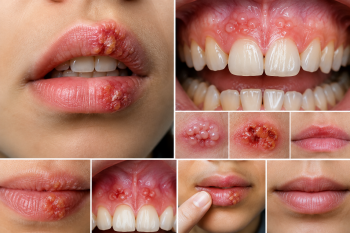
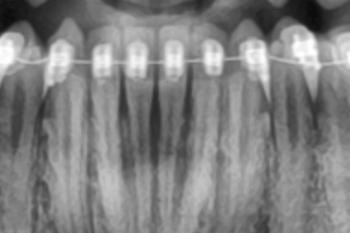
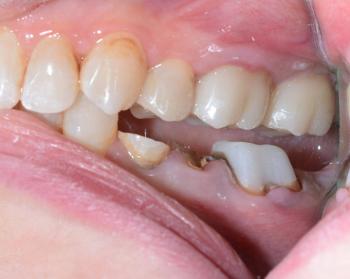
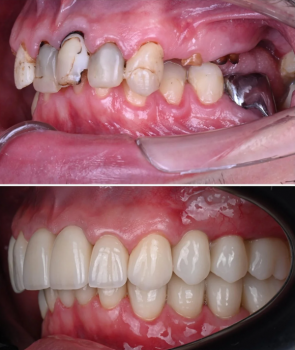
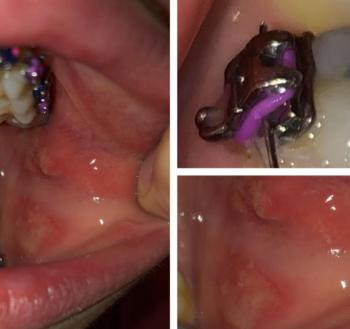
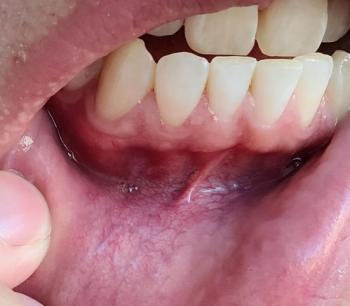
Patients with lower front gum inflammation may also experience tartar buildup, periodontal disease, gum abscesses, or tooth decay. Explore these related clinical case studies.


Other topics:
Other Dental Clinic