Strong Teeth, Fresh Breath, Brighter You.

Severe Tartar Buildup and Gum Inflammation: Why Delaying Dental Scaling Can Cost More
Image:
Severity:
Teeth Problems:
Understanding the Difference Between Plaque and Tartar
Dental plaque is a sticky biofilm containing bacteria that continually forms on teeth. When plaque remains on tooth surfaces, minerals in saliva can harden it into dental calculus, commonly called tartar. Once calculus has formed, brushing and flossing alone cannot reliably remove it. A dental professional must remove it using appropriate scaling instruments.
In the lower front teeth, tartar frequently accumulates on the tongue-facing surfaces near the gumline. This area is particularly prone to deposits because of its proximity to the openings of the salivary glands beneath the tongue.
As plaque accumulates around the gums, the tissue may become red, swollen, tender, or prone to bleeding during brushing. These findings can indicate plaque-induced gingivitis. If periodontal disease develops, inflammation may extend into the supporting tissues and bone around the teeth.
Important clinical distinction: Gingivitis is often reversible with professional cleaning and effective daily oral hygiene. Periodontitis, however, can cause permanent loss of supporting bone and attachment. The condition cannot be accurately staged from a photograph alone.
Dental Expert Analysis: What Severe Tartar May Mean
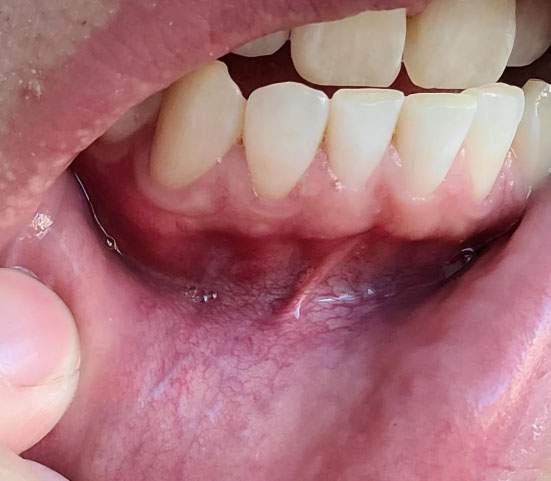
In the referenced dental case, visible calculus around the lower anterior teeth and signs of gum inflammation are the main findings described. Possible localized gum recession is also mentioned. These observations warrant an in-person dental examination.
A dentist may assess the following:
-
Calculus distribution: Whether hardened deposits are limited to the visible tooth surfaces or extend beneath the gumline.
-
Gum inflammation: Whether the gums are red, swollen, tender, or bleeding.
-
Periodontal pocket depth: Measurements help identify whether the supporting tissues may be affected.
-
Gum recession and tooth mobility: These findings may indicate loss of periodontal support.
-
Caries and bone changes: Dental X-rays may be indicated when the clinical examination suggests hidden decay or bone loss.
The appropriate treatment depends on the examination. Professional scaling may be sufficient for gingivitis and accessible calculus. Deposits beneath the gumline associated with periodontitis may require scaling and root planing, followed by periodontal reassessment and maintenance care.
Why Delaying Dental Cleaning Can Make Treatment More Expensive
Some people postpone dental appointments because they believe that avoiding treatment saves money. However, untreated gum inflammation and periodontal disease may become more difficult to manage over time.
Potential consequences include persistent bad breath, gum recession, periodontal pocket formation, loss of supporting bone, and loose teeth. Not every patient with tartar will develop these complications, but delaying evaluation can allow disease to progress unnoticed.
Early professional assessment can identify problems before more complex treatment is needed. The goal is not simply to make teeth look cleaner; it is to preserve the tissues supporting the teeth and protect long-term oral health.
What Happens During Professional Dental Scaling?
Step 1: Examination
The dentist examines the teeth and gums, reviews symptoms and medical history, and determines whether periodontal measurements or X-rays are needed.
Step 2: Calculus removal
The dental professional uses ultrasonic or hand instruments to remove hardened deposits. If deeper periodontal pockets are present, additional treatment may be necessary.
Step 3: Post-cleaning assessment
The dentist checks the gums and explains any remaining periodontal concerns. Some patients experience temporary tenderness or sensitivity after treatment, particularly when deposits were extensive or the gums were already inflamed.
Step 4: Home care and maintenance
Brush twice daily with fluoride toothpaste, clean between the teeth daily, and attend follow-up appointments according to the dentist's recommendations. Patients with periodontitis may need more frequent periodontal maintenance than patients with healthy gums.
Short Story: The Salesman Who Tried to Save Money
This is an illustrative fictional story, not a documented patient case.
Marco was a 38-year-old traveling salesman who spent most of his day meeting customers. He wanted to save money for household expenses, so he repeatedly postponed his dental cleaning appointments.
At first, he noticed only a little blood when brushing his lower front teeth. Later, he began noticing persistent bad breath and a rough, yellow-brown deposit behind his lower incisors. He assumed that brushing harder would remove the buildup, but the hardened tartar remained.
Months passed. When his gums began bleeding more frequently, Marco finally visited a dentist. The examination revealed substantial calculus and inflamed gums. The dentist explained that brushing could remove soft plaque but could not remove hardened tartar. Further periodontal assessment was needed to determine whether the supporting tissues had been damaged.
Marco received professional cleaning and instructions for daily interdental cleaning. He also learned that some areas required monitoring and follow-up.
He realized that postponing preventive care had not solved his dental problem. It had simply allowed the problem to remain untreated while he worried about the cost.
From then on, Marco included routine dental care in his budget. He understood that a healthy smile mattered not only for meeting customers confidently, but also for maintaining his long-term oral health.
Lesson: Saving money is important, but delaying necessary dental care can carry health and financial risks. An early examination helps determine the least invasive appropriate treatment before a problem potentially becomes more complicated.
Practical Prevention Tips
-
Brush for two minutes twice daily using a soft-bristled toothbrush and fluoride toothpaste.
-
Clean between the teeth every day with floss or appropriately sized interdental brushes.
-
Avoid trying to scrape tartar off at home with sharp tools, which can injure the gums and damage tooth surfaces.
-
Avoid smoking or tobacco use, which increases periodontal risk.
-
Limit frequent sugary snacks and drinks to reduce the risk of tooth decay.
-
Schedule professional dental examinations and cleaning at intervals recommended for your individual needs.
-
Seek dental assessment if gum bleeding persists, swelling develops, or teeth feel loose.
When Should You Seek Urgent Dental Care?
Arrange a dental appointment promptly if you have persistent gum bleeding, worsening inflammation, pus around a tooth, persistent bad breath despite good oral hygiene, or new tooth mobility.
Seek urgent dental care for rapidly increasing facial or jaw swelling, severe pain with swelling, or fever associated with a suspected dental infection. Difficulty breathing or swallowing, or swelling that threatens the airway, requires emergency medical care.
Professional scaling is not a substitute for treating an abscess or another spreading infection when one is present.
Teeth Case – Zoom 100%
Focused Area: Lower anterior teeth (lingual side) and gingival tissue
Full Analysis and Visual Assessment
This evaluation is based on the provided image only and does not replace a clinical dental examination.
Observed Conditions
-
Visible dental calculus (tartar) accumulation along the gumline, especially behind the lower front teeth
-
Gingival redness and mild swelling consistent with inflammation
-
Possible early gum recession in localized areas
-
No obvious carious lesions visible, though calculus may conceal decay without radiographic examination
Probable Diagnosis
-
Plaque-induced gingivitis
-
Moderate dental calculus buildup
-
Risk of early periodontal disease if untreated
Recommended Treatment Process
Step 1: Professional Dental Scaling (Day 1)
-
Ultrasonic scaling to remove hardened calculus
-
Manual scaling for residual deposits
-
Polishing to smooth tooth surfaces and reduce plaque retention
Estimated duration: 30–60 minutes
Local anesthesia: Usually not required
Step 2: Healing and Recovery Phase
| Time Frame | Expected Condition |
|---|---|
| Days 1–3 | Reduction in gum redness and tenderness |
| Days 4–7 | Gum tightening and decreased inflammation |
| Days 8–14 | Near-complete soft tissue healing |
A 14-day healing period is realistic, assuming proper oral hygiene is maintained.
Potential Issues If Scaling Is Delayed
-
Progression from gingivitis to periodontitis
-
Gradual bone loss supporting the teeth
-
Increased tooth sensitivity and mobility
-
Chronic bad breath
-
Higher likelihood of tooth loss in advanced stages
-
More complex and costly dental treatment required later
Post-Treatment Care Instructions
-
Brush twice daily using a soft-bristle toothbrush
-
Use fluoride toothpaste
-
Floss or use interdental brushes daily
-
Rinse with salt water or dentist-prescribed mouthwash
-
Avoid smoking and excessive sugar intake during the healing period
Professional Comment
This case appears to be in a manageable and reversible stage. Prompt professional scaling can restore gum health and prevent long-term periodontal damage.
Visit a Dental Clinic Near You
Find a dental clinic for professional scaling and gum evaluation using our directory:
Related Clinical Cases
Patients with lower front gum inflammation may also experience tartar buildup, periodontal disease, gum abscesses, or tooth decay. Explore these related clinical case studies.