Because Every Tooth Deserves Care.

What Makes a Filipina Smile So Beautiful? Alex Eala and the Austronesian Story Behind Filipino Beauty
Language :
Topics:
There is something captivating about a genuine Filipina smile.
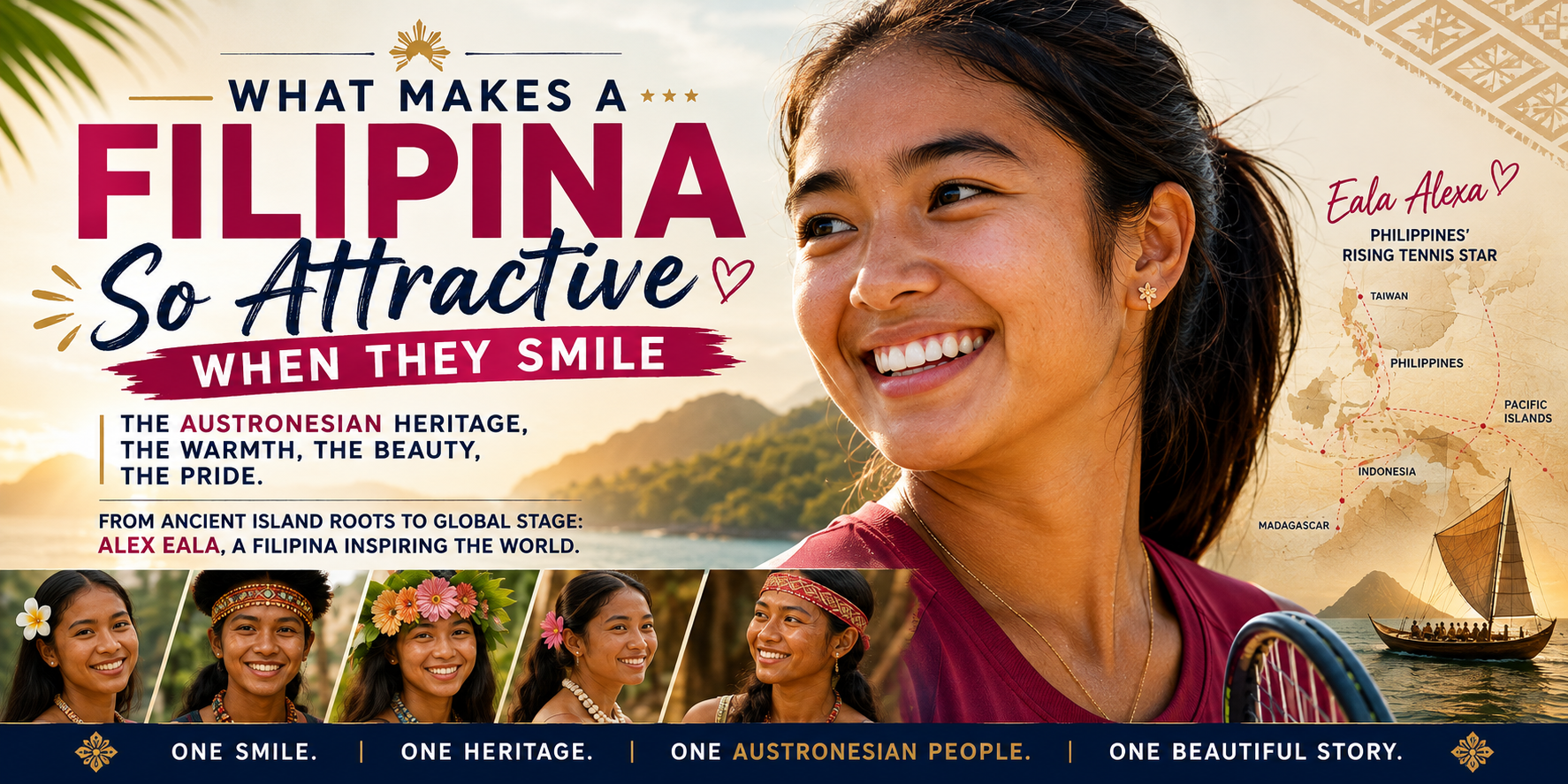
It can be warm, welcoming, confident and expressive—all at the same time. When Filipino tennis star Alexandra “Alex” Eala smiles on the international stage, that expression often becomes part of the moment. Her smile reflects confidence, happiness and the personality of a young athlete representing the Philippines around the world.
But could there be a deeper story behind the familiar appearance of Filipinos?
The answer takes us into the fascinating history of the Austronesian peoples.
Read our related article: Alex Eala and the Austronesian Connection
Alex Eala: A Modern Filipina on the World Tennis Stage
Alex Eala has become one of the most prominent Filipino athletes in international tennis.
The WTA lists Eala as a Filipina player from Quezon City, Philippines. She began playing tennis at four years old and has progressed from the junior and ITF circuits to the highest levels of professional tennis.
Her rise has also created a new generation of Filipino tennis fans.
In 2026, Eala made history at Wimbledon by becoming the first Filipina to reach the second week of a Grand Slam singles tournament in the Open Era. She defeated defending champion Iga Swiatek in the third round before reaching the Round of 16.
Her success has made her face and personality increasingly familiar to tennis audiences worldwide.
And, naturally, people notice her smile.
Why Does a Filipina Smile Feel So Warm?
There is no single scientific explanation for why Filipina women smile beautifully.
Beauty is subjective. Facial appearance is influenced by many factors, including genetics, individual facial structure, culture, personality, expression, health and even the circumstances in which someone smiles.
A genuine smile can be particularly attractive because it communicates emotion.
When someone smiles naturally, the expression involves much more than the teeth. The eyes, cheeks, lips and surrounding facial muscles work together to create an expression of happiness and confidence.
That may be one reason Alex Eala's smile is so memorable.
It feels connected to her personality.
She can smile after winning a point, laugh during an interview, celebrate with supporters or simply enjoy a moment on court. The expression becomes part of the athlete people see beyond the competition.
The Austronesian Connection
The Philippines has a deep connection to the broader Austronesian world.
Austronesian languages and populations are spread across an enormous geographical area, extending from Island Southeast Asia across the Pacific and as far as Madagascar.
Research published in Nature Communications describes the Austronesian expansion as beginning roughly 4,000–5,000 years ago, with evidence pointing toward roots in Taiwan and subsequent movement through Island Southeast Asia and across the Pacific.
The Philippines occupies an important position within this broader history.
But this does not mean that every Filipina has the same appearance or that a particular facial feature can be identified as an “Austronesian smile.”
Filipinos are extraordinarily diverse.
Filipino Beauty Is Diverse
Walk through Manila, Cebu, Davao, Iloilo or any other Philippine community and you will see enormous variation in appearance.
Filipinas can have different skin tones, hair textures, facial structures, eye shapes and ancestral backgrounds.
That diversity is part of what makes Filipino identity so interesting.
The Philippines has experienced thousands of years of migration, interaction and population mixing. Genetic research shows that the population history of Island Southeast Asia is complex rather than belonging to one simple ancestral line.
Therefore, it is better to talk about shared history and cultural connections than to claim that a particular physical characteristic comes directly from an ancient population.
Why Alex Eala Is Such an Interesting Example
Alex Eala represents a modern Filipina identity that is simultaneously local and international.
She was born in the Philippines, developed her tennis career internationally and now competes against the world's best players.
Her smile can therefore become a symbol of something larger:
confidence, youth, Filipino identity and global ambition.
The WTA has also described Eala as a fan favorite, noting the strong support she receives when competing internationally.
Her appeal isn't simply about appearance.
It is the combination of her athletic ability, personality, competitive spirit and the pride she generates among Filipino fans.
Can You Find Similar Smiles Across Austronesian Peoples?
Yes, you can certainly find people across Austronesian-speaking communities who may share some broad physical characteristics with Filipinos.
Look across Indonesia, Malaysia, Taiwan, Micronesia, Polynesia and other parts of the Austronesian world, and you will encounter tremendous diversity—but also occasional similarities in appearance.
These similarities should not be interpreted as proof that two people are closely related.
Human populations share ancestry in complicated ways, and similar facial features can arise through shared ancestry, population history or simply normal human variation.
A beautiful smile belongs to the individual—not to a particular ethnicity.
The Beauty of the Filipino Smile
Perhaps what makes a Filipina smile so attractive isn't one specific genetic feature.
It may be the expression behind it.
A genuine Filipino smile can communicate hospitality, humor, confidence, friendliness and warmth. These qualities are cultural and personal as much as physical.
Alex Eala demonstrates this beautifully.
When she smiles after a major tennis victory, the expression represents more than a beautiful face. It represents an athlete who has worked for years to reach the world stage and a young Filipino woman carrying the Philippine flag into international competition.
From One Smile to an Ancient Island World
Alex Eala's smile can therefore be a doorway into a much bigger story.
Behind the modern Philippines lies a remarkable history of islands, migration, seafaring and cultural exchange.
The Austronesian world stretches across thousands of miles of ocean and includes an extraordinary variety of peoples and cultures.
So when people notice the beauty of a Filipina smile, there is no need to reduce that beauty to genetics.
Instead, we can appreciate the individual—and then explore the fascinating history of the people and islands from which Filipino culture emerged.
Alex Eala is one modern face of the Philippines. Her smile is uniquely hers. But the story behind Filipino identity reaches far beyond one person, extending into one of humanity's most remarkable maritime histories.
There is something captivating about a genuine Filipina smile.
It can be warm, welcoming, confident and expressive—all at the same time. When Filipino tennis star Alexandra “Alex” Eala smiles on the international stage, that expression often becomes part of the moment. Her smile reflects confidence, happiness and the personality of a young athlete representing the Philippines around the world.
But could there be a deeper story behind the familiar appearance of Filipinos?
The answer takes us into the fascinating history of the Austronesian peoples.
Read our related article: Alex Eala and the Austronesian Connection
Alex Eala: A Modern Filipina on the World Tennis Stage
Alex Eala has become one of the most prominent Filipino athletes in international tennis.
The WTA lists Eala as a Filipina player from Quezon City, Philippines. She began playing tennis at four years old and has progressed from the junior and ITF circuits to the highest levels of professional tennis.
Her rise has also created a new generation of Filipino tennis fans.
In 2026, Eala made history at Wimbledon by becoming the first Filipina to reach the second week of a Grand Slam singles tournament in the Open Era. She defeated defending champion Iga Swiatek in the third round before reaching the Round of 16.
Her success has made her face and personality increasingly familiar to tennis audiences worldwide.
And, naturally, people notice her smile.
Why Does a Filipina Smile Feel So Warm?
There is no single scientific explanation for why Filipina women smile beautifully.
Beauty is subjective. Facial appearance is influenced by many factors, including genetics, individual facial structure, culture, personality, expression, health and even the circumstances in which someone smiles.
A genuine smile can be particularly attractive because it communicates emotion.
When someone smiles naturally, the expression involves much more than the teeth. The eyes, cheeks, lips and surrounding facial muscles work together to create an expression of happiness and confidence.
That may be one reason Alex Eala's smile is so memorable.
It feels connected to her personality.
She can smile after winning a point, laugh during an interview, celebrate with supporters or simply enjoy a moment on court. The expression becomes part of the athlete people see beyond the competition.
The Austronesian Connection
The Philippines has a deep connection to the broader Austronesian world.
Austronesian languages and populations are spread across an enormous geographical area, extending from Island Southeast Asia across the Pacific and as far as Madagascar.
Research published in Nature Communications describes the Austronesian expansion as beginning roughly 4,000–5,000 years ago, with evidence pointing toward roots in Taiwan and subsequent movement through Island Southeast Asia and across the Pacific.
The Philippines occupies an important position within this broader history.
But this does not mean that every Filipina has the same appearance or that a particular facial feature can be identified as an “Austronesian smile.”
Filipinos are extraordinarily diverse.
Filipino Beauty Is Diverse
Walk through Manila, Cebu, Davao, Iloilo or any other Philippine community and you will see enormous variation in appearance.
Filipinas can have different skin tones, hair textures, facial structures, eye shapes and ancestral backgrounds.
That diversity is part of what makes Filipino identity so interesting.
The Philippines has experienced thousands of years of migration, interaction and population mixing. Genetic research shows that the population history of Island Southeast Asia is complex rather than belonging to one simple ancestral line.
Therefore, it is better to talk about shared history and cultural connections than to claim that a particular physical characteristic comes directly from an ancient population.
Why Alex Eala Is Such an Interesting Example
Alex Eala represents a modern Filipina identity that is simultaneously local and international.
She was born in the Philippines, developed her tennis career internationally and now competes against the world's best players.
Her smile can therefore become a symbol of something larger:
confidence, youth, Filipino identity and global ambition.
The WTA has also described Eala as a fan favorite, noting the strong support she receives when competing internationally.
Her appeal isn't simply about appearance.
It is the combination of her athletic ability, personality, competitive spirit and the pride she generates among Filipino fans.
Can You Find Similar Smiles Across Austronesian Peoples?
Yes, you can certainly find people across Austronesian-speaking communities who may share some broad physical characteristics with Filipinos.
Look across Indonesia, Malaysia, Taiwan, Micronesia, Polynesia and other parts of the Austronesian world, and you will encounter tremendous diversity—but also occasional similarities in appearance.
These similarities should not be interpreted as proof that two people are closely related.
Human populations share ancestry in complicated ways, and similar facial features can arise through shared ancestry, population history or simply normal human variation.
A beautiful smile belongs to the individual—not to a particular ethnicity.
The Beauty of the Filipino Smile
Perhaps what makes a Filipina smile so attractive isn't one specific genetic feature.
It may be the expression behind it.
A genuine Filipino smile can communicate hospitality, humor, confidence, friendliness and warmth. These qualities are cultural and personal as much as physical.
Alex Eala demonstrates this beautifully.
When she smiles after a major tennis victory, the expression represents more than a beautiful face. It represents an athlete who has worked for years to reach the world stage and a young Filipino woman carrying the Philippine flag into international competition.
From One Smile to an Ancient Island World
Alex Eala's smile can therefore be a doorway into a much bigger story.
Behind the modern Philippines lies a remarkable history of islands, migration, seafaring and cultural exchange.
The Austronesian world stretches across thousands of miles of ocean and includes an extraordinary variety of peoples and cultures.
So when people notice the beauty of a Filipina smile, there is no need to reduce that beauty to genetics.
Instead, we can appreciate the individual—and then explore the fascinating history of the people and islands from which Filipino culture emerged.
Alex Eala is one modern face of the Philippines. Her smile is uniquely hers. But the story behind Filipino identity reaches far beyond one person, extending into one of humanity's most remarkable maritime histories.
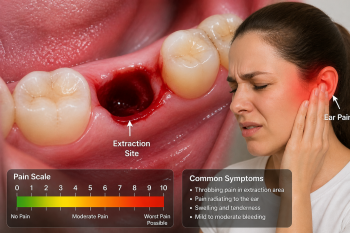
Can tooth extraction cause infection? Mild inflammation is normal, but increasing swelling, fever, or severe pain may indicate infection. Learn more about post-extraction infection warning signs in this detailed guide.
Book a consultation with our Cebu dental specialists for proper evaluation and care.
Ready to get expert guidance?
If you’re experiencing severe pain or delayed healing, book a consultation with our Cebu dental specialists to get proper evaluation and care.
Consultation or contact page .
Book a Consultation
For severe discomfort or delayed healing, book a consultation with our Cebu dental specialists today.
Looking for a dentist? Browse our Cebu dental directory to find trusted clinics near you.
Medical Review and Clinical Basis
This article is based on clinical dental guidelines and real patient recovery patterns observed after tooth extraction procedures. The information reflects common post-extraction healing stages, including normal clot formation, gum tissue repair, and signs of possible complications such as dry socket or infection.
While mild discomfort is expected after a dental extraction, worsening pain after Day 3, bad odor, exposed bone, or spreading pain may require professional evaluation. These symptoms are consistent with known post-extraction complications described in standard dental practice.
About Cebu Dental Implants
Cebu Dental Implants provides comprehensive tooth extraction, surgical procedures, and dental implant services in the Philippines. Our team evaluates post-extraction healing, manages complications such as dry socket, and advises patients on proper aftercare to prevent infection and delayed healing.
If you experience severe pain or unusual symptoms after extraction, early professional assessment is recommended to prevent further complications.
Important Medical Disclaimer
This content is for educational purposes only and does not replace professional dental diagnosis. Every patient heals differently. If symptoms worsen or do not improve within a few days, consult a licensed dentist for proper evaluation and treatment.
Author
This article was prepared by the Cebu Dental Implants content team in consultation with licensed dental professionals experienced in tooth extraction and implant procedures.
Video:
Related Clinical Cases
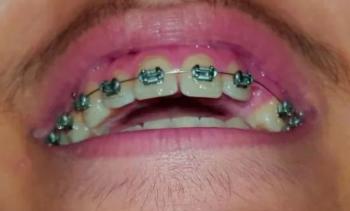
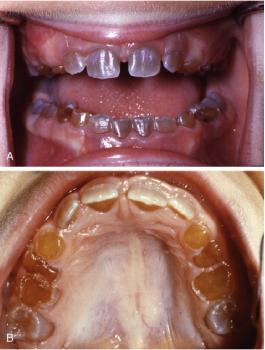
Patients with lower front gum inflammation may also experience tartar buildup, periodontal disease, gum abscesses, or tooth decay. Explore these related clinical case studies.





Other topics:
Other Dental Clinic