Smile Again with Comfort and Confidence.

Why Filipino Patients Are Spending Less on Dental Care: From the Boom Years to Today’s Cost-of-Living Crisis
Language :
Topics:
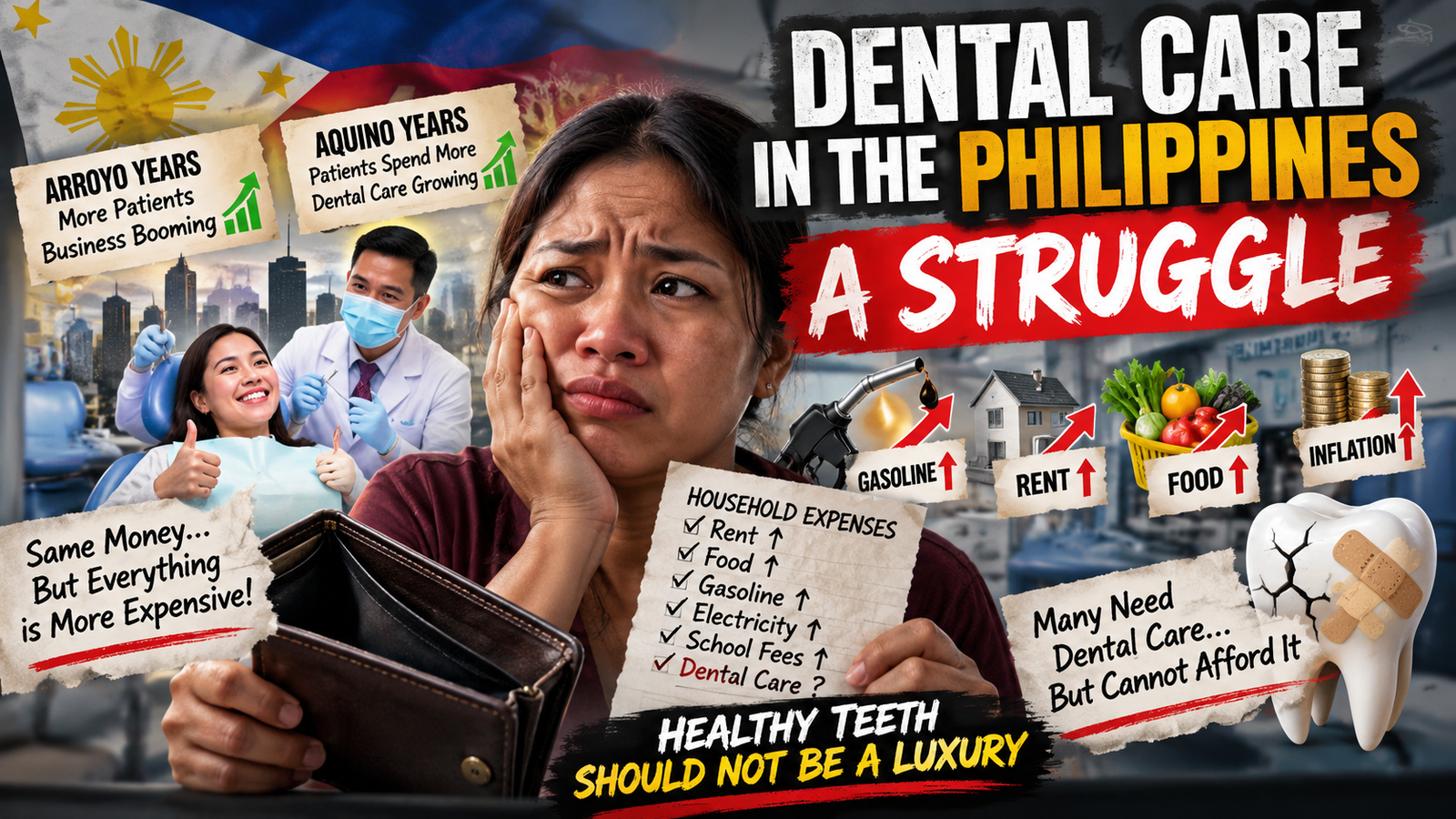
A conversation with a dentist revealed an interesting change in the Philippine dental market: there was a time when patients seemed to have more money available for dental treatment, while today many families are becoming increasingly careful about every peso they spend.
One dentist I spoke with described the years associated with the Gloria Macapagal-Arroyo and Benigno Aquino III administrations as particularly strong years for dental business.
According to the dentist's personal experience, patients were more willing to spend money on dental treatment. Dental clinics were busy, patients were paying for procedures, and sales were booming.
Today, however, the dentist sees a very different environment.
Patients are asking more questions about price.
They compare dentists.
They ask for cheaper alternatives.
They postpone treatment.
And instead of asking, "What is the best treatment?", some patients are asking:
"What is the cheapest option?"
That change says something important about the financial pressure many Filipino households are experiencing.
The Philippine Dental Market Has Changed
Dental care has always been an important part of health, but it is also an expense that many households can postpone when money becomes tight.
When a family has enough disposable income, spending ₱20,000, ₱30,000, or even more on dental treatment may be manageable.
But when household expenses continue rising, dental treatment can suddenly move down the priority list.
Food comes first.
Rent comes first.
Electricity comes first.
Transportation comes first.
School expenses come first.
Fuel costs money.
Then, if there is anything left, healthcare and dental care are considered.
This is one reason dentists can feel a significant difference in patient behavior during difficult economic periods.
Inflation Makes Every Peso Feel Smaller
The Philippine Statistics Authority reported that national headline inflation reached 6.1% in August 2026, after 6.2% in July. The average inflation rate from January through August 2026 was 5.2%.
That doesn't mean every product increased by exactly 6.1%.
Inflation measures the change in the overall price level of a basket of goods and services.
But for ordinary households, the practical experience is simple:
The same amount of money does not stretch as far as it used to.
The pressure is particularly significant for lower-income households. PSA reported that inflation for the bottom 30% of income households was 8.2% in August 2026, considerably higher than the 6.1% headline rate for all households.
That difference matters.
A household already operating on a tight budget has much less room to absorb higher prices.
Housing and Transportation Are Eating Into Household Budgets
The pressure isn't coming from one expense.
Several major categories are increasing.
In August 2026, the PSA recorded national inflation of:
-
7.9% for housing, water, electricity, gas and other fuels
-
13.5% for transport
-
5.0% for health
-
4.6% for food and non-alcoholic beverages
For lower-income households, the numbers were even more concerning in some categories. PSA reported 15.3% transport inflation and 10.3% inflation in housing, water, electricity, gas and other fuels for the bottom 30% income households in August 2026.
Imagine a family already struggling to pay rent, buy food, pay electricity and gasoline, and send children to school.
A dental procedure can become a difficult financial decision.
"Doc, Can You Make It Cheaper?"
This is perhaps one of the biggest changes dentists notice during economically difficult periods.
Patients may still want treatment.
They may understand that they have cavities, gum disease, missing teeth or a damaged tooth.
But wanting treatment and being able to afford treatment are two different things.
A patient might say:
"Doctor, how much is the cheapest?"
Or:
"Can I have the treatment later?"
Or:
"Can we do only the most important part first?"
This doesn't necessarily mean patients don't care about their teeth.
It can simply mean their household budget is under pressure.
The Problem: Dental Problems Don't Always Wait
Unfortunately, teeth don't understand inflation.
A cavity doesn't know that gasoline became more expensive.
An infected tooth doesn't know that rent increased.
Periodontal disease doesn't care whether a family is financially comfortable.
Dental problems can continue progressing while a patient waits for a better financial situation.
A small dental problem may eventually become a larger and more expensive problem.
For example:
Small cavity → larger cavity → tooth infection → root canal or extraction → possible tooth replacement
The longer treatment is postponed, the potential treatment complexity can increase.
That is why preventive dental care remains important even when household finances are tight.
The Irony: People Can Be Unhealthy but Still Unable to See a Dentist
This creates a difficult situation in the Philippines.
People can understand that dental health is important.
They can experience tooth pain.
They can have bleeding gums.
They can have bad breath.
They can have missing teeth.
They can even know that they need dental treatment.
But knowing you need treatment doesn't automatically mean you can afford it.
Healthcare affordability is therefore not simply a question of medical need.
It is also a question of household economics.
Dental Clinics Are Feeling the Pressure Too
Patients aren't the only ones facing higher costs.
Dental clinics have expenses of their own.
Rent can increase.
Dental materials can become more expensive.
Utilities cost money.
Labor costs money.
Equipment requires maintenance.
Dental laboratories charge for their services.
Transportation costs affect suppliers and patients.
Even basic operating expenses can put pressure on a clinic.
This creates a difficult balance for dentists.
If the clinic raises prices, some patients may leave or postpone treatment.
If the clinic doesn't raise prices, its profit margin can become smaller.
The dentist is caught between affordability for patients and sustainability for the clinic.
Why the "Boom Years" Feel Different
The dentist I spoke with remembers the Arroyo and Aquino years as a period when patients appeared more willing to spend on dental treatment.
That is the dentist's personal business experience, rather than a statistical measurement of the entire Philippine dental industry.
It is also important to remember that economic conditions changed substantially across those administrations and that individual dental practices can experience very different levels of demand.
Still, the observation raises an interesting question:
What happens to dental care when household purchasing power becomes weaker?
The answer may be visible inside dental clinics.
Patients become more price-sensitive.
Treatment decisions take longer.
Elective procedures may be postponed.
Patients may prioritize emergency treatment over preventive care.
And dentists may need to explain treatment costs more carefully.
The Future of Affordable Dental Care
The challenge for the Philippine dental industry may not simply be getting more patients through the door.
It may be finding ways to make appropriate dental treatment financially accessible.
This could include:
-
Clear treatment estimates
-
Treatment phases instead of one large bill
-
Preventive-care programs
-
Affordable payment options where appropriate
-
Transparent pricing
-
Prioritizing urgent treatment
-
Patient education
-
Early diagnosis
-
Community dental programs
The goal should not be to simply make dentistry cheaper at any cost.
The goal is to help patients receive appropriate and safe treatment within realistic financial constraints.
A Changing Filipino Consumer
The Filipino dental patient of today may be different from the patient a decade or more ago.
Today's patient may research prices online before making an appointment.
They may compare several clinics.
They may ask friends for recommendations.
They may search Facebook.
They may look at Google reviews.
They may search for dental implant prices, extraction prices, dentures, braces and other procedures before calling a dentist.
And increasingly, the first question may be:
"How much?"
That question is not necessarily a rejection of dental care.
It may simply reflect the economic reality of the household.
The Bigger Picture
The dentist's observation provides a window into something larger than dentistry.
When the cost of everyday life increases faster than a household's ability to increase income, discretionary spending becomes more difficult.
Dental care can become one of the expenses people postpone.
The latest PSA data shows that the pressure is real: national inflation was 6.1% in August 2026, while inflation for the bottom 30% income households was 8.2%.
For many families, every peso now has a job.
And sometimes that job is simply surviving the month.
The Final Question
Perhaps the most important question for the Philippine dental industry isn't:
"Why aren't patients spending as much?"
It is:
"How can the dental industry continue providing safe, quality care when patients have less money available for healthcare?"
Because behind every dental appointment is a real person, a real family, and a real household budget.
And when money becomes tight, even a painful tooth can become a financial decision.
Related Clinical Cases
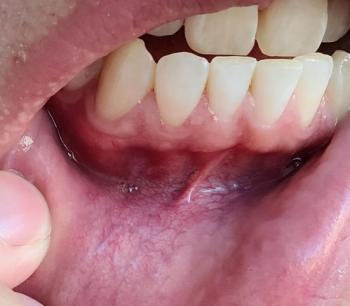
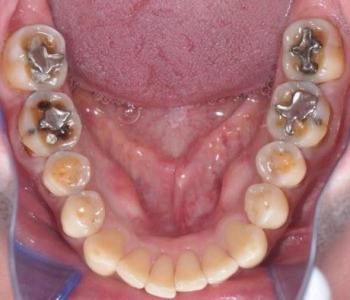
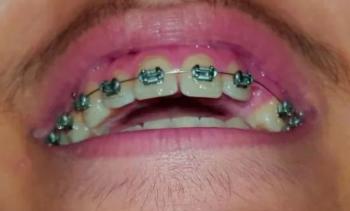
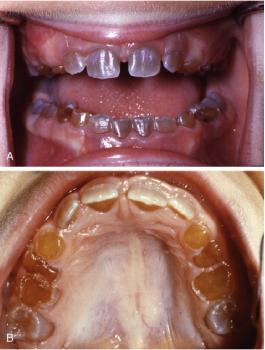
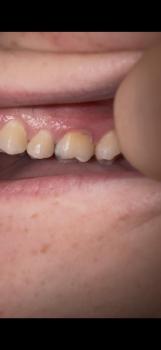
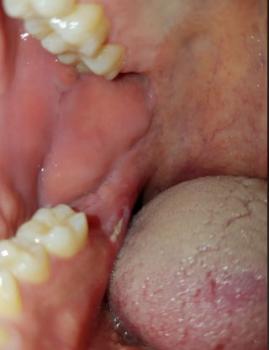
Patients with lower front gum inflammation may also experience tartar buildup, periodontal disease, gum abscesses, or tooth decay. Explore these related clinical case studies.

Other topics:
Other Dental Clinic