Smile Again with Comfort and Confidence.

Child Dental Case: Multiple Tooth Decay Concerns — 100% Zoom Analysis, 14-Day Treatment Plan & Prevention
Image:
Severity:
Teeth Problems:
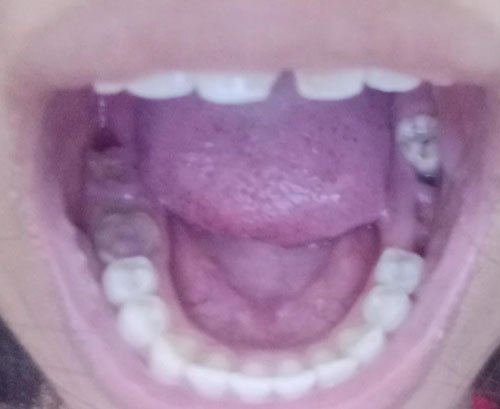
I enlarged the image and examined the visible teeth individually. This is not a definitive diagnosis because the photo is blurred and does not show X-rays, tooth surfaces from all angles, or the child’s symptoms/age. A dentist needs an in-person examination and likely radiographs before deciding whether teeth are restorable.
What stands out
| Area | Visual finding | Concern |
|---|---|---|
| Lower right posterior | A dark/gray posterior tooth with an irregular chewing surface | High suspicion of significant caries/cavitation |
| Lower left posterior | Posterior tooth appears darker/structurally compromised | Possible caries |
| Upper posterior areas | At least one posterior tooth appears discolored/irregular | Possible decay or heavily restored/erupting tooth |
| Lower front teeth | Several teeth appear relatively intact and aligned | No obvious major cavitation visible from this view |
| Gums | Generally pink; no obvious large abscess or dramatic facial swelling visible | Does not rule out infection underneath a tooth |
| Overall | Posterior teeth are the principal concern | Needs a pediatric dental assessment rather than simply cleaning |
Most likely clinical issue
The strongest visual concern is multiple posterior dental caries, with at least one tooth potentially having progressed substantially. I would classify this as needs prompt dental examination, rather than waiting for symptoms to become severe.
Untreated childhood caries can progress to pain, infection, difficulty eating and sleep disruption; once tooth structure is destroyed, it does not simply regenerate.
Important: I would not diagnose an abscess, pulp death, or gum disease from this photograph alone. Those require clinical testing and, when indicated, X-rays.
What could "scale up" if nothing is done for 14 days?
The concern is not that exactly 14 days will cause a predictable change—the rate varies by tooth and depth of decay.
A progression could look like:
Cavity → deeper dentin involvement → pulp inflammation → severe toothache → pulp necrosis/infection → abscess/swelling
If decay has already reached the pulp, simply waiting 14 days can allow symptoms or infection to develop. Pediatric dental guidance recognizes pain, infection and facial swelling as conditions requiring timely evaluation.
A reasonable 14-day plan
Day 0–2 — Examination
- Pediatric dentist examination.
- Determine whether the suspicious posterior teeth are primary or permanent teeth.
- Bitewing/periapical X-rays if clinically indicated.
- Assess whether each affected tooth is restorable.
- Check for pulp involvement, abscess, eruption status and developing permanent teeth.
Days 1–7 — Control the active disease
- Professional cleaning where appropriate.
- Fluoride prevention.
- Restore cavities that can be restored.
- If a primary tooth has deep decay/pulp involvement, the dentist may consider appropriate pulp therapy or extraction depending on restorability and the developing successor. AAPD guidance recognizes pulp therapy or extraction among treatments for odontogenic infections in children.
Days 7–14 — Stabilization and prevention
- Recheck painful/infected teeth.
- Complete remaining urgent treatment.
- Establish daily brushing with fluoride toothpaste and appropriate interdental cleaning.
- Reduce frequent sugary snacks/drinks.
- Establish regular pediatric dental follow-up.
Fourteen days is a reasonable stabilization window, not a guaranteed "healing time." A cavity that has lost tooth structure will generally require dental treatment; it cannot be expected to disappear through brushing alone.
When this becomes urgent
Don't wait 14 days if the child develops:
- facial or cheek swelling
- gum swelling or a pus-filled bump
- fever or significant malaise
- rapidly increasing tooth pain
- difficulty swallowing
- difficulty breathing
- inability to eat/drink because of pain
Significant facial swelling, infection and severe dental pain are recognized pediatric dental emergencies/urgent conditions.
Antibiotics are not automatically the treatment for a cavity. For many dental infections, definitive dental treatment is the priority; antibiotics are generally reserved for situations such as systemic involvement or particular clinical circumstances determined by the dentist.
Accurate Medical Guidance
Important: Children with multiple areas of tooth decay should be evaluated by a dentist, preferably a pediatric dentist. Treatment depends on the child’s age, which teeth are affected, the depth of decay, symptoms, oral hygiene, diet, and whether the teeth are primary (baby) or permanent.
A close-up or “zoom” examination can help illustrate visible problems such as discoloration, plaque accumulation, cavities, fractured tooth structure, or gum irritation. However, a photograph or visual inspection alone cannot determine how deep a cavity is. Dental X-rays may be needed to identify decay between teeth or determine whether the pulp (nerve) is involved.
What Parents Should Know About Multiple Tooth Decay
When a child has several decayed teeth, the goal is not simply to treat the cavities that are already visible. The dentist should also identify why the decay is occurring and how to prevent new lesions.
Common contributing factors include:
- Frequent consumption of sugary foods or drinks
- Juice, sweetened milk, soda, or other sugary beverages
- Frequent snacking throughout the day
- Inadequate brushing or difficulty cleaning certain areas
- Plaque buildup
- Lack of fluoride exposure
- Tooth anatomy or enamel defects
- Previous dental decay
- Certain medical or developmental factors
Do not assume that a painful tooth is the only tooth that needs treatment. Early decay can sometimes cause little or no pain.
Example 14-Day Dental Care Plan
A 14-day plan can be used as a short-term prevention and appointment-preparation routine, but it should not replace professional treatment.
Days 1–3
- Arrange a dental examination.
- Begin consistent twice-daily brushing with fluoride toothpaste appropriate for the child's age.
- Supervise brushing when necessary.
- Reduce frequent sugary snacks and drinks.
- Encourage water between meals.
Days 4–7
- Continue twice-daily brushing.
- Clean between teeth where appropriate.
- Keep sugary foods and drinks mainly with meals rather than frequent snacking.
- Follow any treatment instructions provided by the dentist.
Days 8–14
- Maintain the same oral-hygiene routine.
- Attend the scheduled dental appointment.
- Complete recommended fillings or other treatment rather than waiting for symptoms to worsen.
- Ask the dentist about fluoride varnish, sealants, dietary changes, and an appropriate recall schedule.
Important: A cavity does not normally disappear simply because brushing improves. Very early enamel changes may sometimes be arrested or remineralized with appropriate preventive care, but an established cavity with structural loss generally requires professional treatment.
When to Seek Urgent Dental Care
Parents should seek prompt dental evaluation if a child develops:
- Facial or jaw swelling
- Swelling around the gums
- Fever associated with dental symptoms
- Severe or persistent toothache
- Pus or drainage
- Difficulty opening the mouth
- Difficulty swallowing
- Difficulty breathing
- Significant facial swelling
Difficulty breathing or swallowing, rapidly increasing facial swelling, or a seriously ill-looking child requires urgent medical attention.
Expert Dental Guidance: What Parents Should Know About Multiple Tooth Decay in Children
Multiple areas of tooth decay in a child should be evaluated by a dentist as soon as possible. Decay can progress beneath apparently intact enamel, and a visual photograph alone cannot determine how deep a cavity is or whether the dental pulp is involved.
A dentist will typically assess the child's teeth, gums, symptoms, oral hygiene, dietary habits, fluoride exposure, and previous history of cavities. Dental X-rays may be recommended when they are clinically necessary to identify decay between teeth or evaluate the depth and extent of disease.
Can multiple cavities be treated within 14 days?
A 14-day period can be useful as a short-term treatment and prevention phase, but it should not be presented as a guaranteed time in which all cavities will heal.
Treatment depends on the number, location, and severity of the lesions.
Early tooth decay that has not formed a cavity may sometimes be managed with preventive measures such as fluoride treatment, improved plaque control, and dietary changes. A cavity that has already caused structural damage generally requires restorative dental treatment rather than simply waiting for it to heal.
If decay has reached the pulp, the treatment may be more extensive. Depending on the child's age, the affected tooth, and the condition of the tooth, the dentist may consider pulp therapy, a restoration, or extraction when the tooth cannot be predictably saved.
What should parents do first?
The priority is to arrange a dental examination rather than attempting to determine the severity of every cavity at home.
Parents can help by:
-
Brushing the child's teeth twice daily with fluoride toothpaste appropriate for the child's age.
-
Helping or supervising brushing so all tooth surfaces are cleaned.
-
Cleaning between teeth when the spaces are closed or when the dentist recommends interdental cleaning.
-
Reducing frequent exposure to sugary foods and drinks.
-
Avoiding prolonged sipping of sweetened beverages.
-
Offering water between meals.
-
Following the dentist's recommended recall and fluoride schedule.
-
Completing prescribed dental treatment rather than treating pain alone.
Can tooth decay stop progressing?
Early non-cavitated lesions can sometimes be arrested or remineralized when the conditions causing mineral loss are controlled. Fluoride is an important part of preventing and managing early caries.
However, a tooth with a significant cavity has already lost tooth structure. It should not be assumed that brushing or dietary changes alone will rebuild the missing structure.
Why are children particularly vulnerable to tooth decay?
Children may have increased caries risk because of frequent sugar exposure, inadequate plaque removal, limited fluoride exposure, enamel vulnerability, orthodontic appliances, dry mouth, developmental factors, or other individual circumstances.
The important issue is not simply the amount of sugar eaten on one occasion. How frequently teeth are exposed to fermentable carbohydrates throughout the day also matters.
When should parents seek urgent dental care?
A child should receive prompt dental evaluation for:
-
Persistent or spontaneous toothache
-
Pain that wakes the child at night
-
Facial or jaw swelling
-
Gum swelling or a dental abscess
-
Fever associated with a suspected dental infection
-
Difficulty chewing because of dental pain
-
A broken or severely weakened tooth
Difficulty breathing or swallowing, rapidly increasing facial or neck swelling, or a child who appears seriously unwell requires urgent medical attention.
Dentist-Expert Perspective
A dentist's role is not simply to identify cavities. The goal is to determine why the disease is occurring, how active it is, which teeth require treatment, and how future disease can be prevented.
For a child with multiple areas of decay, a comprehensive plan may include:
-
Clinical examination – evaluating teeth, gums, plaque, symptoms, and visible lesions.
-
Risk assessment – reviewing diet, fluoride exposure, oral hygiene, previous caries, and other risk factors.
-
Radiographs when indicated – particularly when decay may be hidden between teeth or when the depth of a lesion needs assessment.
-
Disease-control measures – improving brushing, fluoride exposure, diet, and plaque control.
-
Restorative treatment when necessary – repairing teeth that have developed cavities.
-
Follow-up – monitoring whether early lesions have arrested and ensuring completed restorations remain healthy.
-
Prevention – establishing a sustainable home-care routine and appropriate dental recall schedule.
The best treatment plan is individualized. A child should not receive invasive treatment solely because a photograph appears concerning, and a parent should not delay professional assessment because a tooth does not currently hurt.
Frequently Asked Questions
1. Can multiple cavities in a child be treated?
Yes. Treatment depends on the severity and location of the decay. Options can include fluoride treatment for early lesions, fillings, crowns for extensively damaged primary teeth, pulp therapy when the pulp is affected, or extraction when a tooth cannot reasonably be restored.
2. Can baby teeth be ignored because they eventually fall out?
No. Primary teeth help children chew, speak, and maintain appropriate space for developing permanent teeth. Untreated decay can cause pain, infection, difficulty eating, and other complications.
3. Can brushing remove an existing cavity?
Brushing helps prevent progression and can support remineralization of very early enamel lesions. However, it cannot rebuild a tooth after a significant cavity has formed.
4. Does every cavity require a filling?
Not necessarily. Very early lesions may sometimes be managed with preventive treatment and monitoring. A dentist must determine whether a lesion is cavitated and how advanced it is.
5. Does a child need dental X-rays?
Sometimes. X-rays can reveal decay that cannot be seen directly, particularly between teeth, and can help assess the extent of disease. The dentist determines whether an X-ray is necessary based on the child's individual risk and examination.
6. Is sugar the only cause of tooth decay?
No. Tooth decay results from interactions between oral bacteria, fermentable carbohydrates, tooth surfaces, saliva, and time. Frequent exposure to sugary or carbohydrate-containing foods and drinks can increase risk.
7. Is fruit juice healthy for a child’s teeth?
Even 100% fruit juice contains naturally occurring sugars and can contribute to tooth decay when consumed frequently. Water is generally the better everyday drink for dental health.
8. Should a child brush immediately after eating?
A consistent twice-daily fluoride-toothpaste routine is more important than trying to brush after every meal. After acidic foods or drinks, waiting before brushing can help avoid brushing softened enamel.
9. Can dental decay spread from one tooth to another?
Decay does not literally “jump” from one tooth to another. However, the same oral environment—plaque, frequent sugar exposure, and inadequate fluoride protection—can cause multiple teeth to develop decay.
10. What should parents do if the child has tooth pain?
Arrange a dental examination rather than relying only on pain medicine. Pain can indicate inflammation, infection, or advanced decay.
11. Can cavities be prevented from coming back?
The risk can be substantially reduced through fluoride toothpaste, effective plaque removal, limiting frequent sugar exposure, regular dental care, and preventive treatments recommended by the dentist.
12. Is a 14-day treatment plan enough to cure multiple cavities?
Not necessarily. Fourteen days is better described as a short-term action and prevention plan. The actual treatment may require several dental visits and depends on the condition of each affected tooth.
13. Should parents wait until a child has pain before visiting the dentist?
No. Early decay can be painless. Regular examinations allow problems to be detected before they become more extensive.
14. Who should evaluate a child with extensive tooth decay?
A general dentist experienced in treating children can provide care, while a pediatric dentist may be particularly appropriate for young children, extensive decay, dental anxiety, special healthcare needs, or complex treatment.
Medical disclaimer: This information is for general education and does not diagnose or treat an individual child. A dentist must examine the child to determine the appropriate diagnosis and treatment plan.
About the child's comment
“My mother works abroad when I was a child and my father is an alcoholic so he doesn't pay attention to me.”
That history is important context, but it should not be interpreted as proof that the child or parent is responsible for the dental condition. Limited supervision, disrupted caregiving, diet, access to dental care and many other factors can contribute to untreated childhood dental disease.
The most constructive approach is nonjudgmental care: stabilize the child's oral health first, then establish a reliable dental home and prevention routine.
Bottom line
Visual priority: HIGH — posterior teeth require professional assessment soon.
The image suggests multiple areas suspicious for dental decay, but the depth and whether the pulp is infected cannot be determined from this photograph.
Related Clinical Cases
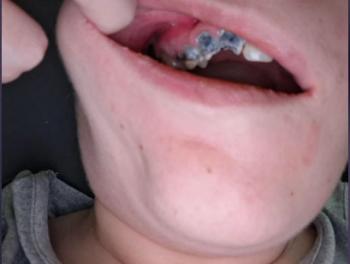
Patients with lower front gum inflammation may also experience tartar buildup, periodontal disease, gum abscesses, or tooth decay. Explore these related clinical case studies.



Other topics:
Other Dental Clinic