Healthy Teeth, Happy Life.

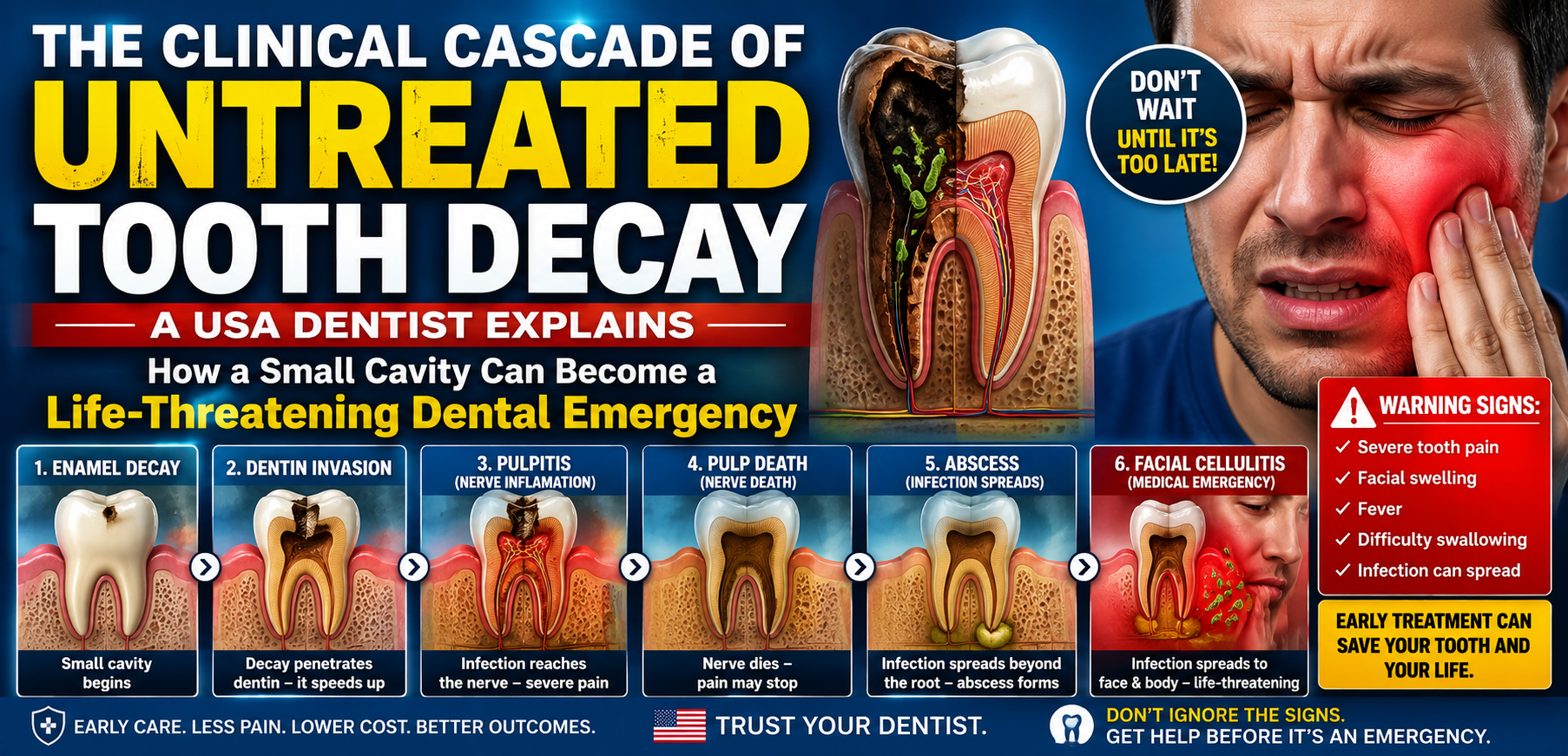
The Clinical Cascade of Untreated Tooth Decay: A USA Dentist Explains How a Small Cavity Can Become a Life-Threatening Dental Emergency
Language :
Topics:
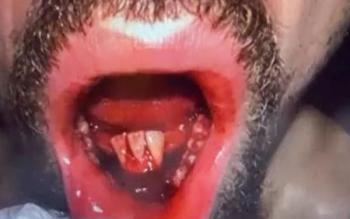
Many patients assume a small cavity is simply a minor inconvenience that can wait until the next dental visit. Unfortunately, tooth decay rarely remains small. Once bacteria penetrate the protective enamel layer, the disease accelerates through the tooth's internal structures, often leading to severe pain, infection, facial swelling, tooth loss, and in rare cases, hospitalization for life-threatening complications.
Understanding how tooth decay progresses helps explain why dentists recommend treating cavities early instead of waiting until symptoms become unbearable.
This clinical case analysis demonstrates the biological cascade of untreated decay and explains why delaying treatment becomes exponentially more difficult, painful, and expensive.
Clinical Case
Patient Profile
-
Age: 37-year-old male
-
Location: Texas, USA
-
Medical History: Healthy with no chronic illnesses
-
Dental History: Had not visited a dentist for approximately six years.
Chief Complaint
"My tooth hurt occasionally for months. Then one weekend the pain became unbearable. Three days later, my face started swelling."
Stage One: Silent Enamel Breakdown
The patient's lower first molar had developed a small cavity.
Initially, bacteria dissolved minerals from the enamel surface through acids produced after consuming sugary foods and beverages.
Why Enamel Slows Decay
Enamel is the hardest tissue in the human body.
Because it contains approximately 96% mineral content, bacteria often require months—or even years—to penetrate this protective shell.
During this stage:
-
No pain occurs.
-
The cavity remains relatively small.
-
Treatment usually involves a simple filling.
Unfortunately, the patient ignored occasional sensitivity because it disappeared after eating.
Stage Two: Structural Acceleration Inside Dentin
Once bacteria reached dentin, disease progression accelerated dramatically.
Unlike enamel, dentin is softer and contains thousands of microscopic tubules extending directly toward the dental pulp.
These tiny channels act like microscopic highways.
Instead of slowly dissolving minerals, bacteria rapidly advance toward the nerve.
Why Decay Speeds Up
The tooth now loses structural integrity from within.
As dentin softens:
-
Cavities enlarge rapidly.
-
Tooth walls weaken.
-
Cracks become more likely.
-
Food becomes trapped deeper inside.
Many patients first notice:
-
Cold sensitivity
-
Sweet sensitivity
-
Occasional sharp pain
-
Food packing into the cavity
These warning signs indicate the disease has already progressed beyond the enamel.
Stage Three: The Pressure Chamber Effect
Several weeks later, bacteria invaded the pulp.
The dental pulp contains:
-
nerves
-
arteries
-
veins
-
connective tissue
-
immune cells
Unlike muscles or skin, the pulp exists inside a rigid chamber completely surrounded by dentin.
This creates what dentists often describe as a biological pressure chamber.
When bacteria trigger inflammation, blood vessels enlarge.
However, the surrounding tooth cannot expand.
Pressure rapidly builds inside the pulp chamber.
The increased pressure compresses blood vessels supplying the nerve.
Eventually:
-
oxygen decreases
-
blood flow slows
-
tissues begin dying
-
pain becomes intense
This condition is called irreversible pulpitis.
Symptoms Experienced
The patient reported:
-
throbbing pain
-
spontaneous pain without eating
-
inability to sleep
-
pain radiating toward the ear
-
worsening discomfort when lying down
Over-the-counter pain medications provided only temporary relief.
Why Tooth Pain Feels So Severe
Dental nerves are among the most sensitive tissues in the body.
Unlike muscles that can swell outward, inflamed pulp tissue becomes trapped inside hard dentin.
Pressure continues increasing hour after hour.
This explains why patients frequently describe pulpitis pain as:
-
unbearable
-
pulsating
-
stabbing
-
constant
Many individuals rank irreversible pulpitis among the worst pain they have ever experienced.
Stage Four: Pulp Death
After several days, something unexpected happened.
The severe pain suddenly disappeared.
The patient believed the infection had healed naturally.
Instead, the opposite had occurred.
The nerve had died.
This stage is called pulp necrosis.
Although pain decreases temporarily, bacteria continue multiplying inside the dead tooth.
Without immune defenses, anaerobic bacteria flourish.
The infection now moves beyond the root.
Stage Five: Root Apex Infection
The bacterial population escaped through tiny openings at the root tip.
The infection entered surrounding bone.
An inflammatory lesion developed.
As bacteria multiplied, pus accumulated.
The body attempted to isolate the infection.
A dental abscess formed.
Symptoms During This Stage
Within days the patient developed:
-
severe biting pain
-
swollen gums
-
bad taste in the mouth
-
foul-smelling drainage
-
facial swelling
-
enlarged lymph nodes
Body temperature also increased.
Stage Six: Facial Cellulitis
Because treatment was delayed another four days, bacteria escaped beyond the localized abscess.
Instead of remaining confined near the tooth, infection spread into facial soft tissues.
The patient awoke with swelling extending from the lower jaw toward the cheek.
Speaking became uncomfortable.
Swallowing became painful.
He presented to an emergency department.
Emergency Evaluation
Hospital examination showed:
-
facial cellulitis
-
elevated white blood cell count
-
significant lower jaw swelling
-
spreading dental infection
A CT scan confirmed infection extending beyond the tooth.
Emergency treatment included:
-
intravenous antibiotics
-
surgical drainage
-
extraction of the infected tooth
Fortunately, the infection had not spread into deeper neck spaces.
Why Tooth Infections Spread
Once the pulp dies, bacteria multiply with very little resistance.
They travel through:
-
root canals
-
root tips
-
jawbone
-
connective tissue spaces
-
facial planes
If untreated, infection may continue spreading toward:
-
the neck
-
airway
-
bloodstream
-
sinuses
-
brain (rare)
-
heart (rare)
While these complications are uncommon, they are medical emergencies requiring immediate treatment.
The Domino Effect of Untreated Decay
Each stage dramatically increases treatment complexity.
| Disease Stage | Typical Treatment |
|---|---|
| Early enamel cavity | Small filling |
| Deep dentin decay | Large filling or crown |
| Reversible pulpitis | Filling if the nerve remains healthy |
| Irreversible pulpitis | Root canal therapy and crown |
| Pulp necrosis | Root canal or extraction |
| Dental abscess | Drainage, antibiotics (when indicated), root canal or extraction |
| Facial cellulitis | Emergency dental and medical care, possible hospitalization |
The earlier treatment begins, the greater the chance of saving the natural tooth.
Why Patients Search During These Stages
Patients often delay care until symptoms interfere with daily life.
Common online searches include:
-
"Why does my tooth throb at night?"
-
"How do I stop severe tooth pain?"
-
"Do I need a root canal?"
-
"Can a tooth infection spread?"
-
"Emergency dentist near me"
-
"Tooth abscess symptoms"
-
"Face swelling from tooth infection"
These searches reflect high urgency because pain frequently becomes impossible to ignore.
Prevention Is Always Easier Than Treatment
The biological cascade of tooth decay is predictable—but also largely preventable.
You can reduce your risk by:
-
Brushing twice daily with fluoride toothpaste
-
Cleaning between teeth every day
-
Limiting sugary snacks and drinks
-
Attending routine dental examinations
-
Treating cavities before they reach the dental nerve
A small filling completed early can often prevent months of pain, emergency treatment, and tooth loss.
Final Thoughts
Tooth decay is not simply a hole in a tooth—it is a progressive bacterial disease. Once bacteria breach the enamel, they spread much more rapidly through dentin, eventually reaching the pulp where inflammation develops inside a rigid chamber. This "pressure chamber effect" explains the severe pain of irreversible pulpitis. If left untreated, the nerve dies, bacteria spread beyond the root, and a localized cavity can evolve into an abscess, facial cellulitis, or even a life-threatening infection.
Early diagnosis remains the safest, least invasive, and most cost-effective approach. If you experience persistent tooth sensitivity, spontaneous throbbing pain, facial swelling, fever, or difficulty swallowing, seek prompt evaluation from a dentist or emergency medical provider. Acting early can often save both your tooth and your overall health.
Looking for a dentist? Browse our Cebu dental directory to find trusted clinics near you.
Medical Review and Clinical Basis
This article is based on clinical dental guidelines and real patient recovery patterns observed after tooth extraction procedures. The information reflects common post-extraction healing stages, including normal clot formation, gum tissue repair, and signs of possible complications such as dry socket or infection.
While mild discomfort is expected after a dental extraction, worsening pain after Day 3, bad odor, exposed bone, or spreading pain may require professional evaluation. These symptoms are consistent with known post-extraction complications described in standard dental practice.
About Cebu Dental Implants
Cebu Dental Implants provides comprehensive tooth extraction, surgical procedures, and dental implant services in the Philippines. Our team evaluates post-extraction healing, manages complications such as dry socket, and advises patients on proper aftercare to prevent infection and delayed healing.
If you experience severe pain or unusual symptoms after extraction, early professional assessment is recommended to prevent further complications.
Important Medical Disclaimer
This content is for educational purposes only and does not replace professional dental diagnosis. Every patient heals differently. If symptoms worsen or do not improve within a few days, consult a licensed dentist for proper evaluation and treatment.
Author
This article was prepared by the Cebu Dental Implants content team in consultation with licensed dental professionals experienced in tooth extraction and implant procedures.
Related Clinical Cases
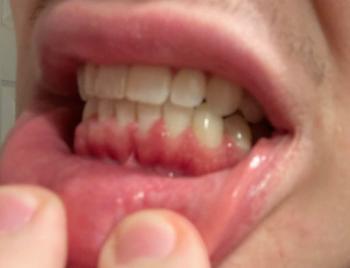
Patients with lower front gum inflammation may also experience tartar buildup, periodontal disease, gum abscesses, or tooth decay. Explore these related clinical case studies.