Strong Teeth, Fresh Breath, Brighter You.

Worst-Case Scenario After Root Canal Treatment in Tennessee, USA: How an Experienced Dentist Found the Solution and Saved a Tooth That Seemed Beyond Repair
Language :
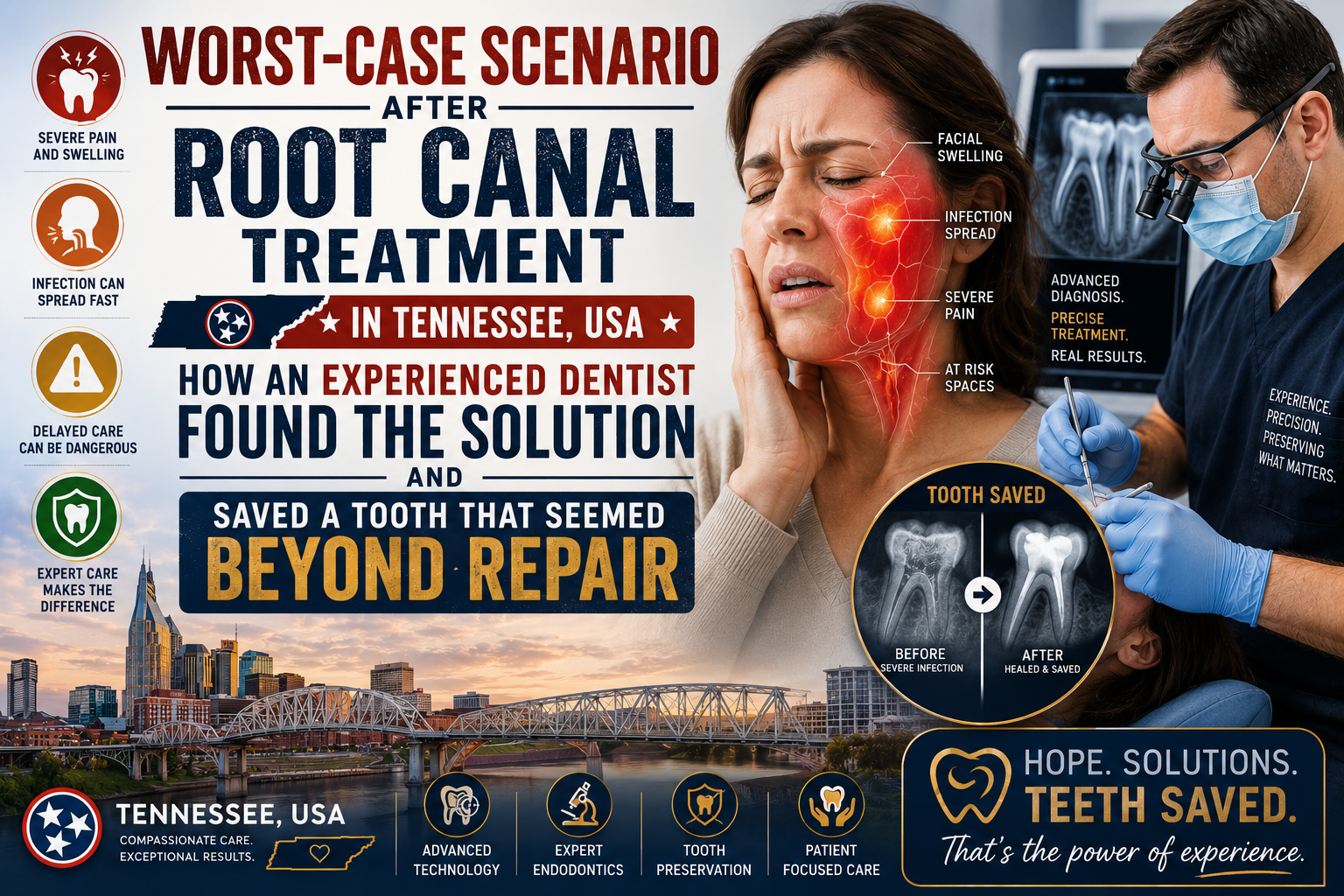
Root canal treatment is one of the most successful procedures in modern USA dentistry. Every year, millions of Americans undergo root canal therapy to save black smelly infected teeth and avoid extraction. In most cases, patients recover smoothly and return to normal life within days. This give them confidence and booster social group friends.
However, there are rare situations where a root canal treatment does not go as planned. Hidden canals, complex root anatomy, severe infections, fractured roots, delayed diagnosis, or reinfection can transform what should have been a routine procedure into a serious dental emergency. Some case teeth decline due to poor health habits like luck of constant sleep.
As a practicing dental professional in the United States, I often remind patients that root canal therapy is designed to save teeth in most cases , but success depends on many factors. The good news is that even when complications occur, modern dentistry offers advanced AI solutions that can rescue teeth once considered hopeless. Higher percentage of curing and healing.
This is the story of a Tennessee patient who experienced one of the worst-case scenarios after root canal treatment—and how an experienced dental team found the solution that ultimately saved the tooth.
A Routine Root Canal That Suddenly Became a Nightmare
Michael, a 46-year-old resident of Tennessee, initially visited his local dentist because of severe pain in a lower molar.
The tooth had a deep cavity that had reached the dental pulp. After examination and X-rays, root canal treatment was recommended.
The procedure appeared successful.
The pain disappeared.
The infection seemed controlled.
Michael believed the problem was solved.
For several weeks, everything seemed normal.
Then the unexpected happened.
One morning he woke up with a strange pressure sensation around the treated tooth.
By evening, the side of his face had started to swell.
Over the next several days, the swelling increased.
A foul taste developed in his mouth.
The tooth felt uncomfortable when chewing.
Soon, the pain became severe.
Warning Signs That Something Was Wrong
Patients often assume that discomfort after root canal treatment is normal.
Mild tenderness can occur during healing.
However, certain symptoms should never be ignored:
- Persistent swelling make cause sever problem ask the dentist help call for advise or visit the dentist
- Severe throbbing pain this may cause rapid decline of health
- Pus drainage
- Facial swelling is unwelcome specially if your job is clients and social gather or working in social media
- Fever never neglect when their is a sign of fever this mean bacteria are massively moving .
- Difficulty opening the mouth is a early sign worse are coming
- Bad taste in the mouth never neglect I almost removed 2 of my teeth neglecting constant bad smell of my teeth even brushing many times or using betadine gargle. This means it damage is hidden below cannot be seen or injecting the roots of the teeth
- Gum boils near the treated tooth
Michael experienced several of these symptoms.
His dentist immediately referred him to an endodontic specialist for advanced evaluation.
The Hidden Infection
A detailed examination revealed something unexpected.
The original root canal treatment had addressed the visible canals inside the tooth.
However, the tooth possessed an unusually complex root system.
One tiny canal had remained hidden.
This microscopic canal contained bacteria.
Because it had not been cleaned during the initial procedure, infection continued to grow deep inside the tooth.
Over time, the bacteria spread beyond the root tip and into the surrounding bone.
A large infection developed.
The infection was now causing destruction of bone around the tooth.
Why Hidden Canals Cause Problems
Certain canals are extremely difficult to locate.
Even experienced clinicians can encounter anatomical variations.
Modern dentistry has improved dramatically thanks to:
- Cone beam CT scans (CBCT)
- Dental operating microscopes
- Digital imaging
- Ultrasonic instruments
These technologies allow specialists to discover canals that were once nearly impossible to find.
In Michael's case, advanced imaging identified a hidden canal responsible for the ongoing infection.
The Infection Begins Spreading
The situation became more serious.
A CBCT scan showed the infection had spread into surrounding bone tissue.
Bone loss was evident.
The abscess had created a pocket of infection around the root.
At this stage, many patients fear extraction is unavoidable.
Historically, removal of the tooth would have been the most likely outcome.
Fortunately, modern endodontics offered another option.
The Specialist Develops a Rescue Plan
The Tennessee endodontist carefully reviewed all findings.
Instead of extracting the tooth immediately, the specialist recommended retreatment.
Root canal retreatment involves:
- Removing old filling materials.
- Reopening the tooth.
- Locating missed canals.
- Eliminating remaining bacteria.
- Disinfecting the root system.
- Refilling and sealing the canals.
The procedure is often more complex than the original treatment.
Yet it can be remarkably successful when performed correctly.
Michael agreed.
Saving the natural tooth remained the priority.
The Discovery That Changed Everything
During retreatment, the specialist used a dental microscope capable of providing significant magnification.
Deep inside the tooth, a hidden canal was located.
The canal contained infected tissue and bacterial debris.
This discovery explained everything.
The infection had never completely disappeared.
It had simply continued growing unnoticed.
Once the canal was found, the specialist carefully cleaned and disinfected it.
Powerful antimicrobial solutions were used to eliminate bacteria throughout the root system.
An Additional Complication Appears
Just as progress seemed promising, another challenge emerged.
A small crack was discovered within the tooth structure.
Cracks represent one of the most concerning findings in dentistry.
Some cracks can be managed.
Others require extraction.
The specialist carefully evaluated the extent of the damage.
Fortunately, the crack had not extended into a catastrophic vertical root fracture.
The tooth still had a chance.
Advanced Techniques Save the Tooth
The dental team implemented several advanced strategies.
These included:
Three-Dimensional Imaging
CBCT technology provided a complete view of the tooth anatomy.
Microscope-Assisted Treatment
Enhanced magnification revealed structures invisible to the naked eye.
Ultrasonic Cleaning
Specialized instruments cleaned difficult areas within the root system.
Enhanced Disinfection
Advanced irrigation methods eliminated bacterial contamination.
Improved Sealing Techniques
Modern filling materials created a superior seal against future bacterial invasion.
Each step improved the odds of long-term success.
Why Preserving Natural Teeth Matters
Patients sometimes ask whether extraction would simply be easier.
The answer depends on the situation.
Natural teeth offer significant advantages:
- Better chewing efficiency
- Preservation of jawbone
- Improved bite function
- Natural appearance
- Reduced treatment costs over time
Replacing a missing tooth often requires:
- Dental implants
- Bridges
- Partial dentures
These treatments can be excellent solutions, but preserving the natural tooth is often preferable whenever possible.
The Healing Process Begins
After retreatment, Michael entered a critical healing phase.
The infection had been present for months.
Bone regeneration would take time.
Regular follow-up visits were scheduled.
At first, progress was gradual.
Swelling decreased.
Pain diminished.
Chewing became more comfortable.
Most importantly, new signs of infection stopped appearing.
Bone Regeneration and Recovery
One of the most remarkable aspects of the human body is its ability to heal.
Once infection was eliminated, bone tissue began rebuilding itself around the root.
Follow-up scans revealed:
- Reduced inflammation
- Shrinking infection size
- New bone formation
- Stabilization of the tooth
These findings confirmed that the rescue treatment was working.
The Crown Plays a Critical Role
Following successful retreatment, a new dental crown was recommended.
Many patients underestimate the importance of crowns after root canal therapy.
Root canal-treated teeth are often weaker because:
- Infection has damaged internal structures.
- Large fillings remove healthy tooth material.
- Years of wear may create microscopic cracks.
A properly fitted crown protects the tooth from fracture.
In Michael's case, the crown became an essential part of the long-term solution.
What Could Have Happened Without Treatment?
The outcome could have been dramatically different.
Had Michael ignored the symptoms, several complications might have occurred.
Severe Bone Destruction
The infection could have continued destroying surrounding bone.
Facial Cellulitis
Bacteria might have spread into facial tissues.
Tooth Loss
Progressive infection could have rendered the tooth unsalvageable.
Systemic Infection
Although uncommon, severe dental infections can spread beyond the mouth.
Emergency Hospitalization
Advanced infections occasionally require hospitalization and intravenous antibiotics.
These possibilities demonstrate why prompt evaluation is essential.
Common Causes of Failed Root Canal Treatment
Patients often ask why root canal treatment sometimes fails.
Potential causes include:
Missed Canals
Hidden anatomy can harbor bacteria.
Delayed Crown Placement
Unprotected teeth are more vulnerable to reinfection.
New Decay
Cavities can expose the root canal system again.
Fractures
Cracks allow bacteria to enter the tooth.
Complex Anatomy
Unusual root structures can complicate treatment.
Persistent Bacteria
Certain bacteria are exceptionally difficult to eliminate.
Understanding these risks helps patients appreciate the importance of follow-up care.
How Technology Has Changed Dentistry
Modern dentistry continues to evolve rapidly.
Today's specialists utilize tools that were unavailable just a few decades ago.
These include:
- Digital radiography
- CBCT imaging
- Dental microscopes
- Laser-assisted procedures
- Bioceramic materials
- Advanced irrigation systems
As a result, teeth once considered hopeless can often be saved.
Michael's case serves as an excellent example of how technology and expertise can work together.
Expert Advice for Tennessee Patients
As dental professionals, we encourage patients to seek immediate evaluation if they experience:
- Swelling after root canal treatment
- Persistent pain
- Fever
- Gum boils
- Pressure when biting
- Facial asymmetry
- Drainage around the treated tooth
Early intervention dramatically improves the chances of saving the tooth.
Waiting weeks or months can transform a manageable problem into a major emergency.
The Final Outcome
One year after retreatment, Michael returned for a comprehensive evaluation.
The results were encouraging.
The infection had resolved.
Bone regeneration was visible.
The crown remained stable.
The tooth functioned normally.
Most importantly, extraction had been avoided.
What initially appeared to be a worst-case scenario after root canal treatment ultimately became a success story thanks to early diagnosis, advanced technology, and the determination of an experienced dental team.
Conclusion
A failed root canal treatment can feel frightening, especially when swelling, infection, and severe pain develop unexpectedly. Patients often assume tooth loss is inevitable when complications arise.
Fortunately, modern dentistry tells a different story.
Through advanced imaging, microscope-assisted treatment, retreatment procedures, and comprehensive infection control, many teeth once considered hopeless can be saved.
The Tennessee case described here demonstrates an important lesson: even the worst scenarios after root canal treatment do not always end with extraction.
When patients act quickly and seek care from experienced dental professionals, remarkable recoveries are possible.
The key is never ignoring warning signs.
Pain, swelling, persistent infection, and unusual symptoms deserve immediate attention. Early intervention remains the most powerful tool for protecting both oral health and overall well-being.
For many patients, the difference between losing a tooth and saving it comes down to one decision—seeking expert help before the problem becomes irreversible.
Can tooth extraction cause infection? Mild inflammation is normal, but increasing swelling, fever, or severe pain may indicate infection. Learn more about post-extraction infection warning signs in this detailed guide.
Book a consultation with our Cebu dental specialists for proper evaluation and care.
Ready to get expert guidance?
If you’re experiencing severe pain or delayed healing, book a consultation with our Cebu dental specialists to get proper evaluation and care.
Consultation or contact page .
Book a Consultation
For severe discomfort or delayed healing, book a consultation with our Cebu dental specialists today.
Looking for a dentist? Browse our Cebu dental directory to find trusted clinics near you.
Medical Review and Clinical Basis
This article is based on clinical dental guidelines and real patient recovery patterns observed after tooth extraction procedures. The information reflects common post-extraction healing stages, including normal clot formation, gum tissue repair, and signs of possible complications such as dry socket or infection.
While mild discomfort is expected after a dental extraction, worsening pain after Day 3, bad odor, exposed bone, or spreading pain may require professional evaluation. These symptoms are consistent with known post-extraction complications described in standard dental practice.
About Cebu Dental Implants
Cebu Dental Implants provides comprehensive tooth extraction, surgical procedures, and dental implant services in the Philippines. Our team evaluates post-extraction healing, manages complications such as dry socket, and advises patients on proper aftercare to prevent infection and delayed healing.
If you experience severe pain or unusual symptoms after extraction, early professional assessment is recommended to prevent further complications.
Important Medical Disclaimer
This content is for educational purposes only and does not replace professional dental diagnosis. Every patient heals differently. If symptoms worsen or do not improve within a few days, consult a licensed dentist for proper evaluation and treatment.
Author
This article was prepared by the Cebu Dental Implants content team in consultation with licensed dental professionals experienced in tooth extraction and implant procedures.
Related Clinical Cases
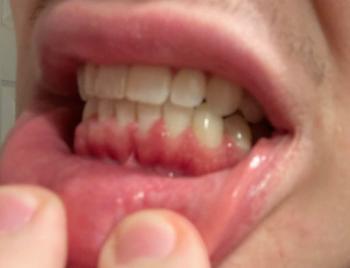
Patients with lower front gum inflammation may also experience tartar buildup, periodontal disease, gum abscesses, or tooth decay. Explore these related clinical case studies.