Because Every Tooth Deserves Care.

Dental Implants Cost: New Zealand vs. Philippines (2026 Guide)
Language :
Topics:
Dental implants are widely regarded as the gold standard for replacing missing teeth. They provide exceptional stability, preserve jawbone structure, improve chewing function, and closely mimic the appearance of natural teeth. For patients missing one tooth, several teeth, or an entire arch, implants can dramatically improve both oral health and quality of life.
However, dental implant treatment is also one of the most expensive procedures in modern dentistry. For many patients in New Zealand, the cost of implants can be a significant financial burden, leading some to explore treatment options overseas. Among the most popular destinations for dental tourism is the Philippines, a country that has developed a strong reputation for providing affordable dental care to international patients.
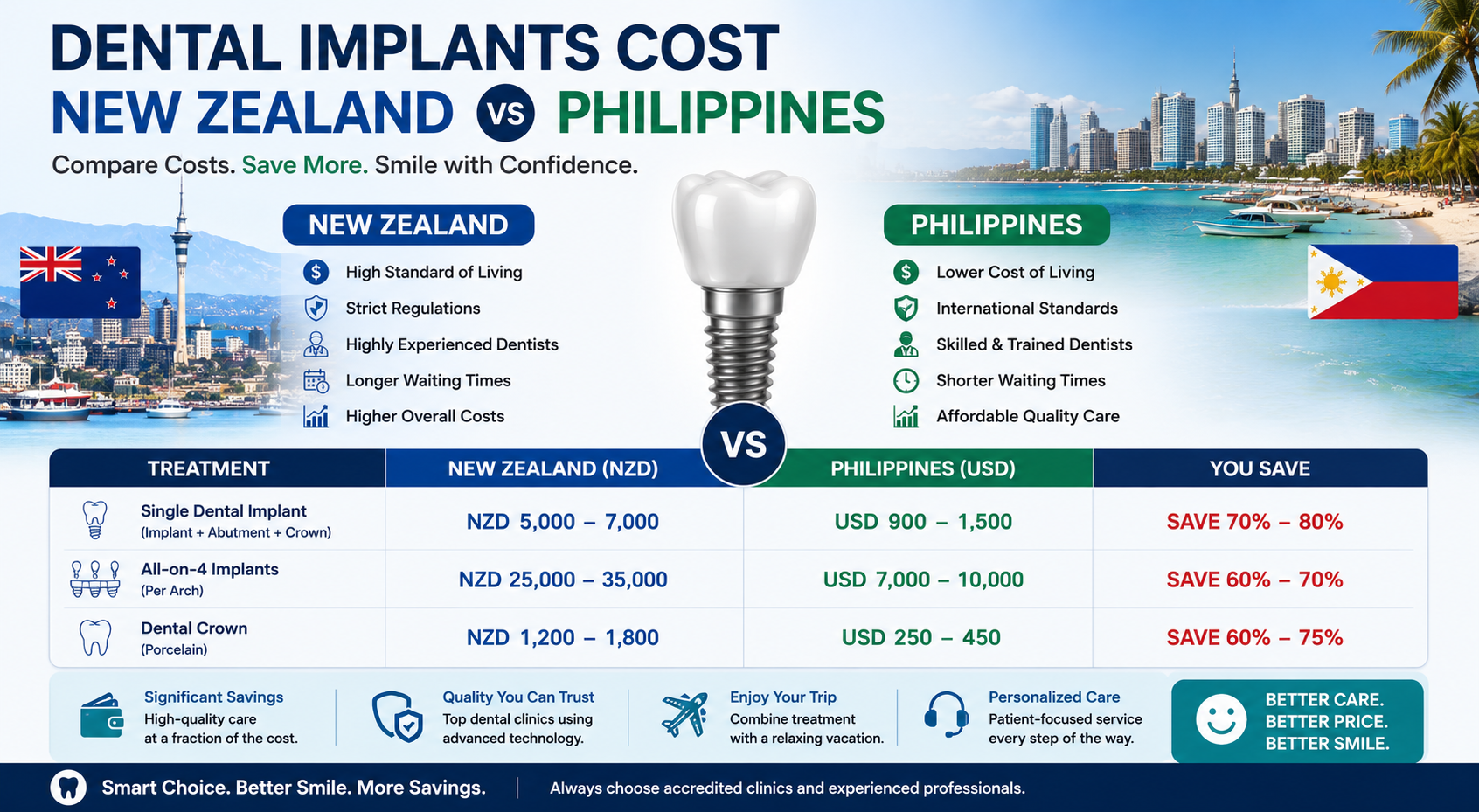
The difference in pricing can be substantial. While a single dental implant in New Zealand may cost between NZD $4,500 and $8,000, comparable treatment in the Philippines may range from approximately USD $850 to $2,500 (roughly NZD $1,300 to $3,900 depending on exchange rates). For patients requiring multiple implants or full-mouth reconstruction, the savings can reach tens of thousands of dollars.
Yet cost alone should never determine where dental treatment is performed. Implant dentistry is a complex, multi-stage process that requires careful planning, surgical precision, quality materials, and long-term follow-up care. Understanding the advantages, limitations, and risks associated with both options is essential before making a decision.
This guide compares dental implant treatment in New Zealand and the Philippines, explores why prices differ so dramatically, discusses the realities of dental tourism, and provides practical advice for patients considering treatment abroad.
Understanding Dental Implant Treatment
Before comparing costs, it is important to understand what a dental implant actually includes.
Many patients assume they are paying only for an artificial tooth. In reality, implant treatment consists of several separate components and procedures.
A typical implant restoration includes:
- Initial consultation
- Diagnostic imaging
- Treatment planning
- Implant placement surgery
- Implant fixture (the artificial root)
- Healing period
- Abutment
- Custom-made crown
- Follow-up appointments
Additional procedures such as bone grafting or sinus augmentation may also be required.
Each component contributes to the final treatment cost.
Dental Implant Costs in New Zealand
New Zealand offers high-quality dental care delivered through modern clinics that follow strict professional and regulatory standards.
However, implant treatment is often expensive.
Typical Single Implant Costs
In 2026, a single implant restoration in New Zealand commonly ranges from:
NZD $4,500–$8,000
This estimate often includes:
- Implant surgery
- Implant fixture
- Abutment
- Crown
- Standard follow-up care
However, additional procedures may increase costs substantially.
Full-Mouth Implant Costs
Patients requiring extensive rehabilitation can expect significantly higher fees.
Examples include:
Implant-Supported Full Arch
NZD $18,000–$40,000+
Full-Mouth Reconstruction
NZD $40,000–$80,000+
Complex cases involving bone grafting or advanced prosthetics may exceed these figures.
Why Implants Cost More in New Zealand
Several factors contribute to higher pricing.
High Labor Costs
New Zealand has relatively high wages for:
- Dentists
- Oral surgeons
- Prosthodontists
- Dental hygienists
- Clinical support staff
Labor represents one of the largest expenses for dental practices.
Clinic Overheads
Operating a modern dental clinic involves substantial expenses, including:
- Rent
- Equipment
- Sterilization systems
- Insurance
- Continuing education
- Compliance requirements
These costs are reflected in treatment fees.
Regulatory Requirements
New Zealand dentistry operates under strict professional standards designed to protect patients.
These regulations support:
- Safety
- Quality control
- Infection prevention
- Continuing education
Maintaining compliance contributes to operating costs.
Premium Implant Systems
Many New Zealand dentists use internationally recognized implant brands such as:
- Nobel Biocare
- Straumann
- Astra Tech
- BioHorizons
These premium systems often have decades of clinical research supporting their performance.
While more expensive, they provide strong long-term reliability.
Dental Implant Costs in the Philippines
The Philippines has become one of Asia's leading dental tourism destinations.
Patients from Australia, New Zealand, the United States, Canada, and Europe frequently travel there seeking more affordable treatment.
Typical Single Implant Costs
In 2026, a single implant restoration commonly ranges between:
USD $850–$2,500
Equivalent to approximately:
NZD $1,300–$3,900
depending on exchange rates.
Full-Mouth Implant Treatment
Full-mouth rehabilitation often costs substantially less than in New Zealand.
Many patients report savings of:
60–80%
compared with domestic treatment.
Why Treatment Is Less Expensive
The lower cost does not automatically indicate lower quality.
Several economic factors contribute.
Lower Operating Costs
The Philippines has significantly lower expenses related to:
- Real estate
- Utilities
- Staffing
- Administration
These savings allow clinics to offer lower fees.
Competitive Dental Tourism Market
The country actively competes for international patients.
As a result:
- Clinics invest heavily in marketing.
- Prices remain competitive.
- Service packages are common.
This competition helps keep costs relatively low.
Lower Labor Costs
Dental professionals in the Philippines generally earn less than their counterparts in New Zealand.
While training standards may remain high, labor expenses are lower.
This difference contributes substantially to pricing disparities.
Quality of Dental Care in the Philippines
A common misconception is that lower prices automatically mean lower quality.
This is not necessarily true.
Many Filipino dental clinics provide excellent care.
Modern Technology
Leading clinics often utilize:
- CBCT scanners
- Digital impressions
- CAD/CAM systems
- Surgical guides
- Digital smile design
These technologies are comparable to those found in many Western clinics.
International Training
Many Filipino dentists pursue continuing education through:
- International conferences
- Implantology programs
- Overseas training courses
Patients frequently encounter highly skilled clinicians.
English Communication
One major advantage for New Zealand patients is language.
English is widely spoken throughout the Philippines.
This reduces communication barriers and simplifies treatment discussions.
Understanding the Potential Savings
At first glance, overseas treatment appears dramatically cheaper.
However, patients must calculate total costs carefully.
Travel Expenses
Treatment abroad often involves:
- Airfare
- Local transportation
- Accommodation
- Meals
These expenses should be included in any comparison.
Lost Income
Some patients may require:
- Vacation leave
- Time off work
- Extended recovery periods
These indirect costs should also be considered.
Multiple Trips May Be Necessary
Dental implants rarely occur in a single appointment.
Treatment often requires:
- Implant placement
- Healing period
- Crown placement
Depending on the protocol, multiple trips may be required.
The Importance of Healing Time
Successful implant treatment depends on osseointegration.
This process allows the implant to bond with the surrounding bone.
Healing often requires:
- Three to six months
- Sometimes longer
Patients should be cautious of clinics promising unrealistically rapid results.
Risks of Rushed Treatment
Accelerated treatment protocols are not appropriate for every patient.
Rushing treatment may increase the risk of:
- Implant failure
- Infection
- Poor aesthetics
- Long-term complications
Treatment planning should prioritize clinical success rather than convenience.
Follow-Up Care Challenges
One of the most important considerations involves aftercare.
Dental implants require monitoring even after successful placement.
What Happens If Problems Occur?
Potential complications include:
- Implant failure
- Crown fracture
- Gum inflammation
- Bone loss
- Bite problems
Managing these issues can become complicated when treatment was performed overseas.
Returning to the Original Clinic
If a problem develops, patients may need to:
- Contact the original provider
- Travel internationally again
- Arrange additional appointments
This can reduce or eliminate initial savings.
Local Dentists May Be Reluctant to Intervene
Some New Zealand dentists may hesitate to modify work completed elsewhere.
Reasons include:
- Unknown materials
- Lack of records
- Liability concerns
Patients should anticipate this possibility.
Regulatory and Legal Considerations
Treatment within New Zealand benefits from established protections.
Domestic Standards
New Zealand patients benefit from:
- National regulations
- Professional oversight
- Local complaint procedures
- Established legal frameworks
These protections may be more difficult to access when treatment occurs abroad.
Overseas Treatment
Patients receiving treatment overseas may face:
- Different regulations
- Different complaint procedures
- Different legal systems
Understanding these differences is important.
The Risk of Over-Treatment
One concern sometimes raised in dental tourism discussions is over-treatment.
This occurs when procedures are recommended that may not be clinically necessary.
Examples of Potential Over-Treatment
Possible examples include:
- Unnecessary crowns
- Excessive extractions
- Additional implants
- Cosmetic procedures presented as essential
Patients should always seek independent opinions.
Why a Local Consultation Is Essential
Before considering treatment abroad, patients should begin with a comprehensive examination in New Zealand.
Establish a Baseline
A local consultation provides:
- Diagnosis
- Treatment options
- Cost estimate
- Clinical documentation
This creates a valuable reference point.
Compare Recommendations
Patients can compare:
- Local treatment plans
- Overseas treatment plans
Significant differences should prompt further questions.
How to Evaluate Overseas Clinics
Not all clinics are equal.
Thorough research is essential.
Verify Credentials
Patients should investigate:
- Professional registration
- Training history
- Implant experience
- Continuing education
Clinician expertise matters more than marketing.
Ask About Implant Brands
Reputable clinics should clearly identify implant systems.
Recognized brands often include:
- Straumann
- Nobel Biocare
- Astra Tech
- BioHorizons
Patients should avoid vague answers.
Request Written Treatment Plans
A detailed plan should include:
- Diagnosis
- Procedures
- Materials
- Timeline
- Costs
Everything should be documented clearly.
Read Independent Reviews
Reviews can provide useful insights regarding:
- Communication
- Professionalism
- Results
- Patient satisfaction
Look for consistent patterns rather than isolated comments.
Understanding All-Inclusive Pricing
Many dental tourism clinics advertise package pricing.
Patients should verify exactly what is included.
Questions to Ask
Does the quote include:
- Consultation?
- CBCT scan?
- Implant surgery?
- Implant hardware?
- Abutment?
- Crown?
- Follow-up visits?
Clarification prevents misunderstandings later.
Who Benefits Most from Dental Tourism?
Dental tourism may be most attractive for patients requiring:
- Multiple implants
- Full-mouth rehabilitation
- Extensive restorative work
Large treatment plans typically generate the greatest savings.
Who May Prefer Local Treatment?
Receiving treatment in New Zealand may be preferable for:
- Medically complex patients
- Individuals requiring extensive follow-up
- High-risk surgical cases
- Patients uncomfortable with international travel
Continuity of care remains a significant advantage.
Questions to Ask Before Deciding
Before choosing either option, consider asking:
- What is my exact diagnosis?
- Which treatment alternatives exist?
- What implant system will be used?
- How many visits are required?
- What happens if complications occur?
- Is a warranty provided?
- Are all costs included?
- Who provides follow-up care?
- What additional procedures might be needed?
- What are the long-term maintenance requirements?
The answers often reveal important differences between providers.
Final Thoughts
Dental implant treatment in both New Zealand and the Philippines can provide excellent outcomes when performed by qualified clinicians using quality materials and evidence-based protocols. The primary difference lies in cost. New Zealand offers the advantages of local convenience, established regulatory protections, continuity of care, and easier access to follow-up treatment. The Philippines, meanwhile, attracts international patients through substantially lower prices, modern facilities, English-speaking professionals, and a highly competitive dental tourism industry.
For patients requiring complex procedures such as multiple implants or full-mouth reconstruction, the financial savings available in the Philippines can be significant. However, those savings should always be weighed against travel costs, potential multiple visits, aftercare considerations, and the challenges associated with managing complications from overseas treatment.
The most prudent approach is to begin with a comprehensive evaluation from a New Zealand dentist. This establishes a clear diagnosis and treatment plan that can serve as a benchmark when comparing overseas options. Patients who choose to travel should prioritize accredited clinics, internationally recognized implant systems, transparent pricing, and detailed treatment planning.
Ultimately, successful implant treatment depends less on geography and more on careful diagnosis, experienced clinicians, appropriate materials, and long-term follow-up care. By thoroughly researching all options and understanding both the benefits and risks, patients can make informed decisions that balance affordability, safety, and long-term oral health.
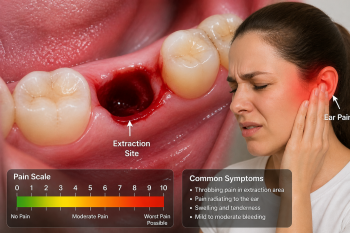
Can tooth extraction cause infection? Mild inflammation is normal, but increasing swelling, fever, or severe pain may indicate infection. Learn more about post-extraction infection warning signs in this detailed guide.
Book a consultation with our Cebu dental specialists for proper evaluation and care.
Ready to get expert guidance?
If you’re experiencing severe pain or delayed healing, book a consultation with our Cebu dental specialists to get proper evaluation and care.
Consultation or contact page .
Book a Consultation
For severe discomfort or delayed healing, book a consultation with our Cebu dental specialists today.
Looking for a dentist? Browse our Cebu dental directory to find trusted clinics near you.
Medical Review and Clinical Basis
This article is based on clinical dental guidelines and real patient recovery patterns observed after tooth extraction procedures. The information reflects common post-extraction healing stages, including normal clot formation, gum tissue repair, and signs of possible complications such as dry socket or infection.
While mild discomfort is expected after a dental extraction, worsening pain after Day 3, bad odor, exposed bone, or spreading pain may require professional evaluation. These symptoms are consistent with known post-extraction complications described in standard dental practice.
About Cebu Dental Implants
Cebu Dental Implants provides comprehensive tooth extraction, surgical procedures, and dental implant services in the Philippines. Our team evaluates post-extraction healing, manages complications such as dry socket, and advises patients on proper aftercare to prevent infection and delayed healing.
If you experience severe pain or unusual symptoms after extraction, early professional assessment is recommended to prevent further complications.
Important Medical Disclaimer
This content is for educational purposes only and does not replace professional dental diagnosis. Every patient heals differently. If symptoms worsen or do not improve within a few days, consult a licensed dentist for proper evaluation and treatment.
Author
This article was prepared by the Cebu Dental Implants content team in consultation with licensed dental professionals experienced in tooth extraction and implant procedures.
Related Clinical Cases
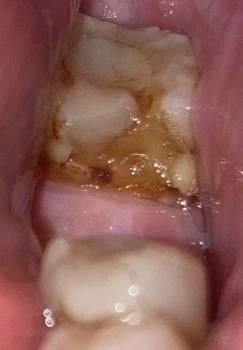
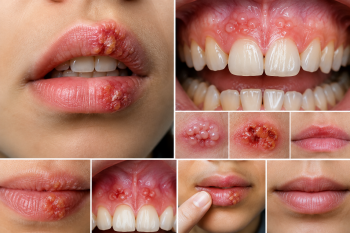
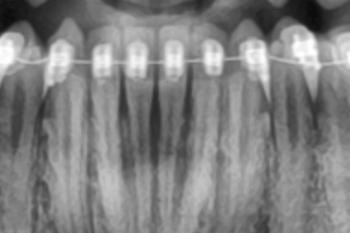
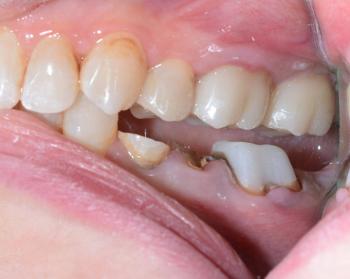
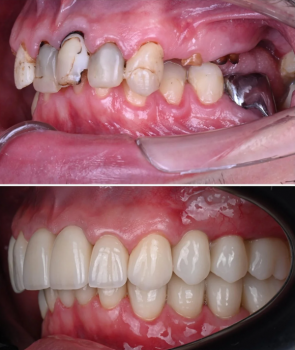
Patients with lower front gum inflammation may also experience tartar buildup, periodontal disease, gum abscesses, or tooth decay. Explore these related clinical case studies.


Other topics:
Other Dental Clinic