Missing Teeth? Find Your Smile Again.

All-on-6 Dental Implants Cost: USA vs Philippines A California Dental Consultant’s Perspective on Cost, Quality, and Patient Decisions
Language :
Topics:
In my work as a dental consultant based in California, I routinely meet patients who are ready to reclaim their smiles—but hesitate when they see the price of treatment. One solution that consistently comes up is All-on-6 dental implants, a more stable and long-term alternative to traditional dentures or even All-on-4 systems.
At the same time, I’ve seen a sharp rise in patients comparing costs between the United States and the Philippines. The difference is not just noticeable—it’s often life-changing.
But here’s the truth:
Choosing where to get All-on-6 implants is not just a financial decision—it’s a clinical one.
This guide will walk you through real cost comparisons, what drives those differences, and what you should consider before deciding.
What Are All-on-6 Dental Implants?
All-on-6 is a full-arch restoration technique that uses six dental implants to support a fixed prosthetic bridge.
Why Six Implants?
Compared to All-on-4:
- Better weight distribution
- Increased stability
- Stronger long-term durability
- Ideal for patients with moderate bone density
Typical Candidates:
- Patients missing most or all teeth
- Those seeking a permanent alternative to dentures
- Individuals who want enhanced support compared to All-on-4
From a consultant’s standpoint, All-on-6 is often recommended when:
“We want to maximize longevity and reduce mechanical stress on implants.”
Cost Comparison: USA vs Philippines
United States Pricing
In the United States, All-on-6 dental implants typically cost:
- Single arch: $25,000 – $40,000
- Full mouth (both arches): $50,000 – $90,000+
What Are You Paying For?
In California especially, costs reflect:
- Specialist expertise (prosthodontists, oral surgeons)
- Digital planning and guided surgery
- High-end materials (titanium implants, zirconia bridges)
- Strict sterilization and regulatory compliance
- Local dental lab craftsmanship
As a consultant, I often explain:
“You’re not just paying for implants—you’re paying for predictability and long-term support.”
Philippines Pricing
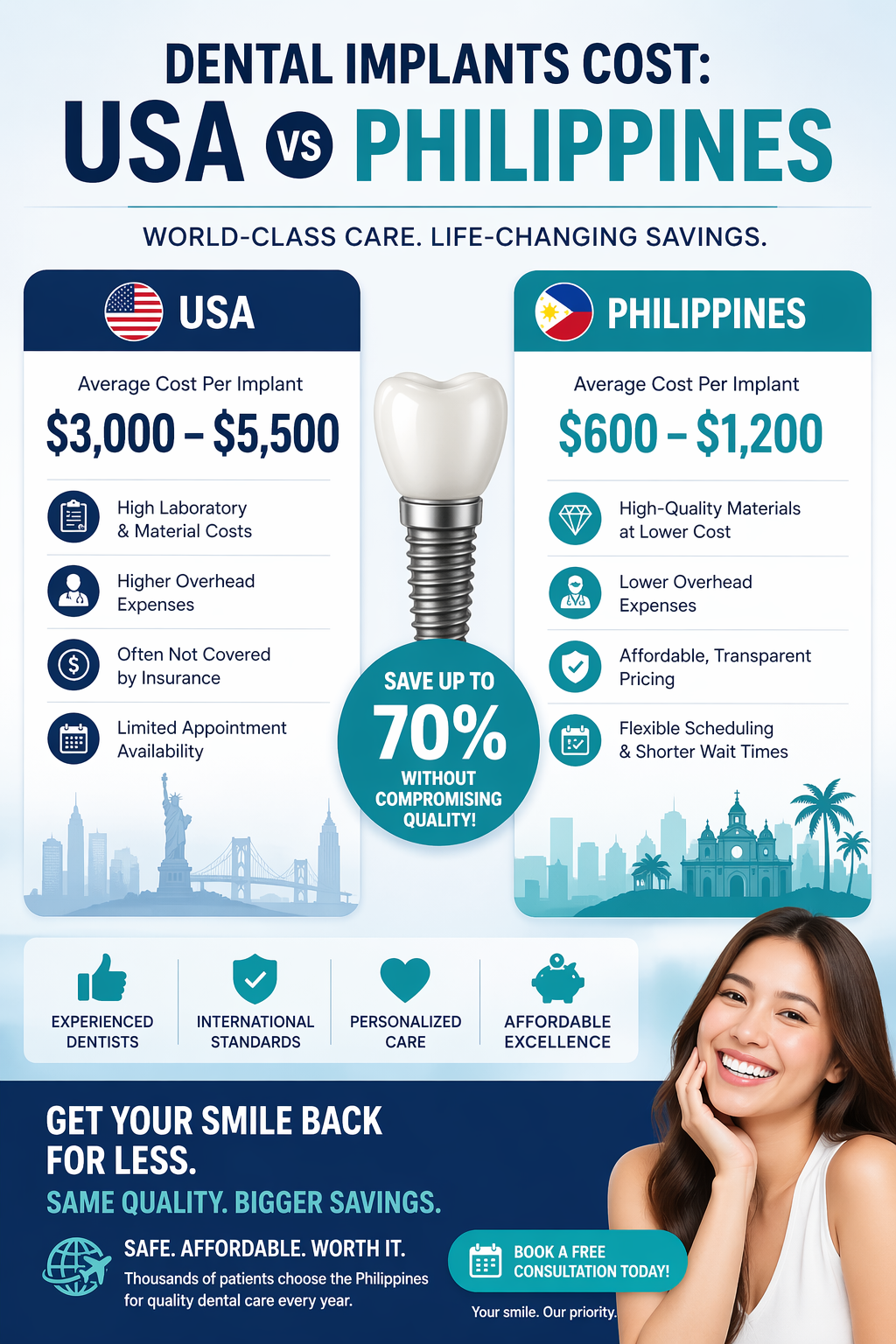
In the Philippines, All-on-6 costs are significantly lower:
- Single arch: $8,000 – $14,000
- Full mouth: $16,000 – $28,000
Even with travel expenses, patients typically save 50% to 70%.
Why Is the Philippines More Affordable?
The price gap is driven by structural economics—not necessarily inferior care.
Key Factors:
- Lower labor and operational costs
- Reduced overhead for clinics
- Competitive dental tourism industry
- Currency differences
However, from my perspective in California:
“Lower cost creates opportunity—but also increases the importance of due diligence.”
Total Cost Breakdown
United States (Typical Case)
- Surgery + prosthetics: $60,000
- Follow-up visits: Included
- Additional procedures (if needed): Extra
Estimated Total: $60,000 – $80,000
Philippines (Typical Case)
- Surgery + prosthetics: $22,000
- Flights: $800 – $1,500
- Hotel (2–3 weeks): $1,000 – $2,000
- Meals and local transport: $500
Estimated Total: $24,000 – $26,000
Clinical Quality: USA vs Philippines
United States
The United States offers:
- Highly regulated dental standards
- Advanced imaging (CBCT, digital workflows)
- Structured follow-up systems
- Legal accountability
The biggest advantage?
Continuity of care.
Philippines
The Philippines has become a strong dental tourism destination.
Strengths:
- Many dentists trained internationally
- Modern clinics in major cities
- English-speaking staff
- Patient-centered care
Challenges:
- Variability in clinic quality
- Less standardized regulation across providers
A California Consultant’s Insight: What Really Matters
From years of reviewing cases and advising patients, I can tell you this:
1. Implant Success Is Planning-Driven
The surgery itself is only part of the equation. Success depends on:
- Proper case selection
- Bone evaluation
- Bite alignment
- Prosthetic design
Cutting corners in planning—anywhere in the world—leads to complications.
2. More Implants ≠ Better Outcome (Automatically)
While All-on-6 provides more stability than All-on-4:
- It requires more precise placement
- It increases surgical complexity
- It demands higher skill from the clinician
3. Follow-Up Care Is Critical
This is where many patients underestimate the process.
After surgery, you’ll need:
- Adjustments
- Healing checks
- Final prosthetic fitting
If done abroad, you must plan:
- Either extended stay
- Or coordination with a local dentist
4. Material Transparency Matters
Ask specifically about:
- Implant brand (globally recognized systems)
- Prosthetic material (acrylic vs zirconia)
- Lab quality
As a consultant, I’ve seen failures not because of surgery—but because of poor prosthetics.
Timeline Differences
United States
- Faster scheduling
- Easier follow-ups
- Streamlined process
Philippines
- Often requires two phases:
- Implant placement
- Final prosthetic after healing
- May require:
- Extended stay OR
- Two separate trips
Risks to Consider
Regardless of location, All-on-6 involves:
- Surgical risks
- Healing variability
- Potential implant failure (low but possible)
Additional Risks Abroad:
- Limited follow-up access
- Travel complications
- Communication gaps
Who Should Consider Treatment in the Philippines?
You may be a good candidate if:
- You are in good general health
- You cannot afford U.S. pricing
- You can commit to travel and recovery
- You are willing to research thoroughly
Who Should Stay in the USA?
From a California-based perspective, I recommend staying in the United States if:
- You have complex medical conditions
- You need bone grafting or sinus lifts
- You want consistent long-term follow-up
- Budget is not your primary limitation
Red Flags When Choosing Any Clinic
Whether in the U.S. or the Philippines, avoid:
- Unrealistically low prices
- Lack of detailed treatment plans
- No transparency on materials
- No documented patient cases
- Poor communication
Professional Recommendation
If you’re considering All-on-6 abroad:
- Request a digital treatment plan
- Confirm implant system and materials
- Ask about complication management
- Understand total timeline
- Plan follow-up care before committing
“The best outcome comes from informed decisions—not rushed ones.”
FAQ: All-on-6 Dental Implants
1. Are All-on-6 implants better than All-on-4?
They can be, especially for patients needing extra stability and load distribution. However, suitability depends on your specific case.
2. How long do All-on-6 implants last?
With proper care, they can last 20+ years, often a lifetime.
3. Is it safe to get All-on-6 in the Philippines?
Yes—if you choose a reputable clinic. Research and verification are essential.
4. How long is the recovery period?
Initial healing takes a few weeks, but full integration may take 3–6 months.
5. Can implants fail?
Yes, but failure rates are low (around 2–5%). Proper planning significantly reduces risk.
Related Topics
1. All-on-4 vs All-on-6: Which Should You Choose?
A detailed comparison of stability, cost, and long-term outcomes.
2. Dental Implant Materials: Titanium vs Zirconia
Understand how material choices affect durability, aesthetics, and cost.
3. Dental Tourism Checklist for Implant Patients
A step-by-step guide to safely planning treatment abroad.
Final Thoughts
All-on-6 dental implants offer a powerful solution for full-mouth restoration. The cost difference between the United States and the Philippines makes dental tourism an appealing option—but it should never be a rushed decision.
From my perspective as a California dental consultant:
“Affordability is important—but predictability and long-term success matter more.”
If you balance cost with proper research, clinical quality, and follow-up planning, you can achieve a result that not only restores your smile—but protects your health for years to come.
Can tooth extraction cause infection? Mild inflammation is normal, but increasing swelling, fever, or severe pain may indicate infection. Learn more about post-extraction infection warning signs in this detailed guide.
Book a consultation with our Cebu dental specialists for proper evaluation and care.
Ready to get expert guidance?
If you’re experiencing severe pain or delayed healing, book a consultation with our Cebu dental specialists to get proper evaluation and care.
Consultation or contact page .
Book a Consultation
For severe discomfort or delayed healing, book a consultation with our Cebu dental specialists today.
Looking for a dentist? Browse our Cebu dental directory to find trusted clinics near you.
Medical Review and Clinical Basis
This article is based on clinical dental guidelines and real patient recovery patterns observed after tooth extraction procedures. The information reflects common post-extraction healing stages, including normal clot formation, gum tissue repair, and signs of possible complications such as dry socket or infection.
While mild discomfort is expected after a dental extraction, worsening pain after Day 3, bad odor, exposed bone, or spreading pain may require professional evaluation. These symptoms are consistent with known post-extraction complications described in standard dental practice.
About Cebu Dental Implants
Cebu Dental Implants provides comprehensive tooth extraction, surgical procedures, and dental implant services in the Philippines. Our team evaluates post-extraction healing, manages complications such as dry socket, and advises patients on proper aftercare to prevent infection and delayed healing.
If you experience severe pain or unusual symptoms after extraction, early professional assessment is recommended to prevent further complications.
Important Medical Disclaimer
This content is for educational purposes only and does not replace professional dental diagnosis. Every patient heals differently. If symptoms worsen or do not improve within a few days, consult a licensed dentist for proper evaluation and treatment.
Author
This article was prepared by the Cebu Dental Implants content team in consultation with licensed dental professionals experienced in tooth extraction and implant procedures.
Related Clinical Cases
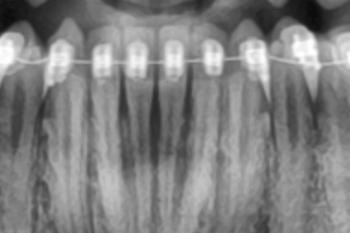
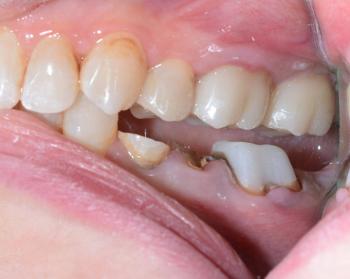
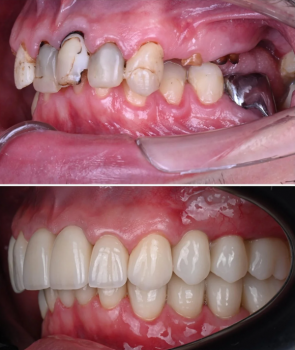
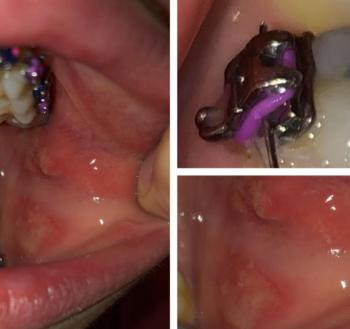
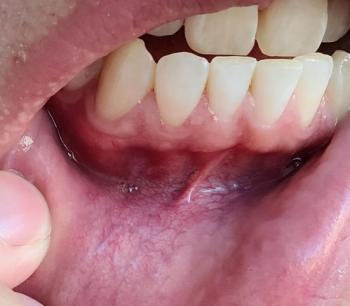
Patients with lower front gum inflammation may also experience tartar buildup, periodontal disease, gum abscesses, or tooth decay. Explore these related clinical case studies.


Other topics:
Other Dental Clinic