Your Smile, Our Passion.

The Global Race for Bioengineered Teeth: Stem Cell Breakthroughs, Clinical Trials, and the 2030 Horizon
Language :

Topics:
The fully functional teeth grown from stem cells in 6 months for adult patients and their global availability by 2030 to 2035 are not supported by credible scientific evidence from Japan or South Korea.
The scientific consensus from recent research is more cautious: while significant progress is being made, the field is still in the basic science and early human trial stages.
Current State of Tooth Regeneration Research
Here is a summary of the main research directions based on recent, verified studies:
| Research Focus | Country/Institution | Key Finding & Status | Source |
|---|---|---|---|
| Basic Science: Identifying Key Stem Cells | International team led by Science Tokyo (Japan) & U.S. institutions | Identified two distinct stem cell lineages responsible for forming tooth roots and the anchoring jaw bone. This is foundational lab research for future therapies |
| . | ||
| Basic Science: Understanding Cellular Positioning | Yonsei University College of Dentistry (South Korea) | Discovered how positional signals in the mouth determine whether cells become teeth or surrounding gum/bone tissue |
| . | ||
| Early Human Clinical Trials: Drug-Based Approach | Kyoto University Hospital / Kitano Hospital (Japan) | Began safety trials (Phase I) in Oct 2024 for a drug (targeting USAG-1 protein) to regrow teeth. Initially for people with congenital tooth loss |
. Estimated timeline for wider use is around 2030, but is not guaranteed
| . | ||
| Advanced Lab Techniques: Enhancing Cell Potential | Not specified (Research published 2025) | Lab study showed combining dental pulp stem cells with engineered blood vessel cells enhances regenerative potential in a dish |
| . |
Is the Research Centralized in Japan and South Korea?
The research landscape is global and collaborative, not centralized in one country.
-
International Collaboration: The foundational stem cell discovery was a joint effort by researchers in Japan, the United States, and Sweden
-
Japan's Specific Focus: Japan has a strong focus on translating research into clinical practice. It is actively conducting the world's first human trials for a tooth-regrowth drug
- and already has around 50 private dental clinics offering other forms of stem cell therapy (e.g., for periodontal issues), though this faces challenges in standardization
-
South Korea's Strategic Position: South Korea has a mature national policy and regulatory framework for stem cell research developed over two decades
- . Its scientists are contributing important basic science, like the study on cellular positioning. A 2025 review suggests the country is strategically aiming to become a global leader in the broader "bioeconomy" centered on stem cells
Important Cautions on Information Accuracy
It's critical to distinguish between verified research and misinformation:
-
No "Bioactive Patch": Claims about a South Korean "bioactive patch" that regrows teeth in 20 minutes a day are false and not found in any credible scientific literature
-
-
Realistic Timelines: Experts caution that sensational claims are common. Even for the most advanced drug trial in Japan, the path to a widely available treatment is long and uncertain. Independent experts estimate that real solutions are likely at least 5 to 10 years away
Conclusion
To summarize:
-
The specific therapy you described (6-month growth for adults) does not exist in the scientific record.
-
Japan is leading in early human trials for a promising drug-based approach, with a hopeful but uncertain target of around 2030.
-
South Korea is strong in basic science and national policy, but not ahead in clinical applications for tooth regeneration.
-
The research field is globally connected, with progress depending on both discovery science (happening worldwide) and clinical translation (currently most advanced in Japan).
If you are interested in monitoring the progress of the most advanced clinical effort, you can search for updates on Dr. Katsu Takahashi's anti-USAG-1 antibody trials at Kyoto University Hospital.
Looking for dentist : Visit directory list
Related Clinical Cases
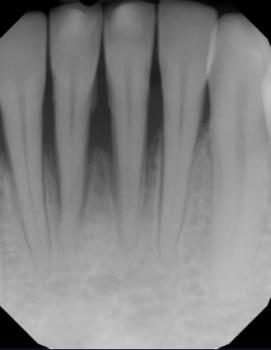
Patients with lower front gum inflammation may also experience tartar buildup, periodontal disease, gum abscesses, or tooth decay. Explore these related clinical case studies.