Because Every Tooth Deserves Care.

The Next Frontier: A 3D-Printed Solution for Deafness Building on Professor Tshifularo's Breakthrough
Language :

Topics:
Expanding the Discovery: From Middle-Ear Repair to Full Auditory Restoration
Professor Mashudu Tshifularo's pioneering middle-ear transplant demonstrated that 3D printing can reconstruct the mechanical pathway for sound. To expand this into a cure for broader deafness, we propose NEURAL COCHLEAR RECONSTRUCTION (NCR)—a multi-layered approach combining 3D bioprinting, stem cell technology, and neural interface engineering.
The Three-Phase Methodological Framework
Phase 1: Extended Ossicular Chain Reconstruction (Beyond Tshifularo's Work)
-
Advanced Materials: Using 4D-printed bioactive titanium alloys and patient-derived cartilage cells that mature post-implantation
-
Integrated Sensing: Micro-sensors embedded in printed ossicles to monitor pressure, vibration, and healing progress
-
Full Chain Replacement: Reconstructing not just three but all seven middle-ear bones in complex cases using endoscopic robotic placement
Phase 2: Bioprinted Cochlear Architecture
-
Cochlear Scaffold Engineering: Creating patient-specific, spiral-shaped scaffolds that mimic the natural cochlea's dimensions
-
Cellular Recellularization: Seeding scaffolds with induced pluripotent stem cells (iPSCs) differentiated into:
-
Hair cell precursors
-
Supporting cells
-
Spiral ganglion neurons
-
-
Gradient Bio-printing: Precisely depositing different cell types along the cochlear length to replicate the tonotopic map (frequency organization)
Phase 3: Neural-Microvillous Interface
-
Synapse-Directing Nanostructures: 3D-printed conductive polymer "bridges" containing neurotrophic factors that guide neural connections
-
Artificial Stereocilia Arrays: Nanoscale piezoelectric polymer hairs on printed hair cells that mechanically trigger electrical signals
-
Optogenetic Enhancement: Gene editing of implanted cells to make them light-responsive for potential optical stimulation backup systems
Technical Innovations Required
-
Multi-Material, Multi-Scale Bioprinting
-
Printers capable of simultaneously depositing structural materials (bioceramics), living cells, and conductive polymers
-
Resolution from millimeter-scale (ossicles) to nanometer-scale (stereocilia)
-
-
Patient-Specific Modeling Pipeline
-
Ultra-high-resolution CT/MRI fusion creating detailed 3D ear models
-
Machine learning algorithms predicting optimal implant design based on individual anatomy
-
Virtual surgery simulations testing implant function before production
-
-
Surgical Integration Systems
-
Augmented reality guidance projecting the 3D model onto the surgical field
-
Micro-robotic surgical assistants for sub-millimeter precision placement
-
Real-time biofeedback during implantation ensuring optimal positioning
-
Clinical Implementation Pathway
Year 1-3: Expand Tshifularo's technique to total middle-ear reconstruction for conductive hearing loss
Year 4-7: Partial cochlear reconstruction for mixed hearing loss, combining printed ossicles with simple cochlear scaffolds
Year 8-12: Full inner-ear reconstruction for sensorineural deafness, beginning with adult patients with acquired deafness
Year 13+: Congenital deafness treatment and preventative regeneration for early-onset hearing loss
Potential Impact and Challenges
Revolutionary Aspects:
-
Truly personalized ear reconstruction matching exact anatomical dimensions
-
Reduced rejection risk using patient-derived cells and materials
-
Potential to restore natural hearing quality surpassing current cochlear implants
-
Cost reduction through automated manufacturing once established
Significant Challenges:
-
Vascularization of printed cochlear tissues
-
Establishing functional neural connections at scale
-
Long-term stability of bioprinted structures
-
Regulatory pathways for combination products (device + biologic)
-
Accessibility in resource-limited settings
Ethical and Accessibility Considerations
Professor Tshifularo emphasized making his procedure accessible in public hospitals. This expanded approach must include:
-
Open-source design libraries for common anatomical variations
-
Lower-cost printing materials suitable for developing countries
-
Training programs following Tshifularo's model of South-to-South knowledge transfer
-
Tiered implementation allowing simpler versions where full bioprinting isn't available
Conclusion: A New Era in Otological Medicine
Professor Tshifularo's breakthrough was the critical first step—demonstrating that 3D printing could successfully reconstruct hearing anatomy. Building on this foundation, a comprehensive solution for deafness is conceivable through stratified 3D reconstruction:
-
Mechanical pathway (middle ear bones)
-
Sensory apparatus (cochlear architecture with hair cells)
-
Neural interface (ganglion connections to the auditory nerve)
This approach transforms hearing restoration from prosthetic replacement (cochlear implants) to true biological restoration. While substantial technical hurdles remain, the convergence of precision imaging, advanced biomaterials, stem cell science, and robotic surgery—sparked by Tshifularo's pioneering work—creates a plausible pathway toward curing forms of deafness previously considered irreversible.
The future of hearing restoration may well be printed, layer by microscopic layer, customized to each patient's unique inner architecture.
Looking for dentist : Visit directory list
Related Clinical Cases
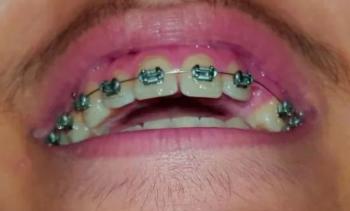
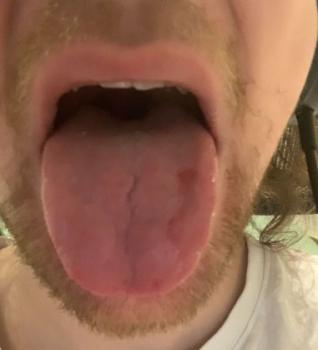
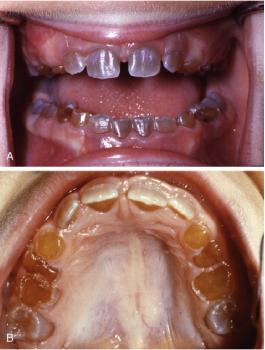
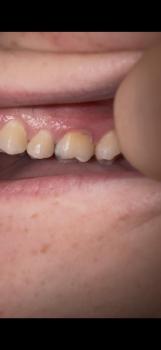
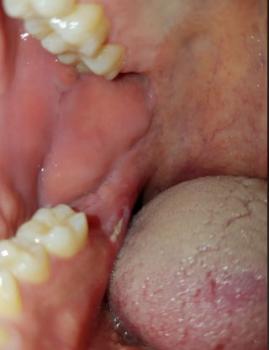
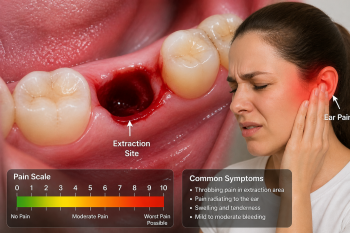
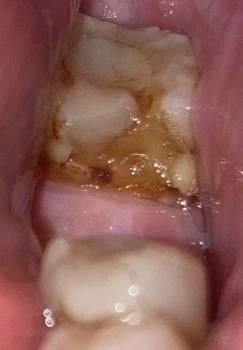
Patients with lower front gum inflammation may also experience tartar buildup, periodontal disease, gum abscesses, or tooth decay. Explore these related clinical case studies.

Other topics:
Other Dental Clinic