Strong Teeth, Fresh Breath, Brighter You.

Extensive Bone Loss Around a Tooth Requiring Root Canal Treatment in San Jose, California: A USA Dentist Explains Diagnosis, Worst-Case Scenarios, Treatment Options, and How Your Tooth May Still Be Saved
Language :
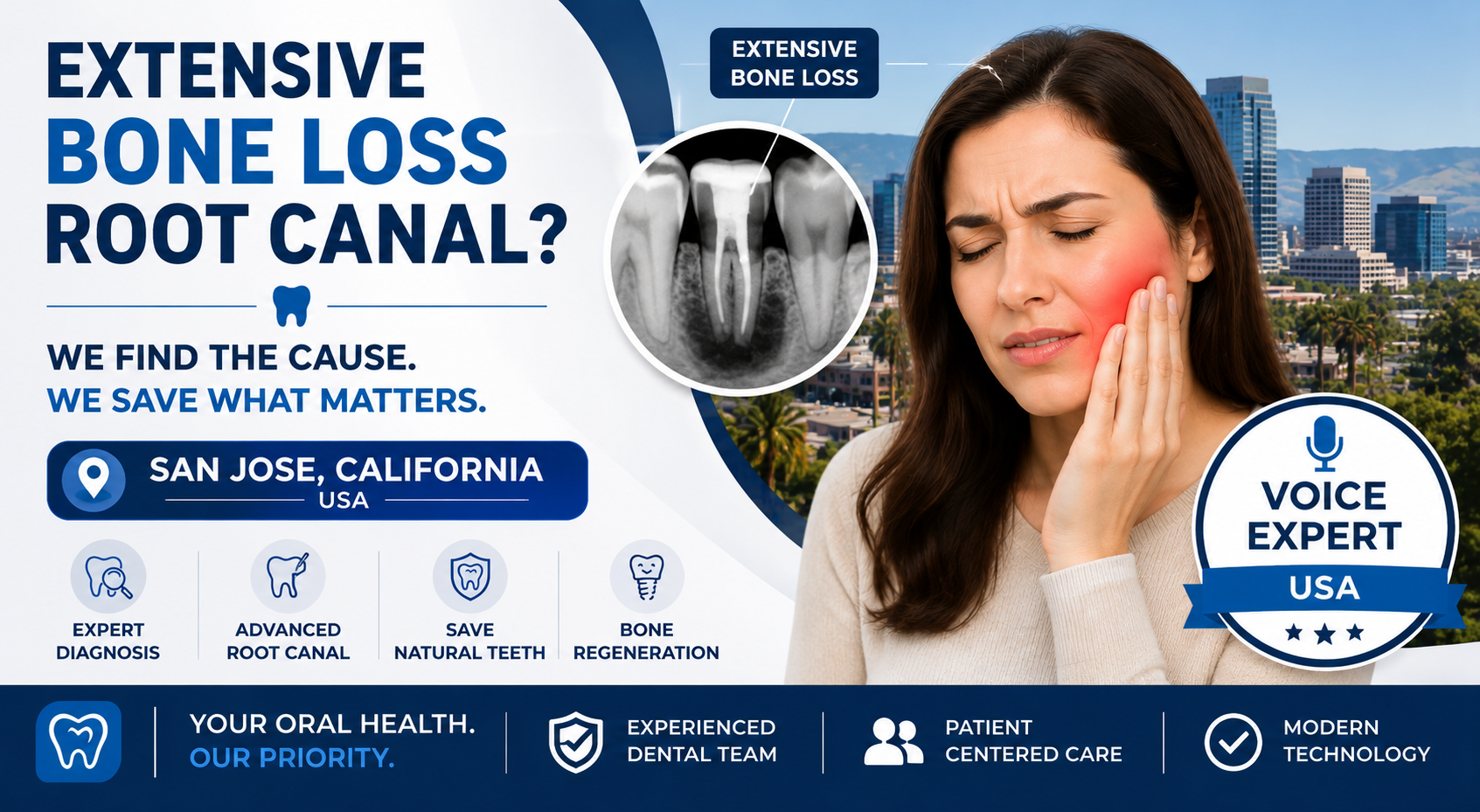
One of the most alarming statements a patient can hear during a dental examination is:
"You have extensive bone loss around this tooth."
Many patients immediately assume the tooth must be extracted. Others fear they have waited too long and that the infection has permanently damaged their jawbone. In my years of clinical practice treating patients across the United States, including individuals seeking root canal treatment in San Jose, California, I have seen many cases where severe bone loss appeared hopeless on X-rays but the tooth was ultimately saved.
Extensive bone loss around a tooth often develops slowly and silently. The condition may be associated with a deep dental infection, untreated decay, previous trauma, cracked teeth, advanced periodontal disease, or failed dental work. By the time symptoms become noticeable, significant destruction of the supporting bone may already have occurred.
The good news is that modern dentistry offers treatment options that were unavailable just a few decades ago. With accurate diagnosis, proper root canal treatment, infection control, and in some cases regenerative procedures, many teeth with extensive bone loss can remain functional for years or even decades.
This comprehensive guide explains:
- What extensive bone loss means
- How root canal infections cause bone destruction
- Symptoms patients commonly experience
- Diagnostic procedures used by dentists
- Worst-case scenarios if treatment is delayed
- Treatment options available in San Jose, California
- Long-term prognosis
- A real-world style success story of a tooth that was saved
Understanding Bone Loss Around a Tooth
The jawbone surrounding a tooth acts as its foundation. Healthy bone supports the tooth and allows it to withstand daily chewing forces.
When bacteria invade the pulp chamber and root canal system, the body's immune system responds by attacking the infection. Unfortunately, the inflammatory process often destroys surrounding bone tissue.
Over time, the bone supporting the tooth begins to disappear.
This condition may appear on X-rays as:
- Dark shadows around root tips
- Large radiolucent lesions
- Vertical bone defects
- Bone loss extending between roots
- Severe periodontal destruction
Patients are often shocked when they learn that a significant portion of supporting bone has disappeared despite minimal pain.
Why Root Canal Infections Cause Bone Loss
Inside every tooth is living tissue called the pulp.
The pulp contains:
- Blood vessels
- Nerves
- Connective tissue
When bacteria enter through:
- Deep cavities
- Cracks
- Fractures
- Trauma
- Failing fillings
the pulp becomes infected.
Once the pulp dies, bacteria multiply inside the root canal system.
The infection eventually exits through the root tip and enters the surrounding bone.
The body responds by sending immune cells to fight the bacteria.
Unfortunately, this defensive reaction often causes:
- Bone destruction
- Inflammatory lesions
- Abscess formation
- Loss of periodontal attachment
The larger and older the infection becomes, the greater the risk of extensive bone loss.
Common Symptoms of Extensive Bone Loss
Many patients are surprised to discover that extensive bone loss may develop with surprisingly few symptoms.
However, warning signs often include:
Persistent Toothache
Pain may be:
- Dull
- Throbbing
- Intermittent
- Constant
The discomfort often worsens while chewing.
Swelling
Infection may cause:
- Gum swelling
- Facial swelling
- Jaw swelling
Swelling is a sign that bacteria have spread beyond the tooth.
Gum Drainage
Some patients notice:
- A pimple-like bump
- Pus drainage
- Bad taste in the mouth
This indicates a chronic draining abscess.
Loose Tooth
As supporting bone disappears, the tooth may begin moving.
Patients frequently describe:
"It feels different when I bite."
Sensitivity
Pain may occur when exposed to:
- Hot drinks
- Cold beverages
- Pressure
Bad Breath
Persistent infection often creates unpleasant odors.
Conditions Commonly Mistaken for Root Canal Bone Loss
Several conditions can mimic extensive bone loss on dental imaging.
These include:
Periodontal Disease
Advanced gum disease can create severe bone defects.
Vertical Root Fracture
A cracked root often causes localized bone destruction.
Dental Cysts
Certain cysts can appear similar to infection-related lesions.
Failed Previous Root Canal
Residual bacteria may continue destroying bone.
Trauma
Injuries may damage the bone surrounding a tooth.
Accurate diagnosis is essential because treatment varies significantly.
How Dentists Diagnose Extensive Bone Loss
Proper diagnosis requires more than simply taking an X-ray.
A thorough evaluation usually includes:
Clinical Examination
Your dentist evaluates:
- Tooth mobility
- Swelling
- Gum health
- Bite forces
Digital Radiographs
Digital X-rays help identify:
- Bone destruction
- Abscesses
- Previous treatment
CBCT Scan
Cone Beam Computed Tomography (CBCT) is one of the most valuable diagnostic tools available today.
A CBCT scan provides:
- Three-dimensional imaging
- Precise lesion measurement
- Root fracture detection
- Detailed bone evaluation
In complex cases, CBCT imaging often determines whether the tooth can be saved.
Pulp Testing
Dentists may perform:
- Cold testing
- Electric pulp testing
- Percussion testing
These procedures help determine if the nerve remains alive.
How Extensive Bone Loss Appears on X-Rays
Patients frequently ask:
"How bad is it?"
Bone loss severity is generally categorized as:
Mild
- Small lesion
- Minimal structural compromise
Moderate
- Larger infection
- Noticeable bone destruction
Severe
- Significant support loss
- Large radiolucent lesion
- Increased mobility
Extensive
- Major structural compromise
- Risk of tooth loss
- Possible spread into surrounding tissues
Extensive bone loss does not automatically mean extraction is necessary.
Worst-Case Scenarios If Treatment Is Delayed
Untreated dental infections rarely improve on their own.
Instead, they usually progress.
1. Complete Tooth Loss
Bone destruction may reach a point where support becomes inadequate.
The tooth eventually becomes non-restorable.
2. Facial Cellulitis
Infection can spread into facial tissues.
Patients may develop:
- Significant swelling
- Fever
- Difficulty opening the mouth
3. Jawbone Destruction
Chronic infection can destroy larger portions of bone.
This may complicate future implant placement.
4. Sinus Involvement
Upper molar infections may spread into sinus cavities.
Symptoms include:
- Facial pressure
- Congestion
- Chronic sinus issues
5. Deep Space Infections
In rare but serious situations, infection enters deeper facial spaces.
This can become a medical emergency.
6. Systemic Infection
Although uncommon, severe untreated infections can spread through the bloodstream.
This condition may require hospitalization.
Can a Tooth with Extensive Bone Loss Be Saved?
In many cases, yes.
Several factors influence prognosis.
Favorable Factors
- No root fracture
- Adequate remaining bone
- Healthy surrounding tissues
- Successful infection removal
- Patient compliance
Less Favorable Factors
- Vertical root fracture
- Severe mobility
- Advanced periodontal disease
- Multiple failed treatments
The key is determining whether the infection is the primary cause of bone loss.
If infection is eliminated, remarkable bone regeneration may occur.
Root Canal Treatment and Bone Healing
One of the most fascinating aspects of dentistry is the body's ability to heal.
When root canal therapy successfully removes bacteria:
- Inflammation decreases
- Bone destruction stops
- New bone begins forming
Healing often continues for:
- 6 months
- 12 months
- 24 months
Some large lesions require years for complete healing.
Modern Root Canal Procedures
Today's root canal treatment is significantly different from procedures performed decades ago.
Modern treatment may include:
Digital Imaging
Enhanced accuracy.
Operating Microscopes
Improved visualization.
Ultrasonic Instruments
More effective cleaning.
Advanced Irrigation Systems
Superior bacterial removal.
Bioceramic Materials
Excellent sealing properties.
These advances have dramatically improved success rates.
When Bone Grafting May Be Needed
Certain cases benefit from regenerative procedures.
Bone grafting may be considered when:
- Large defects exist
- Surgical intervention is required
- Future implant placement may become necessary
Modern grafting materials encourage new bone formation and help restore structural support.
Apicoectomy for Persistent Infections
Occasionally a standard root canal alone is insufficient.
An apicoectomy involves:
- Surgical access
- Removal of infected tissue
- Root-end sealing
- Bone preservation
This procedure often saves teeth that would otherwise be lost.
What Happens If the Tooth Cannot Be Saved?
Despite advances in dentistry, some teeth remain non-restorable.
Common reasons include:
- Root fractures
- Extreme mobility
- Severe structural damage
- Uncontrolled infection
When extraction becomes necessary, replacement options include:
Dental Implants
Widely considered the gold standard.
Fixed Bridges
Alternative solution when implants are not possible.
Partial Dentures
Economical replacement option.
Preserving natural teeth remains the preferred goal whenever feasible.
Long-Term Success Rates
Studies consistently demonstrate high success rates for properly performed root canal treatment.
Success depends on:
- Accurate diagnosis
- Thorough disinfection
- Quality restoration
- Good oral hygiene
Many treated teeth function successfully for decades.
Preventing Extensive Bone Loss
Prevention is always easier than treatment.
Patients should:
Schedule Regular Exams
Routine evaluations detect problems early.
Treat Cavities Promptly
Small cavities are easier and less expensive to repair.
Wear Night Guards
Protect teeth from grinding damage.
Avoid Chewing Hard Objects
Prevent cracks and fractures.
Maintain Excellent Oral Hygiene
Daily brushing and flossing remain essential.
Seek Treatment Quickly
Pain, swelling, or sensitivity should never be ignored.
Advice from a USA Dentist
If you have been told you have extensive bone loss around a tooth, do not immediately assume extraction is your only option.
I have personally treated patients who arrived believing their tooth was beyond saving. Some had large infections, draining abscesses, and alarming radiographic findings. After proper diagnosis and treatment, many of these teeth healed remarkably well.
My advice is simple:
- Obtain a complete diagnosis.
- Request digital imaging or CBCT evaluation.
- Consult an experienced endodontist when necessary.
- Do not delay treatment.
- Follow all post-treatment instructions carefully.
Time is often the deciding factor between saving a tooth and losing it.
A Short Story: How One Tooth Was Saved
Michael, a 52-year-old software engineer from San Jose, California, arrived at our office convinced he would lose his lower molar.
For nearly a year he had ignored occasional discomfort.
At first, the pain came and went.
Eventually, he noticed swelling near the tooth and difficulty chewing on that side.
When we took digital X-rays and a CBCT scan, the findings were concerning.
A large infection surrounded the roots.
Significant bone loss extended around the tooth.
Another office had already suggested extraction.
Michael hoped for a second opinion.
After a thorough examination, we discovered the tooth had no root fracture and enough remaining structure to support treatment.
We performed root canal therapy using modern microscopic techniques.
The infection was thoroughly cleaned and sealed.
Several weeks later, the swelling disappeared.
Three months later, he reported complete comfort.
At the one-year follow-up appointment, new X-rays revealed something remarkable.
The large dark lesion had shrunk dramatically.
New bone was forming.
The tooth remained stable.
Today, several years later, Michael still uses that same tooth comfortably every day.
His case serves as an important reminder:
Even when bone loss appears extensive, saving the natural tooth is often possible when treatment is performed promptly and correctly.
Conclusion
Extensive bone loss associated with a root canal infection is a serious condition, but it is not always the end of the road for your tooth.
Modern diagnostic technology, advanced root canal procedures, and regenerative techniques allow dentists and endodontists to save many teeth that previously would have required extraction.
The most important factor is early intervention.
Ignoring pain, swelling, drainage, or loose teeth allows infection to continue destroying the surrounding bone. Seeking professional care quickly provides the best opportunity for successful treatment and long-term preservation of your natural tooth.
If you live in San Jose, California, and have been diagnosed with extensive bone loss around a tooth, consult an experienced dental professional as soon as possible. With proper diagnosis and treatment, the tooth you believe is hopeless today may still be functioning comfortably for many years to come.
Can tooth extraction cause infection? Mild inflammation is normal, but increasing swelling, fever, or severe pain may indicate infection. Learn more about post-extraction infection warning signs in this detailed guide.
Book a consultation with our Cebu dental specialists for proper evaluation and care.
Ready to get expert guidance?
If you’re experiencing severe pain or delayed healing, book a consultation with our Cebu dental specialists to get proper evaluation and care.
Consultation or contact page .
Book a Consultation
For severe discomfort or delayed healing, book a consultation with our Cebu dental specialists today.
Looking for a dentist? Browse our Cebu dental directory to find trusted clinics near you.
Medical Review and Clinical Basis
This article is based on clinical dental guidelines and real patient recovery patterns observed after tooth extraction procedures. The information reflects common post-extraction healing stages, including normal clot formation, gum tissue repair, and signs of possible complications such as dry socket or infection.
While mild discomfort is expected after a dental extraction, worsening pain after Day 3, bad odor, exposed bone, or spreading pain may require professional evaluation. These symptoms are consistent with known post-extraction complications described in standard dental practice.
About Cebu Dental Implants
Cebu Dental Implants provides comprehensive tooth extraction, surgical procedures, and dental implant services in the Philippines. Our team evaluates post-extraction healing, manages complications such as dry socket, and advises patients on proper aftercare to prevent infection and delayed healing.
If you experience severe pain or unusual symptoms after extraction, early professional assessment is recommended to prevent further complications.
Important Medical Disclaimer
This content is for educational purposes only and does not replace professional dental diagnosis. Every patient heals differently. If symptoms worsen or do not improve within a few days, consult a licensed dentist for proper evaluation and treatment.
Author
This article was prepared by the Cebu Dental Implants content team in consultation with licensed dental professionals experienced in tooth extraction and implant procedures.
Related Clinical Cases
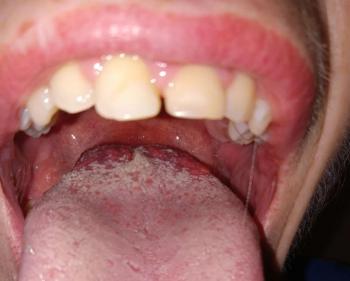
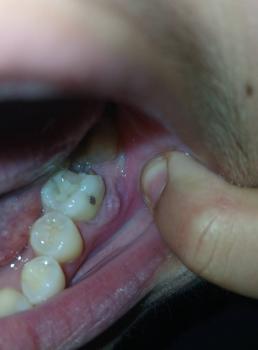
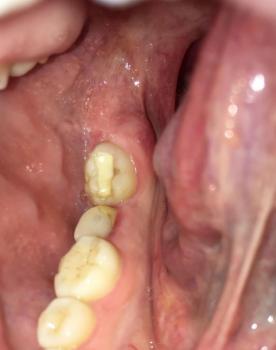
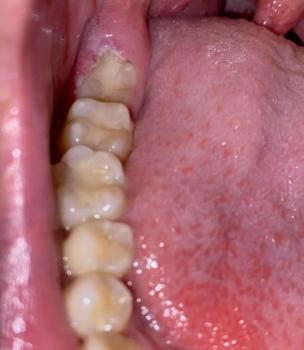
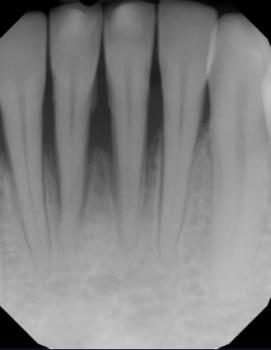
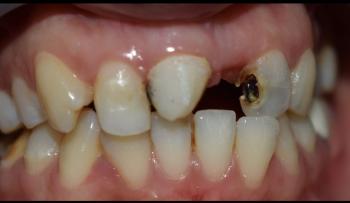
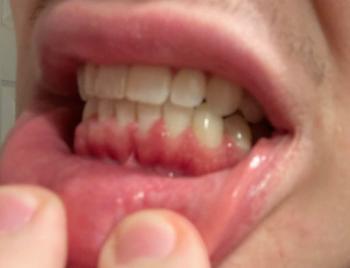
Patients with lower front gum inflammation may also experience tartar buildup, periodontal disease, gum abscesses, or tooth decay. Explore these related clinical case studies.

Other topics:
Other Dental Clinic