Healthy Teeth, Happy Life.

The Lab-Grown Bone Marrow Revolution: Ending Dental Implant Malpractice in the Philippines
Language :
Topics:
The End of Guesswork: How Lab-Grown Bone Marrow Can Revolutionize Dental Implants and Stop Malpractice
In the Philippines, the promise of a dental implant can feel like a high-stakes gamble. For every successful procedure that restores a patient's smile and function, there are stories of failure: implants that loosen, infections that fester, and jawbones that reject expensive posts. Tragically, many of these failures stem from a fundamental flaw—the inability to accurately assess the quality of the patient's bone marrow and its capacity to support an implant before the surgery even begins.
But a seismic shift is on the horizon, one that could make dental implant errors a relic of the past.
The Philippine Reality: Malpractice in a Regulatory Gray Zone
Let's name the uncomfortable truth. The dental implant industry in the Philippines is plagued by a spectrum of malpractice, from subtle negligence to outright fraud. This includes:
-
Placing implants in insufficient bone, hoping for the best without proper grafts.
-
Skipping essential 3D CBCT scans to cut costs, relying on inadequate 2D X-rays.
-
Using substandard, uncertified implant systems to maximize profit.
-
Failing to diagnose underlying health conditions that affect bone healing, like diabetes or osteoporosis.
The most frustrating part? Many of these practitioners operate with impunity, "never been arrested" due to a complex web of weak regulatory enforcement, patient hesitancy to file complaints, and a lack of conclusive, pre-operative evidence to prove negligence.
The Scientific Breakthrough: A "Blood Factory" for Bone Health
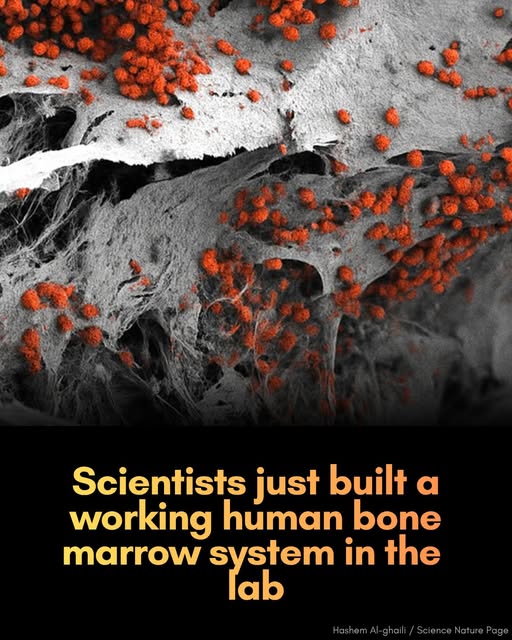
Meanwhile, in a lab at the University of Basel, scientists have engineered something extraordinary: the first fully human-made bone marrow system. Published in Cell Stem Cell, this isn't just an incremental step; it's a leap.
They created a miniature, lab-grown environment that mimics the natural bone marrow's complex architecture—including blood vessels, nerves, and the critical endosteal niche. This niche is the command center where stem cells decide to become blood cells and is vital for the bone-healing process that makes an implant successful.
In simple terms, they built a living, human-specific "blood factory" to study, in perfect detail, how our bones create and sustain life at a cellular level.
The Innovation: From Leukemia Research to Dental Implant Perfection
So, how does a tool for studying leukemia prevent a failed implant in Manila or Cebu?
Critical Application 1: The Pre-Implant Viability Test
Imagine a future where, before scheduling surgery, a dentist takes a small sample of a patient's cells (like from a blood draw or a swab). These cells could be used to grow a miniature replica of that specific patient's bone marrow environment.
This personalized model would allow us to test:
-
Healing Potential: How well will this patient's bone marrow cells integrate with a titanium implant?
-
Biocompatibility: Is there a risk of a negative inflammatory response to the implant material itself?
-
Graft Success: For patients needing bone grafts, which graft material will their biology accept best?
This moves implant planning from educated guesswork—interpreting grainy shades on a 3D scan—to a precise, predictive science.
Critical Application 2: Engineering Superior Implant Materials
This technology allows for the testing of new implant surfaces, coatings, and materials on actual human bone marrow in a lab. We can now ask: "Does this new nano-coating actually improve stem cell attachment and bone growth in a human system?" The answers will lead to a new generation of "biologically active" implants designed for seamless integration.
A Critical Call to Action
To My Fellow Dentists:
The era of excuses is ending. This technology, while still in development, points to a future where the standard of care will be incontrovertible. We must champion this progress.
-
Stop cutting corners. A 3D CBCT scan is the absolute minimum standard for implant planning today.
-
Invest in continuous education. Understand the biology behind osseointegration, not just the mechanics of placement.
-
Embrace transparency. Your reputation will be built on predictable success, not on hiding your failures. This new science will make outcomes transparent and malpractice undeniable.
To Patients in the Philippines:
Your life is not a dentist's experiment. Your right to a safe, successful procedure is non-negotiable.
-
Demand a 3D CBCT Scan. If your dentist plans an implant without one, walk away.
-
Ask About the Implant System. Request the brand and look for internationally recognized certifications (e.g., FDA, CE).
-
Seek a Second Opinion. A qualified implantologist will welcome your caution and will have a thorough, biologically-grounded plan.
-
Understand that the "Cheapest Option" is Often the Most Costly. A failed implant leads to more pain, more complex surgeries, and exponentially higher costs.
The Future is Predictable
The innovation from Basel is more than a medical breakthrough; it is a beacon of accountability. It promises a future where every dental implant is placed on a foundation of proven biological compatibility, not hope. It is a future where malpractice is not just illegal, but impossible to hide.
For the sake of every patient in the Philippines and beyond, that future cannot come soon enough.
Looking for dentist : Visit directory list
Related Clinical Cases
Patients with lower front gum inflammation may also experience tartar buildup, periodontal disease, gum abscesses, or tooth decay. Explore these related clinical case studies.
Other topics:
Other Dental Clinic