Smile Again with Comfort and Confidence.

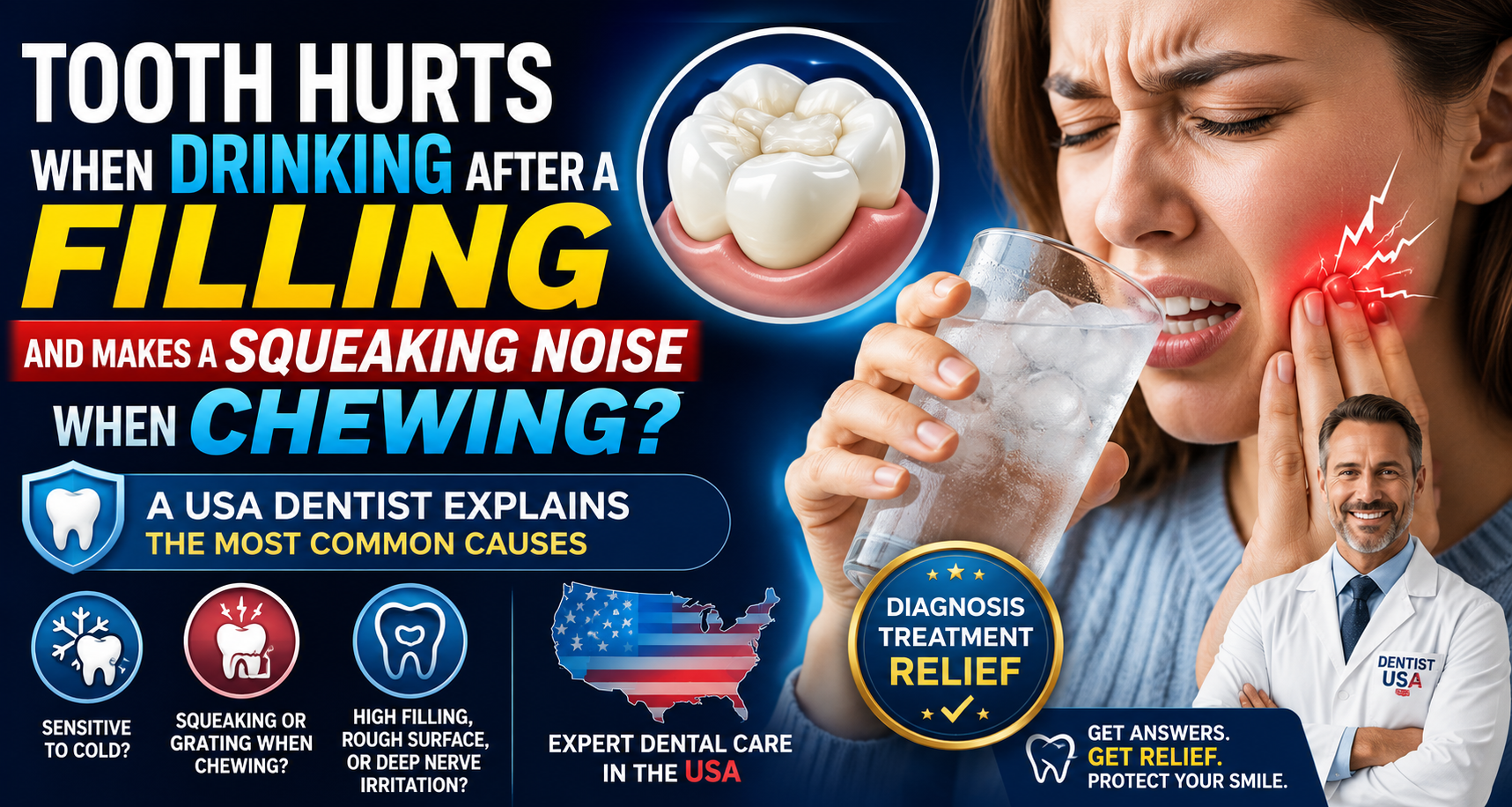
Tooth Hurts When Drinking After a Filling and Makes a Squeaking Noise When Chewing? A USA Dentist Explains the Most Common Causes
Language :
Topics:
By a USA Dental Clinical Review Team
Receiving a new dental filling should relieve pain—not create new symptoms. However, some patients in the United States notice that shortly after a filling, their tooth becomes sensitive when drinking cold or hot beverages and may even produce a squeaking, grating, or rubbing sensation while chewing.
Although these symptoms can be concerning, they are usually explainable and, in many cases, easily corrected by your dentist.
This article explains the most common reasons why a recently filled tooth may hurt when drinking while making unusual noises or sensations during chewing, how dentists diagnose the problem, available treatment options, and when the symptoms could indicate a more serious issue.
Real USA Patient Case
Patient: Michael, 38, Texas
"I had a white filling placed two days ago. Since then, every time I drink cold water, I get a sharp pain that lasts a second or two. When I chew steak or grind my teeth together, it almost feels like the tooth is squeaking or rubbing. I thought something was wrong with the filling."
Michael returned to his dentist, who discovered the filling was only slightly too high. After a quick adjustment lasting less than two minutes, the squeaking sensation disappeared immediately. Within several days, the cold sensitivity also gradually resolved.
This scenario is one of the most common post-filling complaints seen in general dental practices across the United States.
Why Can a Tooth Hurt After a Filling?
A dental filling repairs decay by replacing damaged tooth structure with restorative material such as composite resin.
Although the decay has been removed, the tooth has experienced:
- Drilling
- Bonding procedures
- Pressure changes
- Heat generated during preparation
- Mechanical stress during chewing
The nerve inside the tooth may temporarily become inflamed, leading to short-term sensitivity.
Sometimes, however, additional mechanical problems develop that require professional adjustment.
The Five Most Common Causes
1. High Filling (Occlusal Prematurity) — The Most Common Cause
This is by far the most frequent reason patients experience discomfort after a filling.
What happens?
Even if a filling is only a fraction of a millimeter too high, that tooth contacts the opposing tooth before all the others.
Instead of distributing chewing pressure evenly, one tooth absorbs excessive force.
Why does it squeak?
Composite resin rubbing under heavy pressure against natural enamel or another restoration can produce:
- Squeaking
- Scraping
- Grating
- Slight vibration while chewing
Many patients describe it as:
"The tooth feels different."
or
"It sounds like it's rubbing."
Why does drinking hurt?
The excessive bite force irritates the periodontal ligament (PDL) surrounding the root.
An inflamed PDL makes the tooth much more sensitive to:
- Cold drinks
- Hot beverages
- Pressure
- Biting
Treatment
Fortunately, correction is simple.
Your dentist will:
- Check your bite using articulating paper.
- Identify high contact points.
- Gently polish the filling.
The adjustment usually takes less than five minutes.
Many patients notice immediate improvement.
2. Polymerization Shrinkage and Microscopic Bonding Gaps
Modern tooth-colored fillings shrink slightly while hardening.
This phenomenon is known as polymerization shrinkage.
If the bond between the filling and the tooth weakens under pressure, a microscopic gap can develop.
Although invisible on X-rays, this tiny space may allow movement of dentinal fluid.
Why does cold water hurt?
According to Brännström's Hydrodynamic Theory, movement of fluid inside microscopic dentinal tubules stimulates nerve endings inside the pulp.
Patients often describe:
- Sharp "zing"
- Electric shock sensation
- Brief pain with cold drinks
- Pain when inhaling cold air
Why does chewing feel strange?
During chewing, the composite resin may flex slightly against the tooth wall, creating subtle friction that feels like:
- Squeaking
- Sliding
- Tiny vibration
Treatment
Depending on severity, the dentist may:
- Re-polish the restoration
- Seal the margin
- Replace part of the filling
- Replace the entire restoration if leakage is significant
3. Rough Composite Surface or Excess Resin
Not every filling leaves the dental office perfectly smooth.
Tiny areas of excess composite—sometimes called flash—may remain.
What happens?
The rough surface acts similarly to very fine sandpaper.
When teeth slide across one another during chewing, patients may notice:
- Scratching
- Grating
- Roughness
- Squeaking sensation
Some people can even detect the rough edge with their tongue.
Why is the tooth also sensitive?
The roughness itself does not usually cause pain.
Instead, mild nerve irritation from the drilling process often occurs at the same time.
Treatment
Your dentist simply polishes the restoration until it feels smooth.
This appointment is usually quick and painless.
4. Pulpitis (Inflammation of the Dental Nerve)
Sometimes the decay was extremely deep before the filling.
Even after removing all the decay successfully, the nerve may become inflamed.
Dentists classify pulp inflammation into two categories.
Reversible Pulpitis
The nerve is irritated but still capable of healing.
Symptoms include:
- Brief pain with cold drinks
- Mild sensitivity
- Symptoms improving over days or weeks
Treatment usually involves monitoring the tooth while allowing natural healing.
Irreversible Pulpitis
Here, the nerve is no longer able to recover.
Symptoms often include:
- Severe spontaneous pain
- Pain waking you at night
- Lingering pain lasting more than 10–30 seconds after cold or hot drinks
- Increasing discomfort over time
If irreversible pulpitis develops, root canal treatment may become necessary to remove the inflamed pulp and preserve the tooth.
5. Temporomandibular Joint (TMJ) Crepitus
Surprisingly, the sound may not originate from the tooth at all.
Keeping the mouth open for an extended dental procedure can temporarily strain the jaw joint.
The TMJ may produce:
- Clicking
- Grinding
- Popping
- Squeaking
- Crepitus
Patients often assume the filling caused the noise when, in reality, the jaw joint is responsible.
A clinical examination can distinguish between TMJ-related symptoms and tooth-related problems.
How USA Dentists Diagnose the Problem
A dentist will usually perform several simple tests, including:
- Review of your symptoms and timing.
- Bite analysis with articulating paper.
- Cold sensitivity testing.
- Percussion (tapping) test.
- Bite test using a specialized instrument.
- Examination of the filling margins.
- Dental X-rays if deeper issues are suspected.
- Evaluation of the jaw joint if TMJ involvement is possible.
These tests help identify whether the discomfort is due to bite imbalance, bonding issues, pulp inflammation, or another condition.
Comparison of the Most Common Causes
| Possible Cause | Key Signs | Typical Treatment |
|---|---|---|
| High filling | Pain when biting, one tooth feels "high," squeaking during chewing | Bite adjustment and polishing |
| Polymerization shrinkage / micro-gap | Sharp pain with cold drinks, discomfort when releasing a bite | Re-seal or replace the affected portion of the filling |
| Rough composite surface | Gritty feeling, rubbing sensation during chewing | Surface polishing and smoothing |
| Reversible pulpitis | Brief cold sensitivity that gradually improves | Observation, desensitizing measures, follow-up |
| Irreversible pulpitis | Lingering or worsening pain, spontaneous throbbing | Endodontic evaluation and possible root canal treatment |
| TMJ crepitus | Noise near the jaw joint rather than a single tooth | TMJ assessment and conservative management |
When Should You Contact Your Dentist?
Schedule a follow-up appointment if:
- Your bite feels uneven.
- Chewing becomes painful.
- Cold sensitivity persists for more than one to two weeks.
- You notice persistent squeaking or grinding from one tooth.
- The tooth feels taller than surrounding teeth.
- Pain is worsening instead of improving.
Most post-filling issues are straightforward to diagnose and can often be corrected with a simple adjustment.
Warning Signs That Require Immediate Evaluation
Seek urgent dental care if you experience:
- Severe swelling of the face or gums.
- Fever or chills.
- Difficulty swallowing or breathing.
- Persistent severe throbbing pain.
- Pus or a foul-tasting discharge.
- Pain that wakes you from sleep or continues to intensify.
These symptoms may indicate a deeper infection or significant pulp involvement requiring prompt treatment.
Frequently Asked Questions
Is it normal for a filling to hurt when drinking cold water?
Yes. Mild cold sensitivity for several days is common after a filling, particularly if the cavity was deep. However, persistent or worsening sensitivity should be evaluated by your dentist.
Can a filling actually squeak?
Patients sometimes perceive a squeaking, rubbing, or grating sensation after a filling. This is most often related to a high bite, a rough composite surface, or subtle movement between the restoration and tooth structure.
Will the sensitivity go away on its own?
Many cases improve within days to a few weeks as the tooth heals. If symptoms persist or worsen, a professional examination is recommended.
Does a squeaking tooth mean I need a root canal?
Not necessarily. A squeaking sensation alone usually points to a mechanical issue rather than nerve damage. Root canal treatment is generally considered only if the dental pulp develops irreversible inflammation.
Final Thoughts
Experiencing pain when drinking together with a squeaking or grating sensation after a dental filling can be unsettling, but these symptoms are often caused by minor, correctable issues. The most common culprit is a filling that is slightly too high, followed by microscopic bonding gaps, rough composite surfaces, temporary nerve inflammation, or, less commonly, jaw joint strain.
The good news is that many of these problems can be diagnosed during a routine dental examination and treated with simple adjustments or polishing. If your symptoms are improving each day, your tooth is likely healing normally. However, persistent pain, worsening sensitivity, or prolonged discomfort should never be ignored.
Prompt follow-up with your dentist helps ensure that small problems are corrected before they develop into more complex dental conditions, allowing you to return to comfortable eating, drinking, and smiling with confidence.
Looking for a dentist? Browse our Cebu dental directory to find trusted clinics near you.
Medical Review and Clinical Basis
This article is based on clinical dental guidelines and real patient recovery patterns observed after tooth extraction procedures. The information reflects common post-extraction healing stages, including normal clot formation, gum tissue repair, and signs of possible complications such as dry socket or infection.
While mild discomfort is expected after a dental extraction, worsening pain after Day 3, bad odor, exposed bone, or spreading pain may require professional evaluation. These symptoms are consistent with known post-extraction complications described in standard dental practice.
About Cebu Dental Implants
Cebu Dental Implants provides comprehensive tooth extraction, surgical procedures, and dental implant services in the Philippines. Our team evaluates post-extraction healing, manages complications such as dry socket, and advises patients on proper aftercare to prevent infection and delayed healing.
If you experience severe pain or unusual symptoms after extraction, early professional assessment is recommended to prevent further complications.
Important Medical Disclaimer
This content is for educational purposes only and does not replace professional dental diagnosis. Every patient heals differently. If symptoms worsen or do not improve within a few days, consult a licensed dentist for proper evaluation and treatment.
Author
This article was prepared by the Cebu Dental Implants content team in consultation with licensed dental professionals experienced in tooth extraction and implant procedures.
Related Clinical Cases
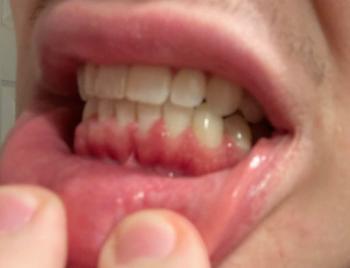
Patients with lower front gum inflammation may also experience tartar buildup, periodontal disease, gum abscesses, or tooth decay. Explore these related clinical case studies.