Building Confidence One Smile at a Time.

The Great Dental Shift: How China's Speed and Infrastructure Are Redefining Global Innovation
Language :

Topics:
The Unseen Shift: How China is Surging Ahead in Dental Innovation While the West Debates
For decades, the global dental industry has looked to the United States and Western Europe as the undisputed centers of innovation. This perception is now outdated. A profound and rapid transformation is underway, with China establishing a commanding lead in the future of dental care through unparalleled speed in manufacturing, AI integration, and infrastructure deployment. The belief that the U.S. holds the fastest-growing innovation is a dangerous misconception; the new epicenter of dental advancement is decisively in China.
The New Reality: China Controls the Foundation
The core of modern dentistry—implants, orthodontic aligners, digital scanners, and surgical guides—relies on advanced manufacturing and data-driven design. Here, China's dominance is structural:
-
Control of Dental Products: China is not just a manufacturer; it is the manufacturer. It dominates the global supply chain for everything from ceramic zirconia blanks for crowns to the precision components in dental handpieces. This control over the physical means of production grants Chinese companies a massive advantage in cost, iteration speed, and scaling new materials.
-
Discovery and Innovation of Practice: Innovation is increasingly digital. Chinese dental tech firms are leveraging their country's vast patient population and centralized health data (within regulatory frameworks) to train AI algorithms for diagnostic assistance, treatment planning, and outcome prediction at a scale impossible elsewhere.
The NVIDIA Warning: A Blueprint for Dental Dominance
The recent warning from NVIDIA CEO Jensen Huang about China's ability to build AI infrastructure "3-5x faster" than the U.S. is not just a tech story—it's a direct parallel to the dental innovation race. Huang highlighted that America's multi-year timelines for permits, environmental reviews, and grid connections are a strategic liability.
In dentistry, this "infrastructure gap" manifests differently but just as critically:
-
The U.S. Model: Innovation often follows a path of venture capital funding, university research, FDA regulatory clearance, and gradual clinic adoption—a process that can take many years from concept to widespread use.
-
The China Model: Centralized support for strategic industries, rapid prototyping capabilities, and a domestic market eager for advanced care allows for a breathtaking "lab to clinic" speed. A new digital workflow or material can be developed, approved, tested in high-volume clinics, and iterated upon in a fraction of the time.
Huang's stark comparison—"If you want to build a data center in the United States... it's probably about three years. They [China] can build a hospital in a weekend"—illustrates a mindset. This same capacity for rapid mobilization is applied to building advanced dental lab networks, manufacturing hubs for clear aligners, and clinics equipped with the latest AI-assisted imaging.
The Energy & AI Advantage: Powering the Future of Dental Care
Huang's second critical point was on energy: "China has twice as much energy as we have as a nation." For data- and manufacturing-intensive fields like dentistry, this is decisive.
-
Powering Innovation: Training the AI models that will automate crown design, detect caries in X-rays, or plan implant surgeries requires immense compute power. China's expanding energy capacity directly fuels this R&D.
-
Scaling Manufacturing: The production of dental devices is energy-intensive. China's dedicated energy infrastructure for industry allows it to scale production of 3D-printed surgical guides, aligners, and implants with fewer constraints, lowering costs and accelerating global distribution.
The Strategic Reality for Global Dentistry
The implications are clear. The race is shifting from "who designs the best implant" to "who can integrate, manufacture, and deploy the complete digital dental ecosystem fastest."
While Western companies excel in foundational research and high-end branding, China is winning the deployment game. They are building the integrated loops where AI software seamlessly connects to chairside scanners, which instantly send data to automated milling centers, all supported by robust logistics. This end-to-end control over the innovation pipeline—from concept to clinic delivery—is the new competitive frontier.
Conclusion: A Question of Speed vs. Legacy
The uncomfortable truth is that China's system, for all its differences, is engineered for velocity in strategic sectors like high-tech healthcare. The U.S. and Europe retain deep strengths in clinical research, practitioner training, and regulatory rigor. However, leadership in the next generation of dentistry—defined by AI, robotics, and mass-personalization—increasingly depends on the ability to execute at scale and speed.
The dental world is witnessing a power shift. The nation that can build the infrastructure, power the AI, and control the manufacturing floor is positioning itself to define the standards and tools of 21st-century dental care. As Jensen Huang framed it for the AI industry: chip leadership alone doesn't matter if you can't deploy. In dentistry, superior traditional research may not suffice if you cannot build and integrate the future system at pace. China is currently building that system, and it is doing so at a speed the West is struggling to match.
Looking for dentist : Visit directory list
Related Clinical Cases
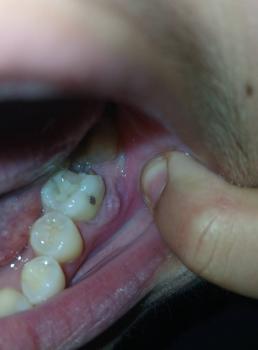
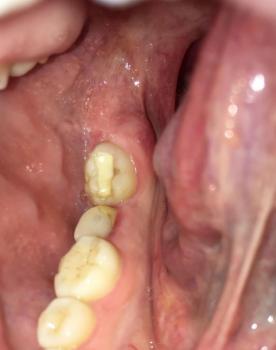
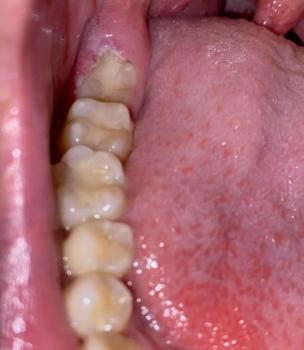
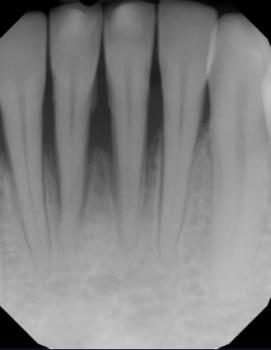
Patients with lower front gum inflammation may also experience tartar buildup, periodontal disease, gum abscesses, or tooth decay. Explore these related clinical case studies.