Transforming Smiles, Restoring Confidence.

When the Well Runs Dry: A Tale of Oral Health, Longevity, and Lost Comfort
Language :

Topics:
The Fountain: A New York Story About What Keeps Us Going
The thing about saliva is that you never think about it until it’s gone. For Leo, a second-generation bookbinder in a tiny West Village shop that smelled of dust and leather, that moment came on a Tuesday. He was painstakingly repairing the spine of a 19th-century poetry anthology when a dry, papery feeling seized his tongue. A profound, unquenchable thirst. It was the first whisper of what his doctor would later call xerostomia—a side effect of new medication, a simple drying up of the well.
Before that, Leo’s life was measured in the quiet, fluid rhythms of his craft. He’d work for hours, the only sounds the brush of his sizing brush, the creak of old paper, and the constant, unconscious swallow. He never considered the 0.5 to 1.5 liters of biological alchemy his body produced daily, the 40,000-liter ocean he would create and process in a lifetime. He just knew his mouth was comfortable, the leather supple under his fingers, the world tasting of his morning coffee and the faint, sweet glue.
The drought changed everything. Without saliva’s lubrication, eating a bagel became a gritty, painful ordeal. His tongue stuck to the roof of his mouth. A canker sore erupted on his gum—a small, screaming betrayal where the protective film of saliva had vanished. The worst was the taste. A metallic, stale bitterness coated everything, a constant reminder of absence. His world, once rich with subtle flavors, turned flat and hostile.
The turning point was as mundane as the problem itself. A young medical student, Elara, brought in a water-damaged anatomy text. As Leo assessed the splayed pages depicting muscles and veins, she noticed him sipping from his ever-present water bottle, his movements pained.
“Sjögren’s?” she asked gently, referencing the autoimmune condition.
“Medication,” he croaked.
She nodded, pointing not at the heart or brain in her book, but at a detailed illustration of the salivary glands. “It’s easy to forget,” she said. “But this? This is your first line of defense. It’s not just spit. It’s an antibacterial rinse that fights cavities, a digestive starter with enzymes like amylase, a wound wash, a mineralizer for your teeth. It’s a pH balancer, a speech lubricant, a taste solvent. You’re not just dry. Your whole oral ecosystem is crashing.”
Her words struck him like a physical blow. He wasn't just thirsty. He was losing a micro-universe of protection. That night, in his apartment overlooking a fire escape, Leo did the math he’d read once and forgotten. 40,000 liters. Enough to fill 500 bathtubs. A lifetime’s output, a secret, internal fountain he had taken for granted. And his was trickling to a halt.
He declared war on the drought. He became a scholar of saliva. He bought a humidifier that fogged up his workshop like a greenhouse. He chewed sugar-free gum with xylitol, not for flavor, but to beg his parotid glands for a few precious drops. He swapped his coffee for green tea, rich in polyphenols that might soothe. He meticulously applied biotene gel before sleep, a poor imitation of the body’s own genius. He imagined each act as a plea to his own biology: Remember. Remember how to flow.
The victory, when it came, wasn't a flood. It was a morning, weeks later, when he was binding a simple journal. He brought a corner of the binding thread to his lips—an old, unconscious habit to point the thread—and felt it. Not the desperate, dry pull of paper, but a faint, cool dampness. A microscopic bead of moisture had returned.
He froze. Then, slowly, he swallowed. It wasn't the effortless glide of before, but it was no longer a desert trek. It was a trickle finding its old path. A profound, cellular gratitude washed over him. He wasn't just healing; he was witnessing a miracle he’d never known to praise.
Leo finished the journal and, on the first blank page, wrote a single line in his precise script:
*"The body's quietest masterpiece is the ocean it makes on the inside, the 40,000-liter tide that lets us taste, speak, and begin to digest the world."*
He placed the journal in his shop window. He didn't expect anyone to understand its full meaning. But for Leo, it was a monument. A testament to the silent, vital fountain within—the humble, miraculous flow that truly lets us live, and live well, one swallow at a time.
Looking for dentist : Visit directory list
Related Clinical Cases
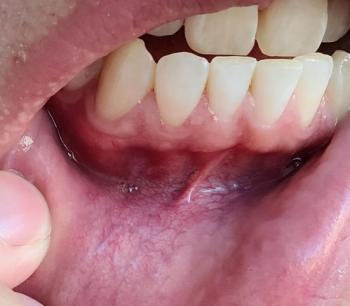
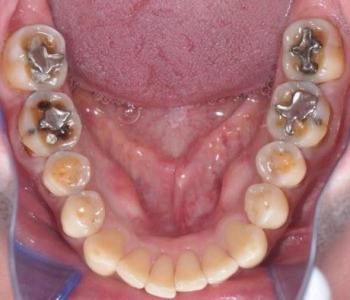
Patients with lower front gum inflammation may also experience tartar buildup, periodontal disease, gum abscesses, or tooth decay. Explore these related clinical case studies.

Other topics:
Other Dental Clinic