Transforming Smiles, Restoring Confidence.

From Sci-Fi to Your Smile: The Tiny Patch Set to End Drilling Forever
Language :
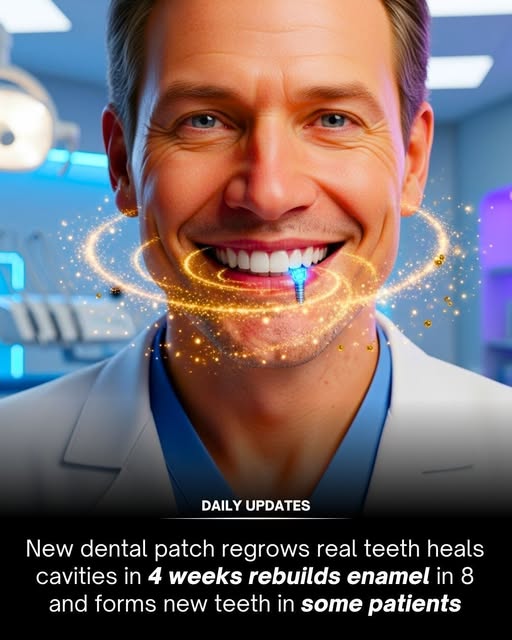
From Sci-Fi to Your Smile: The Tiny Patch Set to End Drilling Forever
For generations, dentistry has been synonymous with the whirr of the drill, a sound that sends shivers down spines. This paradigm is on the cusp of a historic shift. Scientists have developed a revolutionary microneedle patch that promises to heal cavities and regrow enamel, offering a future where damaged teeth repair themselves. This isn't distant future speculation; with clinical results showing significant healing in weeks and a potential market launch as early as 2026, this painless, non-invasive treatment is poised to transform global dental care.
Beyond the Patch: The Science of "Regrowing" a Tooth
The power of this patch comes from mimicking and supercharging your body's natural, though limited, healing potential. Here's a look at the science that makes it work and where it fits in the broader field of regenerative dentistry.
How the Patch Works: The patch is a sophisticated drug delivery system. A special compound, often Tideglusib, is delivered directly to the tooth and gum via tiny microneedles. This compound "wakes up" dormant stem cells—the body's master repair cells—within the dental pulp (the tooth's inner core). Once activated, these stem cells are stimulated to regenerate the damaged tissues, rebuilding lost enamel from the inside out, much like healing skin.
The Bigger Picture of Regeneration: The patch represents one exciting approach in a field pursuing even more ambitious goals. Scientists worldwide are actively exploring multiple paths:
| Research Pathway | Core Concept | Current Stage & Potential |
|---|---|---|
| Enamel-Regenerating Gels |
| Using protein-based gels to mimic nature and rebuild lost enamel structure. | Human clinical trials imminent; could soon be available in dental offices. |
| Antibody Drug Therapy |
| Using a drug (antibody) to block a protein that inhibits tooth growth, allowing new teeth to form. | In human clinical trials (since 2024) for patients with congenital tooth loss |
| . |
| Lab-Grown Whole Teeth |
| Growing a complete, biological tooth from a patient's own cells in a lab for later implantation. | Advanced pre-clinical research; key breakthroughs in creating the right cellular "scaffold" have been achieved |
| . |
Roadmap to Your Dentist's Chair: Trials, Approval, and Scaling
The journey from a lab breakthrough to a safe, widely available treatment is structured and rigorous.
-
Clinical Trials & Medical Approval: Any new treatment must prove its safety and efficacy through phased human trials. The antibody drug for tooth growth is already in this stage
. The patch technology, with its promising trial results showing enamel and cavity repair in weeks, would need to successfully navigate this same process to earn approval from bodies like the FDA or EMA.
-
Proof of Safety for Humans: Safety is paramount. Research focuses on using a patient's own cells or carefully controlled compounds to minimize rejection and ensure cells behave as intended . Positive trial data is the only acceptable proof for regulators.
-
Scaling to the Global Market: Once approved, scaling up production is the next challenge. The global dental patches market is already growing, valued at $1.2 billion and projected to reach $2.5 billion by 2033. This existing commercial infrastructure and demand will help accelerate the adoption of regenerative patches. Experts believe that if final tests succeed, these technologies could become available to the public within the next 5-10 year
-
The Future Smile: What This Means for You
The implications are profound. We are moving from a model of "drill and fill" to one of "heal and regenerate." For patients, this means the potential for painless, durable, and more natural repairs that preserve their original tooth structure. For dentists, it represents a fundamental evolution of the profession toward regenerative bioengineering.
The era of the dental drill is not over yet, but its dominance is being seriously challenged. The future of dentistry is quietly taking shape—not with louder tools, but with smarter biology, promising a healthier smile that your own body helps maintain.
I hope this expanded content provides a solid foundation for your blog. Would you like me to draft a sidebar with "Frequently Asked Questions" about tooth regeneration for your readers?
Looking for dentist : Visit directory list
Related Clinical Cases
Patients with lower front gum inflammation may also experience tartar buildup, periodontal disease, gum abscesses, or tooth decay. Explore these related clinical case studies.



Other topics:
Other Dental Clinic