Your Smile, Our Passion.

Cracked Tooth Syndrome: A California Dentist’s USA Case Study, Clinical Review, and Patient Guide
Cracked Tooth Syndrome is one of the more challenging dental conditions to diagnose because the tooth may look relatively normal while producing sharp, intermittent pain during chewing. Patients may describe a sudden “electric” sensation when biting, pain when releasing the bite, or sensitivity to hot and cold. The discomfort may come and go, making it difficult to identify the exact tooth responsible. The American Association of Endodontists (AAE) recognizes cracked teeth as a condition requiring careful diagnosis because the location and depth of the crack strongly influence whether the tooth can be preserved.
From a California clinical perspective, the key principle is simple: a suspicious cracked tooth should not be ignored simply because the pain is intermittent or an ordinary X-ray appears normal.
USA Case Study: The Patient Who Could Not Identify the Problem Tooth
Consider a representative California dental case.
A 52-year-old patient presented with several months of intermittent pain in the lower left posterior teeth. The patient reported:
-
Sharp pain when chewing harder foods
-
Occasional pain when releasing the bite
-
Cold sensitivity
-
Symptoms that disappeared for several days at a time
-
Difficulty identifying which tooth was responsible
-
Previous dental treatment that had not completely resolved the symptoms
A routine visual examination showed no obvious major fracture.
A conventional dental radiograph also failed to clearly demonstrate a longitudinal crack.
This is a classic diagnostic challenge.
Cracked teeth can produce symptoms that are disproportionate to what is visible clinically. The AAE notes that pain may occur during chewing and with temperature changes, while the offending tooth can be difficult to localize.
Clinical Question
The important question was not simply:
“Does the tooth look cracked?”
The more important questions were:
Where does the crack begin? How far does it extend? Has the pulp been affected? Has the crack reached the root? Is the tooth still structurally restorable?
Those questions determine the treatment strategy.
Clinical Examination
A dentist or endodontist may use several diagnostic methods when Cracked Tooth Syndrome is suspected.
1. Bite Testing
The patient may be asked to bite on specific areas of the tooth.
Pain during biting or especially during release can provide an important clinical clue.
However, bite testing is only one component of diagnosis and should not be interpreted by itself.
2. Transillumination
A concentrated light source can sometimes reveal interruption of light transmission through a crack.
This may help identify cracks that are difficult to see under ordinary illumination.
3. Periodontal Probing
The dentist evaluates the gum around the tooth for abnormal periodontal defects.
A localized deep periodontal defect can raise suspicion for a fracture extending toward the root.
However, periodontal findings are not always definitive.
4. Magnification
Dental magnification and microscopic examination can improve visualization of subtle cracks.
This becomes particularly important when treatment decisions involve saving the natural tooth versus extraction.
5. Pulp Testing
Cold testing, electric pulp testing, and other diagnostic procedures can help determine whether the dental pulp remains healthy or has become inflamed or necrotic.
This distinction is important because a structural crack and pulp disease are related but are not identical problems.
6. Dental Imaging
Conventional radiographs may help evaluate bone, restorations, decay and other pathology, but a crack itself may not always be visible.
In selected complex cases, cone-beam computed tomography (CBCT) can provide additional information. The AAE describes CBCT as potentially valuable in evaluating certain cracked-tooth presentations, although no imaging method should be considered a substitute for a complete clinical examination.
Understanding the Root Problem
The major concern with a cracked tooth is not simply the visible line.
The deeper problem is what happens when the crack provides a pathway toward the internal tissues of the tooth.
A crack can allow movement of tooth structures during chewing. This mechanical irritation can affect the pulp. As the condition progresses, bacterial contamination may contribute to pulpal inflammation or infection.
The AAE explains that cracks can eventually involve the pulp and, in more advanced cases, infection can spread into the surrounding bone and gum tissues.
This creates a potential progression:
Crack → mechanical irritation → pulp inflammation → pulp damage → bacterial contamination → infection → bone and periodontal involvement
That progression is why intermittent pain should not automatically be considered harmless.
Cracked Tooth vs. Vertical Root Fracture
These conditions should not be confused.
Cracked Tooth
A typical cracked tooth has a crack extending from the chewing surface toward the root.
The tooth may remain in one piece.
If the crack is diagnosed early and remains within a treatable area, treatment may sometimes preserve the tooth.
Split Tooth
A cracked tooth can eventually progress into a split tooth.
At that point, distinct segments of the tooth can separate.
A completely split tooth generally cannot be maintained as an intact natural tooth, although the possibility of preserving a portion depends on the anatomy and extent of the fracture.
Vertical Root Fracture
A vertical root fracture begins in the root and extends toward the crown.
These fractures can be particularly difficult because symptoms may be limited or absent until the surrounding bone and gum become involved. Treatment may include extraction, although selected cases may be considered for surgical management.
Treatment Decision: Can the Tooth Be Saved?
Treatment depends on the crack's location, depth, structural stability, pulpal condition and periodontal involvement.
Option 1: Monitoring
Some superficial enamel craze lines do not require invasive treatment.
These shallow enamel lines are extremely common in adults and generally do not cause pain.
Option 2: Restorative Protection
A tooth with a structurally compromised but restorable crack may require a restoration designed to protect the remaining tooth structure.
A full-coverage crown may be considered in appropriate cases.
Option 3: Root Canal Treatment
If the crack has affected the pulp and the tooth remains structurally treatable, endodontic treatment may be appropriate.
The root canal addresses diseased or infected pulp tissue, while the subsequent restoration helps protect the remaining tooth structure.
Option 4: Extraction
Extraction becomes a consideration when the fracture is too extensive to predictably restore the tooth.
The AAE specifically notes that a crack extending below the gum line may make a tooth non-restorable.
The important point is that “cracked tooth” does not automatically mean “extract the tooth.”
Modern endodontic evaluation emphasizes determining whether the tooth is actually restorable before making that decision.
A More Modern View of Deep Cracks
Historically, deeply cracked teeth were often considered poor candidates for treatment.
However, contemporary endodontic literature has reported more favorable outcomes in carefully selected cases.
An AAE review reports studies showing survival rates in selected deeply cracked teeth that can reach approximately 82–96%, with some modified treatment protocols reporting approximately 96% survival over 2–4 years. These figures apply to specific clinical circumstances and should not be interpreted as a guarantee for every cracked tooth.
The same review emphasizes careful case selection, including absence of a complete split and evaluation of the internal extent of the crack.
This represents an important change in clinical thinking:
Do not extract simply because the crack looks complicated. Determine whether the tooth is actually treatable.
California Patient Review Perspective
From a patient-experience standpoint, Cracked Tooth Syndrome can be frustrating.
Patients may hear:
“I don't see anything wrong.”
Yet the patient continues to experience pain.
This is one reason cracked teeth can generate repeated dental visits.
A patient may initially suspect:
-
Tooth decay
-
A loose filling
-
Sinus pressure
-
Gum disease
-
Tooth sensitivity
-
Another nearby tooth
The AAE specifically recognizes that cracked-tooth pain can be difficult to localize and that endodontists specialize in diagnosing difficult sources of dental pain.
A second opinion from an endodontist can therefore be reasonable when persistent symptoms remain unexplained.
What Patients Should Watch For
Seek dental evaluation if you repeatedly experience:
-
Sharp pain while chewing
-
Pain when releasing a bite
-
Unexplained cold sensitivity
-
Intermittent tooth pain
-
Pain that repeatedly returns in the same area
-
A tooth that feels different when biting
-
A broken filling or fractured cusp
-
Swelling around a suspicious tooth
-
A history of trauma or heavy biting forces
Sharp pain during biting can have several causes, including decay, a defective restoration or a cracked tooth, so professional diagnosis is necessary.
Prevention: Protecting the Natural Tooth
Cracked teeth cannot always be prevented, but several habits can reduce mechanical stress.
Avoid routinely chewing:
-
Ice
-
Hard candy
-
Unpopped popcorn kernels
-
Pens and other hard objects
Patients who clench or grind their teeth should discuss protective strategies with their dentist. A properly designed nightguard may be recommended in appropriate situations. Sports participants should also use appropriate mouth protection when indicated.
Dental Hub Clinical Takeaway
Cracked Tooth Syndrome is a structural problem, not simply a pain problem.
A tooth can appear relatively normal while a crack is producing significant symptoms.
The most important clinical questions are:
-
Where is the crack?
-
How deep is it?
-
Has the pulp been affected?
-
Has the crack reached the root?
-
Is there periodontal or bone involvement?
-
Is the tooth structurally restorable?
-
Can endodontic treatment preserve it?
-
Would extraction provide a more predictable result?
The earlier these questions are answered, the more options may remain.
For patients in California and throughout the United States, persistent unexplained biting pain deserves a proper dental examination rather than repeated self-treatment. An endodontist may be particularly valuable when the suspected problem involves the tooth's pulp, root or a difficult-to-diagnose crack.
Important: This case study is an educational clinical example, not a diagnosis of an individual patient. Treatment decisions must be based on an examination, diagnostic testing and appropriate imaging by a licensed dental professional.
Clinical References
-
American Association of Endodontists — Cracked Teeth and patient treatment information.
-
American Association of Endodontists — Contemporary evidence and treatment considerations for deeply cracked teeth.
-
American Association of Endodontists — CBCT and diagnostic evaluation of cracked teeth.
-
American Dental Association — Definition of Cracked Tooth Syndrome.
Related Clinical Cases
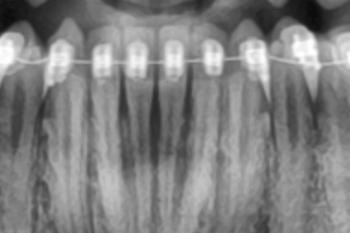
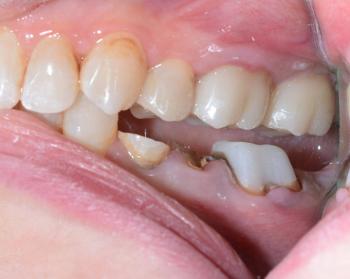
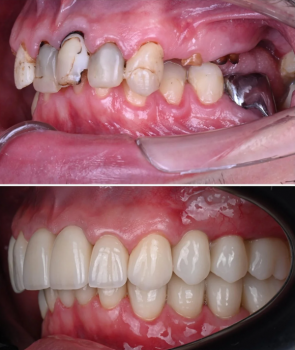
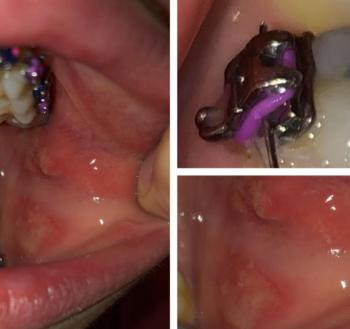
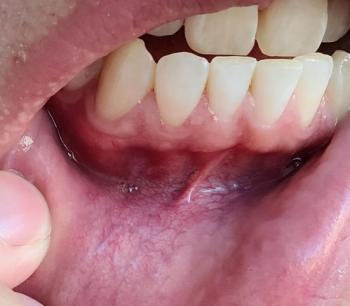
Patients with lower front gum inflammation may also experience tartar buildup, periodontal disease, gum abscesses, or tooth decay. Explore these related clinical case studies.


Other topics:
Other Dental Clinic