Because Every Tooth Deserves Care.

Dental Care in Denmark: Free Dental Services for Children, Adult Costs, Subsidies, and Insurance Explained (2026 Guide)
Language :
Topics:
Denmark is widely regarded as one of the world's most comprehensive welfare states, offering residents access to a robust public healthcare system funded through taxation. While many healthcare services are provided at little or no direct cost to patients, dental care operates under a unique model that differs significantly based on age.
For children and young adults, dental care is largely free and organized through municipal programs. For adults, however, dentistry functions as a mixed public-private system where patients contribute a portion of treatment costs while receiving varying levels of government subsidies. This approach aims to promote preventive care while sharing financial responsibility between the state and individual patients.
Understanding how dental care is funded in Denmark can help residents, expatriates, international students, and visitors make informed decisions about maintaining their oral health. Whether you are seeking routine examinations, restorative treatment, orthodontics, or emergency dental care, knowing what is covered—and what is not—can significantly affect your financial planning.
This guide explains how Denmark's dental care system works, who qualifies for free treatment, how adult subsidies operate, what additional assistance may be available, and how voluntary dental insurance can help reduce out-of-pocket expenses.
Understanding Denmark's Dental Care System
Dental care in Denmark is designed around two distinct groups:
- Children and young adults
- Adults
The level of public support differs considerably between these groups.
The Danish government places a strong emphasis on prevention and early intervention, which explains why younger populations receive extensive public support.
For adults, responsibility gradually shifts toward a shared funding model that combines public subsidies with personal contributions.
Why Denmark Prioritizes Preventive Dental Care
The Danish healthcare philosophy emphasizes prevention rather than treatment alone.
Research consistently demonstrates that preventive dental care reduces:
- Tooth decay
- Gum disease
- Emergency dental treatment
- Long-term healthcare costs
By providing free care during childhood and adolescence, Denmark aims to establish healthy habits that continue throughout adulthood.
This investment often produces better long-term oral health outcomes and lower treatment costs later in life.
Free Dental Care for Children and Young Adults
One of the most generous aspects of the Danish dental system is its support for younger citizens.
Children and young adults receive comprehensive dental care without direct payment.
Current Age Eligibility
Denmark has gradually expanded eligibility for free dental care.
As of 2026:
- Individuals born in 2004 or later are entitled to free dental care until age 22.
- Individuals born in 2003 or earlier generally received free care until age 18.
This expansion reflects Denmark's commitment to improving oral health among young adults.
Why the Age Extension Matters
The years between 18 and 22 represent a critical period for oral health.
Many young adults experience:
- Lifestyle changes
- Higher education enrollment
- Employment transitions
- Reduced parental supervision
These factors can increase oral health risks.
Extending free dental care helps ensure continuity of preventive services during this important stage of life.
What Services Are Included?
Free dental care typically includes a wide range of preventive and restorative treatments.
Common services include:
- Dental examinations
- Professional cleanings
- X-rays
- Fillings
- Preventive fluoride treatments
- Gum health evaluations
- Orthodontic assessments
- Emergency care
The exact range of services may vary slightly between municipalities.
Municipal Dental Clinics (Tandplejen)
Most children's dental care is delivered through municipal dental services known as Tandplejen.
These clinics are operated by local governments.
Their primary mission is preventive care and oral health promotion.
Municipal clinics are designed specifically to serve younger populations and often maintain strong relationships with schools and local communities.
Advantages of Municipal Dental Clinics
Municipal clinics offer several benefits:
- No direct patient fees
- Structured recall systems
- Preventive focus
- Standardized care
- Easy access for families
These advantages contribute to Denmark's strong oral health outcomes among children.
Private Providers for Young Patients
Some municipalities contract with private dentists to provide care.
In these cases:
- Treatment remains free for eligible patients.
- Services are funded through municipal agreements.
- Patients receive care in private practice settings.
This arrangement increases flexibility and access.
Orthodontic Care for Children
Orthodontic treatment occupies a unique position within the Danish system.
Not all children automatically qualify for free braces.
Eligibility typically depends on:
- Functional need
- Severity of malocclusion
- Clinical assessment
When orthodontic treatment is deemed medically necessary, public funding may be available.
Purely cosmetic orthodontic treatment may not qualify.
Preventive Education in Childhood
Dental care in Denmark extends beyond treatment alone.
Municipal programs frequently provide:
- Oral hygiene instruction
- Nutritional guidance
- Fluoride education
- Preventive counseling
These initiatives help establish lifelong healthy habits.
Transitioning Into Adult Dental Care
At the end of the free-care period, patients transition into the adult dental system.
This transition can surprise some individuals who have never previously paid for dental treatment.
Understanding the adult model is essential.
Dental Care for Adults in Denmark
Unlike children's services, adult dental care is not generally free.
Instead, adults participate in a cost-sharing system.
This model combines:
- Government subsidies
- Personal payments
- Optional insurance
The result is a shared financial responsibility framework.
Freedom to Choose a Dentist
One major advantage of the Danish adult system is patient choice.
Adults may select their preferred dentist without being assigned to a specific provider.
This flexibility encourages:
- Competition
- Patient satisfaction
- Service quality
- Accessibility
Patients can switch providers if desired.
Private Dental Practices Dominate Adult Care
Most adult dental care is delivered through private practices.
These clinics operate independently while participating in subsidy agreements negotiated with regional authorities.
Private practices offer:
- Flexible scheduling
- Personalized care
- Modern facilities
- Broad treatment options
However, patients typically pay a portion of treatment costs.
How State Subsidies Work
The Danish government provides subsidies for many common dental procedures.
These subsidies are administered through agreements between:
- Regional authorities
- The Danish Dental Association
The subsidy is applied automatically in most situations.
Patients pay only their portion directly to the clinic.
Treatments Commonly Eligible for Subsidies
Government support often applies to:
Routine Examinations
Regular dental check-ups receive partial public funding.
These examinations help identify problems before they become severe.
Dental X-Rays
Diagnostic imaging is often partially subsidized.
X-rays are essential for detecting:
- Hidden decay
- Bone loss
- Root problems
Fillings
Many restorative procedures qualify for subsidies.
This support helps encourage early intervention when cavities develop.
Oral Surgery
Certain surgical procedures may also receive public assistance.
Examples include:
- Surgical extractions
- Minor oral surgery
- Medically necessary procedures
Preventive Services
Preventive treatment remains a priority within the Danish system.
Subsidies help support:
- Early diagnosis
- Risk assessment
- Preventive interventions
How Much Do Patients Pay?
The amount paid by patients depends on:
- Age
- Treatment type
- Applicable subsidy category
Subsidies generally cover approximately:
- 15% to 65% of treatment costs
The remaining balance becomes the patient's responsibility.
Why Subsidy Levels Vary
Not all dental procedures receive identical support.
Preventive and essential treatments typically receive higher levels of public assistance.
More complex or elective procedures may receive lower subsidies—or none at all.
Treatments Often Paid Mostly by Patients
Certain procedures involve substantial out-of-pocket costs.
Examples include:
Crowns
Dental crowns are frequently patient-funded.
While limited assistance may apply in specific situations, patients often bear most of the expense.
Bridges
Bridge treatment can be costly and generally receives limited subsidy support.
Dental Implants
Implants are among the most expensive dental procedures in Denmark.
Public subsidies are typically limited or unavailable for the implant itself.
Adult Orthodontics
Adult braces and aligners are generally considered private expenses.
Patients commonly pay the full cost.
Why Adult Dental Costs Can Seem High
Many adults are surprised by dental costs after leaving the free-care system.
Several factors contribute:
- High Danish labor costs
- Advanced technology
- Strict regulations
- Premium materials
- Specialized training
These factors support high-quality care but increase expenses.
Additional Financial Support for Vulnerable Groups
Denmark recognizes that some individuals may struggle to afford dental treatment.
Additional assistance programs exist for vulnerable populations.
Social Assistance Recipients
Individuals receiving social benefits may qualify for additional dental support.
Municipalities assess:
- Income
- Financial resources
- Treatment necessity
Eligible individuals may receive partial or complete coverage.
People with Low Income
Certain low-income residents can apply for financial assistance.
The amount available depends on individual circumstances and municipal assessments.
Pensioners and Dental Costs
Retirees may qualify for additional support.
Programs may include:
- Health supplements
- Personal allowances
- Special municipal assistance
Eligibility depends on financial need.
Municipal Assessment Process
Financial assistance is generally not automatic.
Applicants may need to provide:
- Income documentation
- Treatment estimates
- Financial statements
Municipal authorities then evaluate eligibility.
Voluntary Dental Insurance in Denmark
Because adult dentistry often involves substantial copayments, many Danes purchase voluntary insurance coverage.
The most well-known option is Sygeforsikring Danmark.
What Is Sygeforsikring Danmark?
Sygeforsikring Danmark is a voluntary health insurance organization.
Members pay regular premiums in exchange for reimbursement benefits.
The program supplements public healthcare support.
Why Many Danes Join
Membership helps reduce:
- Dental copayments
- Examination costs
- Preventive care expenses
- Treatment costs
For individuals requiring ongoing dental care, membership can offer meaningful savings.
Treatments Commonly Supported
Benefits vary by membership category but may include assistance for:
- Examinations
- Fillings
- Professional cleanings
- X-rays
- Crowns
- Other restorative procedures
Coverage details depend on the selected plan.
Is Voluntary Insurance Worth It?
The answer depends on individual circumstances.
Insurance may be beneficial for:
- Patients with recurring dental issues
- Families with ongoing treatment needs
- Individuals expecting restorative work
Patients with excellent oral health and minimal treatment needs may find less value.
The Importance of Preventive Care for Adults
Even with subsidies, prevention remains the most effective strategy for controlling costs.
Routine care helps prevent:
- Large cavities
- Root canal treatment
- Tooth loss
- Gum disease
Small problems are generally less expensive to treat.
Financial Benefits of Prevention
Consider the progression:
Small cavity → Filling
Untreated cavity → Root canal
Lost tooth → Implant
The difference in treatment cost can be substantial.
How Often Should Adults Visit the Dentist?
Visit frequency depends on individual risk factors.
Some patients may benefit from:
- Annual examinations
Others may require:
- Semiannual visits
- More frequent periodontal maintenance
Your dentist can recommend an appropriate schedule.
Comparing Denmark with Other Nordic Countries
Denmark's dental care model differs somewhat from neighboring nations.
Like many Nordic systems:
- Children receive extensive public support.
- Adults contribute financially.
However, subsidy structures vary across countries.
Denmark generally places significant emphasis on shared responsibility for adult dental care.
Common Misconceptions About Danish Dentistry
Several myths frequently arise.
Myth 1: Dental Care Is Completely Free
Reality:
Only specific age groups receive comprehensive free care.
Most adults pay part of treatment costs.
Myth 2: All Treatments Receive Subsidies
Reality:
Coverage varies by procedure.
Complex restorative and cosmetic treatments often involve significant personal expense.
Myth 3: Private Insurance Is Mandatory
Reality:
Voluntary insurance is optional.
Many residents choose it, but participation is not required.
Future Trends in Danish Dental Care
Several developments may shape the future of dentistry in Denmark.
These include:
- Expanded preventive programs
- Increased digital dentistry
- Greater focus on young adult care
- Improved access for vulnerable populations
The recent extension of free care to age 22 reflects ongoing policy evolution.
Final Thoughts
Denmark's dental care system combines strong public support for children and young adults with a cost-sharing model for adult patients. Individuals born in 2004 or later currently benefit from free dental care until age 22, while earlier generations generally received free care until age 18. This publicly funded approach reflects Denmark's commitment to prevention and early intervention.
For adults, dental treatment is primarily delivered through private practices supported by government subsidies. Patients typically pay a portion of treatment costs while the state contributes according to established subsidy agreements. Preventive services, examinations, fillings, X-rays, and certain surgical procedures often receive financial support, whereas more expensive treatments such as implants, crowns, bridges, and adult orthodontics frequently require substantial personal contributions.
Additional assistance exists for vulnerable populations, including low-income individuals, social assistance recipients, and pensioners. Many Danes also choose voluntary insurance programs such as Sygeforsikring Danmark to reduce copayments and improve financial predictability.
Ultimately, Denmark's dental care system seeks to balance universal access, personal responsibility, and preventive healthcare. By understanding available subsidies, assistance programs, and insurance options, residents can make informed decisions that support both their oral health and their financial well-being.
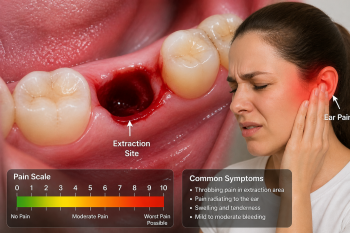
Can tooth extraction cause infection? Mild inflammation is normal, but increasing swelling, fever, or severe pain may indicate infection. Learn more about post-extraction infection warning signs in this detailed guide.
Book a consultation with our Cebu dental specialists for proper evaluation and care.
Ready to get expert guidance?
If you’re experiencing severe pain or delayed healing, book a consultation with our Cebu dental specialists to get proper evaluation and care.
Consultation or contact page .
Book a Consultation
For severe discomfort or delayed healing, book a consultation with our Cebu dental specialists today.
Looking for a dentist? Browse our Cebu dental directory to find trusted clinics near you.
Medical Review and Clinical Basis
This article is based on clinical dental guidelines and real patient recovery patterns observed after tooth extraction procedures. The information reflects common post-extraction healing stages, including normal clot formation, gum tissue repair, and signs of possible complications such as dry socket or infection.
While mild discomfort is expected after a dental extraction, worsening pain after Day 3, bad odor, exposed bone, or spreading pain may require professional evaluation. These symptoms are consistent with known post-extraction complications described in standard dental practice.
About Cebu Dental Implants
Cebu Dental Implants provides comprehensive tooth extraction, surgical procedures, and dental implant services in the Philippines. Our team evaluates post-extraction healing, manages complications such as dry socket, and advises patients on proper aftercare to prevent infection and delayed healing.
If you experience severe pain or unusual symptoms after extraction, early professional assessment is recommended to prevent further complications.
Important Medical Disclaimer
This content is for educational purposes only and does not replace professional dental diagnosis. Every patient heals differently. If symptoms worsen or do not improve within a few days, consult a licensed dentist for proper evaluation and treatment.
Author
This article was prepared by the Cebu Dental Implants content team in consultation with licensed dental professionals experienced in tooth extraction and implant procedures.
Related Clinical Cases
Patients with lower front gum inflammation may also experience tartar buildup, periodontal disease, gum abscesses, or tooth decay. Explore these related clinical case studies.


Other topics:
Other Dental Clinic
 |
 |
 |
 |