Dentures That Feel Natural, Look Beautiful.

Severe Pain After Molar Extraction: Is This Normal?
Image:
Severity:
Teeth Problems:
Severe Pain After Molar Extraction: Is This Normal?
What Is Seen in This Case
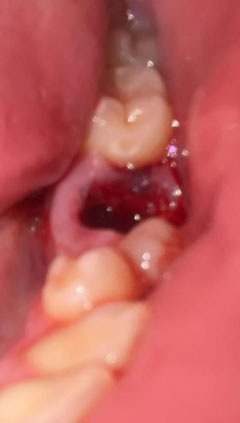
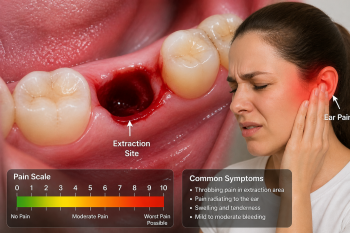
The image shows a fresh lower molar extraction site with visible blood and an open socket. This photo was taken about 1–2 hours after the tooth was removed, which explains the presence of blood and raw tissue.
At this very early stage, the socket is still forming a blood clot, which is essential for healing.
Client Concern
The client reported:
-
Severe pain shortly after extraction
-
Crying and screaming from pain
-
Worry that something may be wrong
This level of pain can be very alarming, especially for first-time extractions.
Is This Normal After 1–2 Hours
Yes — this can still be normal, but with important conditions.
In the first 1–3 hours after extraction:
-
Anesthetic may wear off suddenly
-
Pain can feel intense and sharp
-
Bleeding or oozing is expected
-
The socket will look red and raw
However, pain should be gradually controllable, not continuously worsening.
Most Likely Diagnosis at This Stage
Based on timing and appearance:
-
Normal immediate post-extraction pain
-
Fresh extraction wound with forming blood clot
-
Inflammation from surgical trauma
At 1.5 hours, this is too early to diagnose dry socket.
What Causes Severe Pain Right After Extraction
Common reasons include:
-
Local anesthesia wearing off quickly
-
Deep or difficult molar extraction
-
Bone and nerve irritation
-
Anxiety amplifying pain perception
Lower molars are among the most painful teeth to remove, especially if impacted or infected.
What Is NOT Normal (Warning Signs)
Seek urgent dental care if any of the following occur:
-
Uncontrolled bleeding soaking gauze every 20 minutes
-
Pain getting worse after 24–48 hours
-
Foul smell or taste after the first day
-
Fever or facial swelling
-
Pain radiating to ear, jaw, or neck
These may indicate dry socket or infection, but not this early.
Normal Healing Timeline After Extraction
First 24 Hours
-
Bleeding reduces gradually
-
Pain is strongest in first 6–12 hours
-
Swelling may begin
Days 2–3
-
Pain should slowly decrease
-
Blood clot stabilizes
-
Swelling peaks then improves
Days 4–7
-
Gum tissue begins closing
-
Pain becomes mild or dull
Up to 14 Days
-
Socket continues to heal
-
Gum closes more fully
What Happens If Healing Is Disturbed
If the blood clot is lost, the condition may scale up into:
-
Dry socket (severe pain 2–4 days later)
-
Bone exposure
-
Delayed healing
-
Infection
This is why aftercare is critical.
Immediate Aftercare Advice (Very Important)
What to Do Now
-
Bite firmly on clean gauze for 30–45 minutes
-
Take prescribed pain medication as directed
-
Apply cold compress on the outside of the face
-
Rest with head elevated
What NOT to Do
-
Do not rinse aggressively
-
Do not spit repeatedly
-
Do not smoke or vape
-
Do not touch the socket with tongue or fingers
Professional Comment
Severe pain 1–2 hours after a molar extraction can still be normal, especially for lower molars. What matters most is pain progression over the next 24–48 hours. If pain does not improve or worsens after Day 2, the patient must return to the dentist immediately.
When to Return to the Dentist
-
Pain is unbearable despite medication
-
Bleeding does not stop
-
Swelling increases rapidly
-
Pain worsens after 48 hours
Early follow-up can prevent complications.
Visit a Dental Clinic Near You
For urgent post-extraction evaluation and pain management, visit:
https://cebudentalimplants.com/map-dental-clinic
Related Clinical Cases
Patients with lower front gum inflammation may also experience tartar buildup, periodontal disease, gum abscesses, or tooth decay. Explore these related clinical case studies.



Other topics:
Other Dental Clinic