Transforming Smiles, Restoring Confidence.

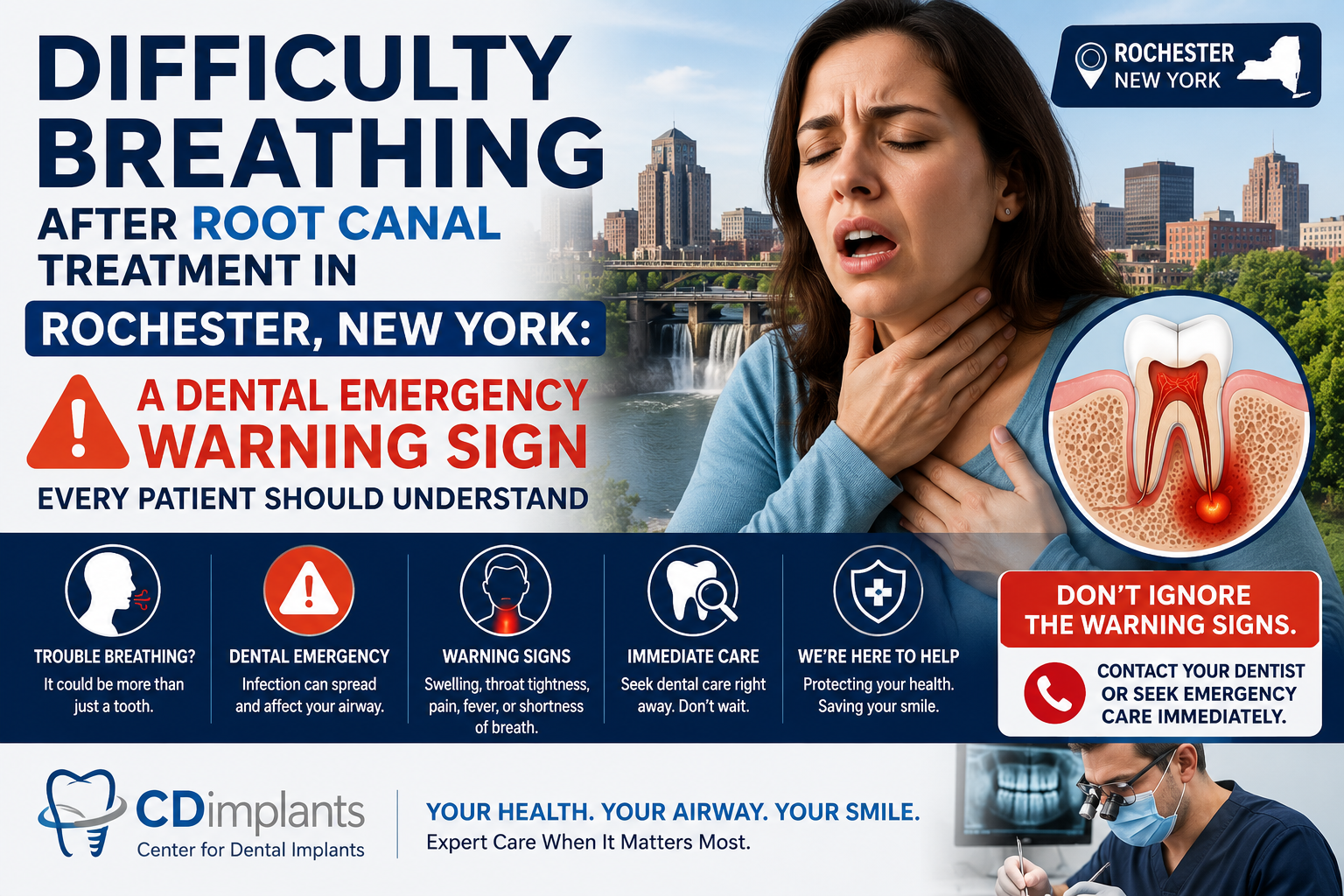
Difficulty Breathing After Root Canal Treatment in Rochester, New York: A Dental Emergency Warning Sign Every Patient Should Understand
Language :
Root canal treatment is one of the most successful procedures in USA modern dentistry. Every year, millions of Americans undergo root canal therapy to eliminate infection, relieve severe tooth pain, and preserve natural teeth that would otherwise require extraction.
For the vast majority of patients in Rochester, New York, recovery is straightforward. Mild tenderness, slight swelling, and temporary discomfort are expected and usually resolve within a few days. However, there are rare situations when symptoms develop that should never be ignored.
One of the most serious warning signs is difficulty breathing after root canal treatment. Call the doctor if this case happened this could be sever.
While uncommon, breathing problems following dental treatment may indicate a rapidly spreading infection, severe swelling, allergic reaction, or involvement of deeper facial spaces. These situations require immediate professional evaluation and, in some cases, emergency medical intervention.
As dental professionals, our goal is not only to save teeth but also to protect overall health. Understanding why breathing difficulties may occur after a root canal can help patients recognize danger signs early and seek treatment before complications become life-threatening.
This article examines the causes, diagnosis, treatment options, recovery process, and how experienced dental professionals in Rochester, New York can often save both the tooth and the patient's health when complications arise.
A Rochester Patient's Story
Michael, a 47-year-old resident of Rochester, had been suffering from severe pain in a lower molar for nearly two months.
Like many busy professionals, he delayed treatment.
The tooth occasionally throbbed, but over-the-counter medications seemed to keep the discomfort manageable. Eventually the pain became unbearable, and he scheduled a root canal appointment.
The procedure appeared successful.
The dentist removed infected tissue from inside the tooth, disinfected the canals, and sealed the area.
For the first day, Michael experienced only mild soreness.
However, two days later he noticed increasing swelling beneath his jaw.
By the evening, the swelling had expanded significantly.
He felt pressure in his throat.
Speaking became uncomfortable.
Swallowing became difficult.
Then came the symptom that alarmed him most.
Breathing felt harder.
His airway seemed tighter than normal.
Recognizing the seriousness of the situation, he immediately contacted his dentist and was referred for emergency evaluation.
Imaging revealed that a severe dental infection had spread beyond the tooth and into surrounding tissue spaces.
Prompt intervention prevented the infection from progressing further.
After surgical drainage, antibiotics, and careful monitoring, Michael recovered successfully.
Most importantly, the tooth was eventually preserved.
His experience illustrates why breathing difficulty following dental treatment should never be ignored.
Is Difficulty Breathing Normal After Root Canal Treatment?
The simple answer is no.
Difficulty breathing is not considered a normal part of root canal recovery.
Common post-treatment symptoms include:
- Mild soreness
- Sensitivity when chewing
- Minor gum irritation
- Slight swelling
- Temporary tenderness
These symptoms typically improve within several days.
Breathing difficulties, however, may indicate a serious complication requiring immediate professional assessment.
Whenever a patient experiences:
- Shortness of breath
- Tightness in the throat
- Difficulty swallowing
- Rapidly increasing facial swelling
- Tongue swelling
- Neck swelling
Immediate evaluation is necessary.
Understanding the Anatomy
To appreciate why breathing problems can occur, it is important to understand how dental infections spread massively to the body if neglected.
The roots of teeth sit close to various anatomical spaces in the face and neck.
When bacteria escape beyond the tooth root, they can enter:
- Facial tissue spaces
- Submandibular spaces
- Sublingual spaces
- Deep neck spaces
Once infection enters these regions, swelling can expand rapidly.
The airway may become compressed.
Breathing can become increasingly difficult.
This is one reason dental infections are never considered "just a tooth problem."
Potential Causes of Breathing Difficulty After Root Canal Treatment
1. Spreading Dental Infection
The most concerning cause is a spreading infection.
In some situations, bacteria may have already traveled beyond the tooth before treatment began.
Even after successful root canal therapy, the body may continue reacting to existing infection.
Signs include:
- Fever
- Facial swelling
- Neck swelling
- Difficulty swallowing due to spreading of bacteria to the body.
- Difficulty breathing
- Fatigue
Immediate intervention is often necessary.
2. Facial Space Infection
Facial space infections represent one of the most serious dental complications.
These infections spread through connective tissue spaces rather than remaining confined to the tooth.
The infection may involve:
- Cheeks
- Jaw
- Tongue area
- Throat tissues
As swelling increases, the airway may become compromised.
This situation can become life-threatening if not treated promptly.
3. Allergic Reaction
Occasionally patients experience allergic reactions to: The dentist always ask if you have allergic specially in taking any medication my dentist always ask me repeatedly . Best communication is very important.
- Antibiotics
- Dental materials
- Medications
- Latex products
Symptoms may include:
- Hives
- Rash
- Swollen lips
- Swollen tongue
- Difficulty breathing
This represents a medical emergency.
Emergency medical care should be sought immediately.
4. Severe Inflammatory Response
The body's immune system may create significant inflammation around an area of infection.
Although less dangerous than a deep-space infection, substantial swelling can still affect surrounding structures.
Monitoring by dental professionals is essential.
5. Existing Undiagnosed Infection
Sometimes the root canal itself is not the problem.
The infection may have already advanced extensively before treatment.
Patients often seek care after weeks or months of symptoms.
By that stage, bacteria may have spread beyond the tooth.
Root canal therapy addresses the source, but additional treatment may still be necessary.
Warning Signs That Require Immediate Attention
Patients should seek urgent care if they experience:
Rapid Swelling
Facial swelling that worsens hour by hour is concerning.
Fever
Persistent fever suggests active infection.
Difficulty Swallowing
Problems swallowing may indicate tissue involvement near the throat.
Difficulty Breathing
Any breathing difficulty requires immediate evaluation.
Voice Changes
A muffled voice can signal deep tissue swelling.
Tongue Elevation
Swelling beneath the tongue may indicate serious infection spread.
Diagnostic Procedures
Dental professionals in Rochester use multiple diagnostic tools.
Clinical Examination
The dentist evaluates:
- Swelling
- Pain levels
- Airway condition
- Mouth opening
- Gum condition
Digital X-Rays
Radiographs help identify:
- Bone destruction
- Root infections
- Persistent abscesses
CBCT Imaging
Cone Beam Computed Tomography provides three-dimensional imaging.
This technology allows dentists to visualize:
- Infection pathways
- Bone involvement
- Anatomical structures
Medical Evaluation
In severe cases, collaboration with:
- Oral surgeons
- ENT specialists
- Emergency physicians
may be necessary.
How Dentists Manage These Cases
Treatment depends on the underlying cause.
Antibiotic Therapy
When infection is present, antibiotics help reduce bacterial activity.
Common goals include:
- Controlling infection
- Preventing spread
- Reducing inflammation
Drainage Procedures
Large abscesses often require drainage.
Removing accumulated pus reduces pressure and improves healing.
Patients frequently experience immediate relief.
Airway Protection
If breathing becomes compromised, protecting the airway becomes the highest priority.
Medical teams may provide hospital-based treatment when necessary.
Root Canal Retreatment
Occasionally previously treated teeth require additional cleaning and disinfection.
Retreatment may eliminate residual infection.
Apicoectomy
In some cases, infection persists around the root tip.
An apicoectomy removes infected tissue surgically while preserving the tooth.
Can the Tooth Still Be Saved?
Fortunately, yes.
Many teeth associated with serious infections can still be preserved.
Successful tooth preservation depends on:
- Early diagnosis
- Prompt treatment
- Effective infection control
- Skilled dental care
Modern endodontic techniques have dramatically improved long-term outcomes.
Even teeth once considered hopeless may now be saved.
Recovery Timeline
First 24 Hours
Patients may experience:
- Mild soreness
- Temporary sensitivity
- Minor swelling
Days 2–5
Healing generally progresses.
Any worsening symptoms should be reported immediately.
One Week
Most swelling has significantly decreased.
Comfort improves substantially.
Two to Four Weeks
Soft tissues continue healing.
Bone repair begins.
Several Months
Complete bone regeneration may continue for months after treatment.
Follow-up imaging often confirms successful healing.
Why Early Treatment Matters
Many serious complications begin with treatment delays.
Patients frequently ignore symptoms such as:
- Tooth sensitivity
- Occasional pain
- Swelling
- Gum drainage
Early intervention dramatically reduces risks.
The sooner infection is addressed, the less opportunity bacteria have to spread.
Modern Advances in Root Canal Therapy
Today's root canal procedures are safer and more predictable than ever.
Technologies include:
Digital Imaging
Improves diagnostic accuracy.
Surgical Microscopes
Enhance visualization of tiny canal structures.
Ultrasonic Instruments
Assist in precise cleaning.
Bioceramic Materials
Improve sealing and healing outcomes.
CBCT Technology
Provides advanced three-dimensional diagnosis.
These innovations help dentists identify hidden problems before complications occur.
Prevention Strategies
Patients can reduce risks by:
- Attending regular dental checkups
- Seeking treatment promptly
- Following post-operative instructions
- Completing prescribed medications
- Reporting unusual symptoms immediately
Prevention remains the best strategy.
The Psychological Impact of Dental Emergencies
Difficulty breathing can be frightening.
Patients often experience:
- Anxiety
- Fear
- Stress
- Sleep disturbances
Clear communication from dental professionals is essential.
Understanding what is happening and how it will be treated often helps reduce anxiety significantly.
Long-Term Outlook
Most patients recover fully.
Once infection is eliminated and healing occurs:
- Pain disappears
- Swelling resolves
- Function returns
- Teeth remain stable
Regular follow-up appointments help ensure long-term success.
Expert Perspective from American Dental Professionals
Dental organizations throughout the United States emphasize that difficulty breathing following dental treatment should always be treated seriously.
Although rare, airway-related complications represent genuine emergencies.
Fortunately, modern dentistry offers highly effective solutions when intervention occurs early.
The overwhelming majority of patients who receive prompt diagnosis and treatment recover successfully.
Even in severe cases involving significant infection, experienced dental teams, oral surgeons, and medical specialists can often eliminate infection, protect the airway, and preserve the natural tooth.
Conclusion
Difficulty breathing after root canal treatment in Rochester, New York is not a normal recovery symptom. While root canal therapy remains one of the safest and most successful procedures in modern dentistry, breathing problems may indicate serious infection, facial space involvement, severe swelling, or an allergic reaction.
Early recognition is critical.
Warning signs such as increasing swelling, fever, difficulty swallowing, neck swelling, and shortness of breath require immediate professional evaluation.
The good news is that modern diagnostic technology, advanced infection management techniques, and highly skilled dental professionals can often successfully treat these complications while preserving the natural tooth.
When addressed promptly, even severe dental infections can be controlled, healing can occur, and patients can return to normal life with a healthy, functional smile. The key is never ignoring symptoms and seeking professional care the moment breathing difficulties appear.
Can tooth extraction cause infection? Mild inflammation is normal, but increasing swelling, fever, or severe pain may indicate infection. Learn more about post-extraction infection warning signs in this detailed guide.
Book a consultation with our Cebu dental specialists for proper evaluation and care.
Ready to get expert guidance?
If you’re experiencing severe pain or delayed healing, book a consultation with our Cebu dental specialists to get proper evaluation and care.
Consultation or contact page .
Book a Consultation
For severe discomfort or delayed healing, book a consultation with our Cebu dental specialists today.
Looking for a dentist? Browse our Cebu dental directory to find trusted clinics near you.
Medical Review and Clinical Basis
This article is based on clinical dental guidelines and real patient recovery patterns observed after tooth extraction procedures. The information reflects common post-extraction healing stages, including normal clot formation, gum tissue repair, and signs of possible complications such as dry socket or infection.
While mild discomfort is expected after a dental extraction, worsening pain after Day 3, bad odor, exposed bone, or spreading pain may require professional evaluation. These symptoms are consistent with known post-extraction complications described in standard dental practice.
About Cebu Dental Implants
Cebu Dental Implants provides comprehensive tooth extraction, surgical procedures, and dental implant services in the Philippines. Our team evaluates post-extraction healing, manages complications such as dry socket, and advises patients on proper aftercare to prevent infection and delayed healing.
If you experience severe pain or unusual symptoms after extraction, early professional assessment is recommended to prevent further complications.
Important Medical Disclaimer
This content is for educational purposes only and does not replace professional dental diagnosis. Every patient heals differently. If symptoms worsen or do not improve within a few days, consult a licensed dentist for proper evaluation and treatment.
Author
This article was prepared by the Cebu Dental Implants content team in consultation with licensed dental professionals experienced in tooth extraction and implant procedures.
Related Clinical Cases
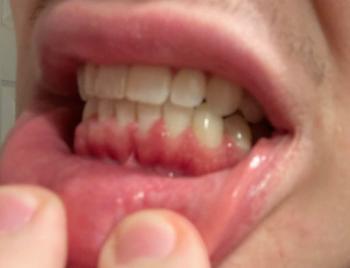
Patients with lower front gum inflammation may also experience tartar buildup, periodontal disease, gum abscesses, or tooth decay. Explore these related clinical case studies.