Dentures That Feel Natural, Look Beautiful.

Throbbing Pain After Tooth Removal: Normal or Warning Sign?
Language :
Topics:
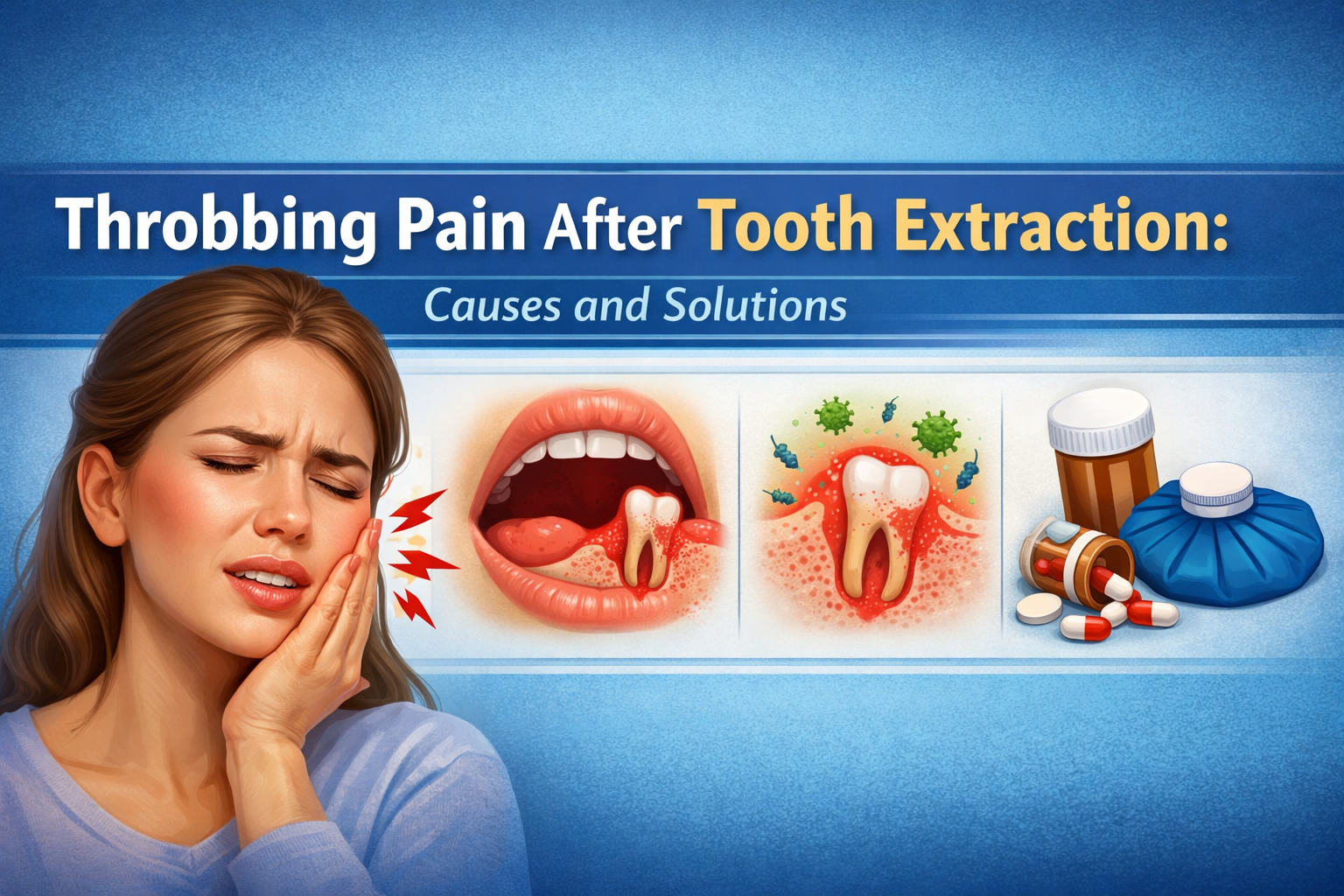
So, you’ve just had a tooth extraction. You followed the dentist’s instructions, you’ve got the gauze in place, and you’re settling in for a weekend of Netflix and soft foods. But then it hits you: a deep, rhythmic, throbbing pain that seems to pulse in time with your heartbeat.
Is this normal? When should you panic?
While some discomfort is an expected part of healing, a persistent throbbing sensation is your body’s way of sending an important signal. Let’s break down why this happens, how to tell the difference between standard healing and a complication, and—most importantly—how to find relief.
Is Throbbing Pain Normal After an Extraction?
Yes and no.
In the first 24 to 72 hours after an extraction, a dull ache and mild throbbing are completely normal. Think of it as the aftermath of a minor surgery (because that’s exactly what it is). Your body is flooding the area with blood to form a clot, and inflammatory chemicals are rushing to the site to begin healing. This process naturally causes swelling and a sensation of pressure that can feel like a pulse.
However, the intensity and duration of this pain matter. Normal post-operative pain should gradually decrease day by day. If the pain is getting worse instead of better—especially after the third day—it is usually a red flag.
The Top Causes of Throbbing Pain
If the throbbing is severe or worsening, it is usually caused by one of three main issues:
1. Dry Socket (Alveolar Osteitis)
This is the most common culprit for severe pain days after an extraction. Usually occurring 3 to 5 days post-op, a dry socket happens when the protective blood clot that forms in the socket is dislodged, dissolves too early, or fails to form.
Without that clot, the underlying bone and nerve endings are exposed to air, food, and saliva. The result is a deep, gnawing, throbbing pain that can radiate to your ear, eye, or neck. If you notice that your pain medication isn’t touching the pain, or if you can see an empty-looking socket (rather than a dark clot), you likely have a dry socket.
2. Infection
Sometimes, bacteria can invade the extraction site. While a mild infection might just cause a bad taste in the mouth, a significant infection (abscess) causes intense, persistent throbbing. Unlike dry socket, an infection is often accompanied by:
-
A foul taste or odor
-
Visible pus or oozing from the site
-
A fever
-
Spreading swelling in the face or jaw
3. Bone Fragments (Sequestra)
Sometimes, tiny fragments of bone or tooth root that were not visible during the extraction work their way to the surface during healing. As these sharp fragments press against the gum tissue from the inside, they can cause localized throbbing and sharp pain until they are removed or work themselves out.
Solutions: How to Stop the Throb
Your course of action depends entirely on why you are hurting. Here is how to address each scenario.
If it’s Normal Healing Pain:
If you are still within the first 48 hours and the pain is manageable but annoying:
-
Ice is your best friend. Apply ice packs to the outside of your cheek for 20 minutes on, 20 minutes off. This constricts blood vessels and reduces the pulsing sensation.
-
Elevate your head. Sleep with an extra pillow. Keeping your head above your heart reduces blood pressure to the area, which minimizes the intensity of the throbbing.
-
Stick to soft foods. Avoid anything hot, spicy, or crunchy that might irritate the site or increase blood flow to the area.
-
Follow the medication schedule. Don’t wait for the pain to become severe before taking prescribed or over-the-counter anti-inflammatories (like ibuprofen), as they help reduce the inflammation causing the throb.
If You Suspect a Dry Socket:
You cannot fix a dry socket at home. Home remedies like clove oil can offer temporary relief, but they are not a cure.
-
Call your dentist immediately. This is a priority. Your dentist will pack the socket with a medicated dressing (often containing eugenol/clove oil).
-
The relief is almost instant. Within minutes of the dentist placing the dressing, the throbbing usually subsides drastically. You may need to return every day or two to have the dressing changed until the tissue begins to heal over.
If You Suspect an Infection:
-
Seek professional care. You will likely need a course of antibiotics to clear the infection.
-
Do not stop brushing. While you should be gentle, keeping the area clean is crucial. Your dentist may also need to irrigate (flush out) the socket to remove debris.
If You Have Bone Fragments:
-
Don’t try to dig them out with tweezers. This can introduce bacteria.
-
See your dentist. They can use sterile tools to remove the fragment in seconds, providing immediate relief from the pressure and throbbing.
When to Call the Emergency Dentist
While most extraction pain is manageable, you should seek urgent dental care if you experience:
-
Pain that increases significantly after day 3
-
Swelling that gets worse instead of better (especially if it spreads to the eye or neck)
-
Difficulty swallowing or breathing
-
A fever over 100.4°F (38°C)
-
Bleeding that won’t stop with firm pressure
Throbbing pain after a tooth extraction is a common experience, but severe or worsening throbbing is not something you have to “tough out.” Modern dentistry has effective, immediate solutions for dry sockets, infections, and other complications.
If you are counting the minutes until your next pain pill because the throbbing is keeping you awake, don’t wait. Call your dental office. Your comfort matters, and the sooner the issue is addressed, the sooner your mouth can get back to healing properly.
Can tooth extraction cause infection? Mild inflammation is normal, but increasing swelling, fever, or severe pain may indicate infection. Learn more about post-extraction infection warning signs in this detailed guide.
Book a consultation with our Cebu dental specialists for proper evaluation and care.
Ready to get expert guidance?
If you’re experiencing severe pain or delayed healing, book a consultation with our Cebu dental specialists to get proper evaluation and care.
Consultation or contact page .
Book a Consultation
For severe discomfort or delayed healing, book a consultation with our Cebu dental specialists today.
Looking for a dentist? Browse our Cebu dental directory to find trusted clinics near you.
Medical Review and Clinical Basis
This article is based on clinical dental guidelines and real patient recovery patterns observed after tooth extraction procedures. The information reflects common post-extraction healing stages, including normal clot formation, gum tissue repair, and signs of possible complications such as dry socket or infection.
While mild discomfort is expected after a dental extraction, worsening pain after Day 3, bad odor, exposed bone, or spreading pain may require professional evaluation. These symptoms are consistent with known post-extraction complications described in standard dental practice.
About Cebu Dental Implants
Cebu Dental Implants provides comprehensive tooth extraction, surgical procedures, and dental implant services in the Philippines. Our team evaluates post-extraction healing, manages complications such as dry socket, and advises patients on proper aftercare to prevent infection and delayed healing.
If you experience severe pain or unusual symptoms after extraction, early professional assessment is recommended to prevent further complications.
Important Medical Disclaimer
This content is for educational purposes only and does not replace professional dental diagnosis. Every patient heals differently. If symptoms worsen or do not improve within a few days, consult a licensed dentist for proper evaluation and treatment.
Author
This article was prepared by the Cebu Dental Implants content team in consultation with licensed dental professionals experienced in tooth extraction and implant procedures.
Teeth Case
 |
 |
 |
 |
 |
 |