Modern Dentistry, Timeless Smiles.

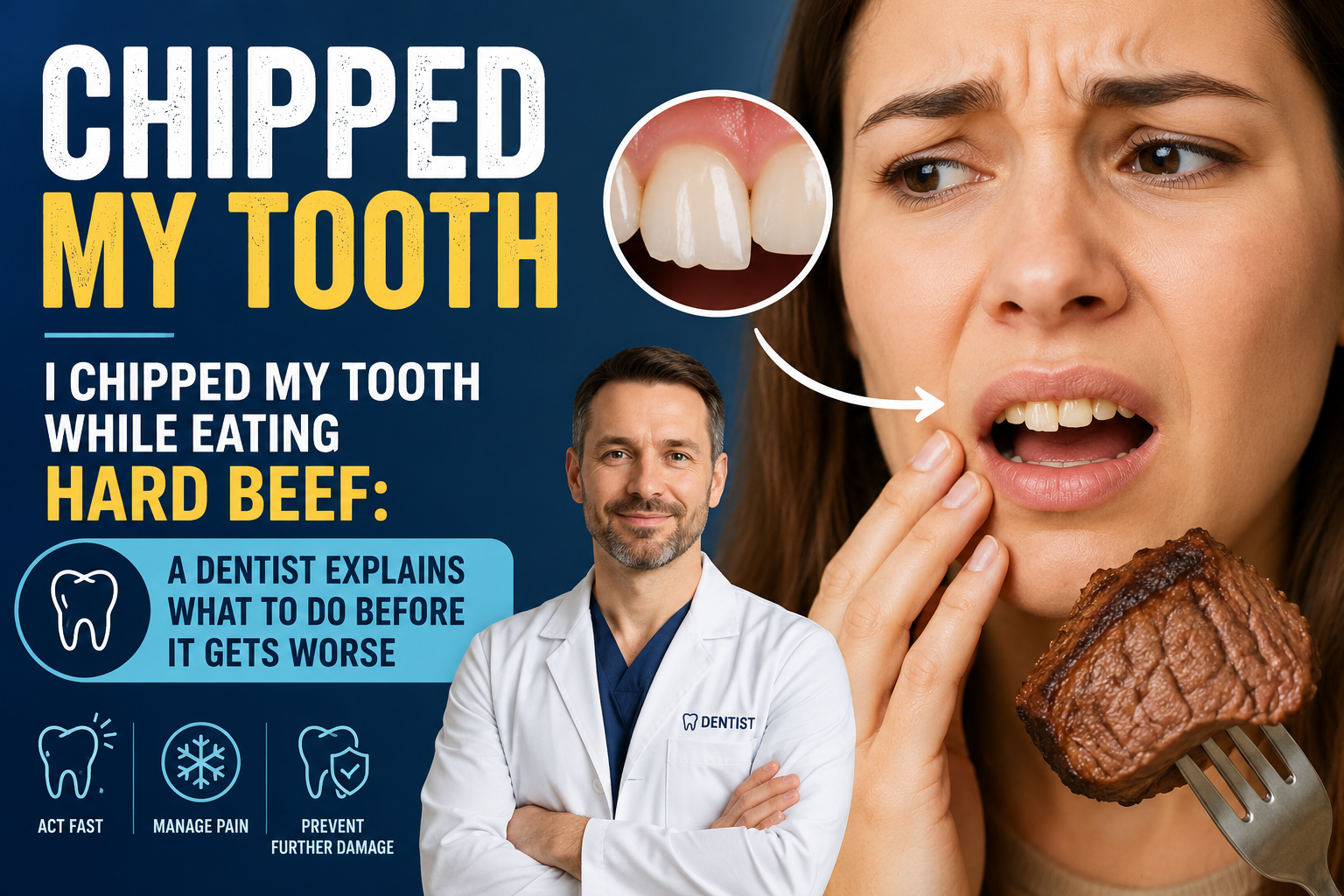
I Chipped My Tooth While Eating Hard Beef: A Dentist Explains What to Do Before It Gets Worse
Language :
Topics:
I Was Eating Hard Beef and Suddenly a Small Piece of My Tooth Broke Off
"I was just enjoying my meal. The beef was tougher than I expected. As I chewed down, I suddenly heard a small crunch. At first I thought it was part of the meat. Then I realized a tiny piece of my own tooth had broken off.
Now I'm anxious.
Did I permanently damage my tooth?
Will I lose it?
Will it become infected?
Should I rush to the dentist today?"
If this sounds familiar, you are not alone.
Many patients experience a chipped tooth while eating foods that require strong chewing pressure. Hard beef, steak with gristle, bones hidden in meat, hard candy, popcorn kernels, nuts, ice cubes, and crusty bread are among the most common causes.
Although a small chip may not seem serious initially, every chipped tooth deserves professional evaluation. Teeth cannot repair themselves naturally. Even a tiny fracture can become larger over time if ignored.
The good news is that most chipped teeth can be successfully repaired, especially when treated early.
First, Make Sure This Is Not a Dental Emergency
It is important to distinguish between a simple chipped tooth and a serious dental infection.
A chipped tooth requires prompt dental care to prevent further damage, but before anything else, make sure you are not experiencing symptoms of a dental infection that has spread into the facial tissues.
Seek Immediate Emergency Medical or Dental Care If You Have:
-
Difficulty breathing
-
Tightness in the throat
-
Difficulty swallowing
-
Excessive drooling
-
Swelling rapidly spreading toward the eye
-
Swelling extending into the neck
-
Swelling spreading toward the chest
-
High fever
-
Chills
-
Extreme fatigue
-
Confusion
-
Severe headache
-
Stiff neck
These symptoms may indicate that a dental infection has spread beyond the tooth into the soft tissues of the face or neck. Such infections can become life-threatening if they compromise the airway or enter the bloodstream.
Do not wait for a dental appointment if these warning signs are present.
If You Do NOT Have Emergency Symptoms
If you only have a chipped tooth without the emergency warning signs above, the situation is usually much less urgent—but it still requires timely treatment.
A dentist should examine the tooth as soon as possible to determine:
-
How deep the fracture extends
-
Whether the tooth nerve is involved
-
Whether hidden cracks exist
-
Whether the tooth can be restored with a simple filling or needs more extensive treatment
Why Did My Tooth Chip While Eating Beef?
Many patients assume the beef caused the damage.
Usually, the food simply revealed an underlying weakness.
Healthy teeth are remarkably strong.
When a tooth chips during normal eating, there is often another contributing factor.
Common causes include:
Previous Fillings
Large fillings weaken the remaining tooth structure.
Old Dental Work
Crowns and fillings wear down over time.
Tiny Cracks
Small cracks may have been present for years before finally breaking.
Tooth Grinding
Grinding places tremendous pressure on teeth every night.
Teeth Clenching
Stress-related clenching weakens enamel.
Cavities
Decay makes teeth fragile.
Aging
Enamel slowly becomes more brittle with age.
Acid Erosion
Soft drinks, citrus fruits, and acid reflux gradually dissolve enamel.
Previous Trauma
An old sports injury may have weakened the tooth years earlier.
Common Symptoms After a Chipped Tooth
Every chipped tooth feels different.
Some people notice only a rough edge.
Others experience significant pain.
Symptoms may include:
-
Sharp edge
-
Sensitivity to cold drinks
-
Sensitivity to hot foods
-
Pain while chewing
-
Pain when biting
-
Tongue irritation
-
Lip irritation
-
Gum soreness
-
Mild bleeding
-
Feeling that something is missing
Sometimes there is no pain at all.
Unfortunately, absence of pain does not mean the tooth is healthy.
Should I Save the Broken Piece?
Yes.
If you find the chipped fragment:
-
Rinse it gently.
-
Place it in a clean container.
-
Store it in milk or saline if possible.
-
Bring it to your dental appointment.
Although many fragments cannot be reattached, some can be bonded back depending on their size and condition.
What Should I Do Immediately?
Stay Calm
A small chip is usually repairable.
Rinse Your Mouth
Warm salt water helps keep the area clean.
Avoid Hard Foods
Chew on the opposite side.
Cover Sharp Edges
Dental wax from a pharmacy may help protect your tongue.
Sugar-free chewing gum can be a temporary alternative if dental wax is unavailable.
Apply a Cold Compress
If swelling develops, place an ice pack wrapped in a towel against your cheek for 10–20 minutes.
Never place ice directly onto the skin.
Never Apply Heat
Heat increases blood flow and may worsen swelling or encourage the spread of an underlying infection.
What NOT to Do
Avoid these common mistakes:
-
Do not chew ice.
-
Do not bite fingernails.
-
Do not chew pens.
-
Do not delay treatment for months.
-
Do not ignore sensitivity.
-
Do not attempt to glue the tooth yourself.
-
Do not file the tooth.
-
Do not use household adhesives.
How Will the Dentist Examine My Tooth?
Your dentist may perform:
-
Visual examination
-
Bite evaluation
-
Cold sensitivity testing
-
Percussion testing
-
Dental X-rays
-
Bitewing radiographs
-
Periapical radiographs
-
Occasionally 3D CBCT imaging for complex fractures
This helps determine the extent of damage.
Treatment Options
Treatment depends on how much tooth structure has been lost.
1. Polishing
Very tiny chips may simply be smoothed.
Recovery is immediate.
2. Dental Bonding
Composite resin rebuilds the missing portion.
Advantages:
-
Conservative
-
Affordable
-
Completed in one visit
-
Excellent cosmetic results
3. Tooth-Colored Filling
Moderate chips may require a composite filling.
4. Dental Veneer
Front teeth with cosmetic chips may benefit from porcelain veneers.
5. Dental Crown
Large fractures often require a crown.
A crown protects the weakened tooth from future fractures.
6. Root Canal Treatment
If the fracture exposes the pulp, bacteria may infect the nerve.
A root canal removes infected tissue while preserving the tooth.
7. Tooth Extraction
If the fracture extends below the gum line or splits the root, the tooth may not be restorable.
Replacement options include:
-
Dental implant
-
Dental bridge
-
Partial denture
Can a Chipped Tooth Heal Naturally?
No.
Unlike skin or bone, enamel cannot regenerate.
Once enamel is lost, it does not grow back.
Professional treatment is required.
Can I Wait If It Doesn't Hurt?
Many patients ask this question.
Unfortunately, pain is not always an accurate indicator of damage.
A painless chipped tooth can still develop:
-
Decay
-
Cracks
-
Infection
-
Nerve inflammation
-
Tooth fracture
Early treatment is usually simpler, less expensive, and more successful.
Can a Chipped Tooth Become Infected?
Yes.
If bacteria enter deeper layers of the tooth, they can infect the pulp.
Signs include:
-
Severe toothache
-
Lingering sensitivity
-
Swelling
-
Gum pimple
-
Bad taste
-
Bad breath
-
Facial swelling
Prompt treatment reduces the risk of complications.
Will I Lose My Tooth?
Not necessarily.
Most chipped teeth are successfully restored.
The sooner you seek treatment, the better the prognosis.
How Can I Prevent Another Chipped Tooth?
Simple habits can significantly reduce the risk:
-
Avoid chewing ice.
-
Do not open packages with your teeth.
-
Wear a sports mouthguard during contact sports.
-
Use a night guard if you grind your teeth.
-
Visit your dentist regularly.
-
Repair old fillings before they fail.
-
Treat cavities early.
-
Maintain good oral hygiene.
Living with Anxiety After Chipping a Tooth
Many patients become anxious after hearing that unmistakable "crack."
It is natural to worry about losing your smile, facing expensive treatment, or needing a root canal.
Take comfort in knowing that dentists manage chipped teeth every day.
Modern restorative dentistry offers highly effective treatments that can often restore both appearance and function. Seeking care promptly gives your dentist the best opportunity to preserve your natural tooth and minimize the amount of treatment required.
Frequently Asked Questions
Is a small chipped tooth serious?
It can be. Even a tiny chip can expose weaker tooth layers or develop into a larger fracture if left untreated.
Can I eat after chipping my tooth?
Yes, but choose soft foods and chew on the opposite side until you are examined by a dentist.
Is a chipped tooth painful?
Not always. Some chips cause no discomfort, while others lead to significant sensitivity or pain.
How soon should I see a dentist?
Ideally within 24–48 hours, or sooner if you have pain, sharp edges, or increasing sensitivity.
Can dental bonding fix a chipped tooth?
Yes. Bonding is one of the most common and effective treatments for small to moderate chips.
Will I need a root canal?
Only if the fracture has damaged or infected the pulp inside the tooth.
Final Thoughts
Accidentally chipping a tooth while eating hard beef can be alarming, but in many cases it is a treatable problem rather than a reason to panic. The key is to act promptly. Avoid chewing on the affected tooth, keep the area clean, and arrange a dental examination as soon as possible. Early treatment can often preserve your natural tooth with relatively simple procedures such as polishing, bonding, or a filling.
Remember that while a chipped tooth itself is usually not life-threatening, symptoms such as rapidly spreading facial swelling, difficulty breathing, difficulty swallowing, or high fever require immediate emergency medical attention because they may indicate a serious dental infection. By recognizing the warning signs and seeking appropriate care, you can protect both your oral health and your overall well-being.
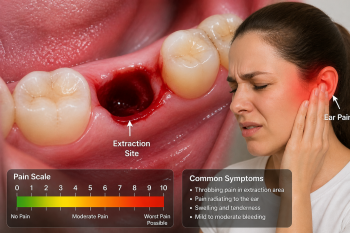
Can tooth extraction cause infection? Mild inflammation is normal, but increasing swelling, fever, or severe pain may indicate infection. Learn more about post-extraction infection warning signs in this detailed guide.
Book a consultation with our Cebu dental specialists for proper evaluation and care.
Ready to get expert guidance?
If you’re experiencing severe pain or delayed healing, book a consultation with our Cebu dental specialists to get proper evaluation and care.
Consultation or contact page .
Book a Consultation
For severe discomfort or delayed healing, book a consultation with our Cebu dental specialists today.
Looking for a dentist? Browse our Cebu dental directory to find trusted clinics near you.
Medical Review and Clinical Basis
This article is based on clinical dental guidelines and real patient recovery patterns observed after tooth extraction procedures. The information reflects common post-extraction healing stages, including normal clot formation, gum tissue repair, and signs of possible complications such as dry socket or infection.
While mild discomfort is expected after a dental extraction, worsening pain after Day 3, bad odor, exposed bone, or spreading pain may require professional evaluation. These symptoms are consistent with known post-extraction complications described in standard dental practice.
About Cebu Dental Implants
Cebu Dental Implants provides comprehensive tooth extraction, surgical procedures, and dental implant services in the Philippines. Our team evaluates post-extraction healing, manages complications such as dry socket, and advises patients on proper aftercare to prevent infection and delayed healing.
If you experience severe pain or unusual symptoms after extraction, early professional assessment is recommended to prevent further complications.
Important Medical Disclaimer
This content is for educational purposes only and does not replace professional dental diagnosis. Every patient heals differently. If symptoms worsen or do not improve within a few days, consult a licensed dentist for proper evaluation and treatment.
Author
This article was prepared by the Cebu Dental Implants content team in consultation with licensed dental professionals experienced in tooth extraction and implant procedures.
Related Clinical Cases
Patients with lower front gum inflammation may also experience tartar buildup, periodontal disease, gum abscesses, or tooth decay. Explore these related clinical case studies.

Other topics:
Other Dental Clinic